

Back to Evil Eye
The evil eye belief most likely began in the ancient Mediterranean and Near East, with traces in Mesopotamia, Egypt, Greece, and later Rome. A careful answer does not point to one country. It points to a connected ancient world where people worried that a look could carry envy, and that envy could do real harm.
Greek, Turkish, Middle Eastern, North African, and South Asian traditions all gave the belief local names and habits. The protective idea stayed familiar: a charm, prayer, gesture, or spoken blessing could guard a child, a home, an animal, or a piece of good fortune from the wrong kind of gaze.
A fear of envy crossed borders early, turning the evil eye into a shared language of protection.
Where the evil eye most likely originated
The evil eye origin is usually traced to the ancient Near East and Mediterranean world, rather than to one modern nation. Early forms of the belief appear around Mesopotamia, Egypt, the Levant, Greece, and later Rome. In those places, envy, praise, illness, and sudden misfortune could all be read through the danger of a harmful look.
For the question “where did evil eye originate,” the clearest short answer is this: the belief grew in an ancient Near Eastern and Mediterranean cultural zone. The evidence comes from texts, images, ritual habits, and protective objects that developed across neighboring societies over time.

Ancient Ugarit matters because it places part of the history of the evil eye in the Levant, near the coast of modern Syria. Ugaritic material is discussed in this background because it belongs to a world where words, divine forces, human harm, and ritual protection were closely connected.
That does not mean Ugarit invented the evil eye. It gives us one early window into a wider region where people tried to explain curses, illness, envy, and bad luck without separating religion from daily life.
The earliest setting is best understood as a broad ancient zone that included Mesopotamia, Egypt, the Levant, Greece, and Rome. Ugarit belongs in that background, though the belief likely formed through contact among several cultures.
Later, Greek, Roman, Jewish, Islamic, and Christian traditions carried the belief into Turkish, Middle Eastern, and Mediterranean customs. That long movement helps explain why the symbol feels familiar in so many places without belonging to only one of them.
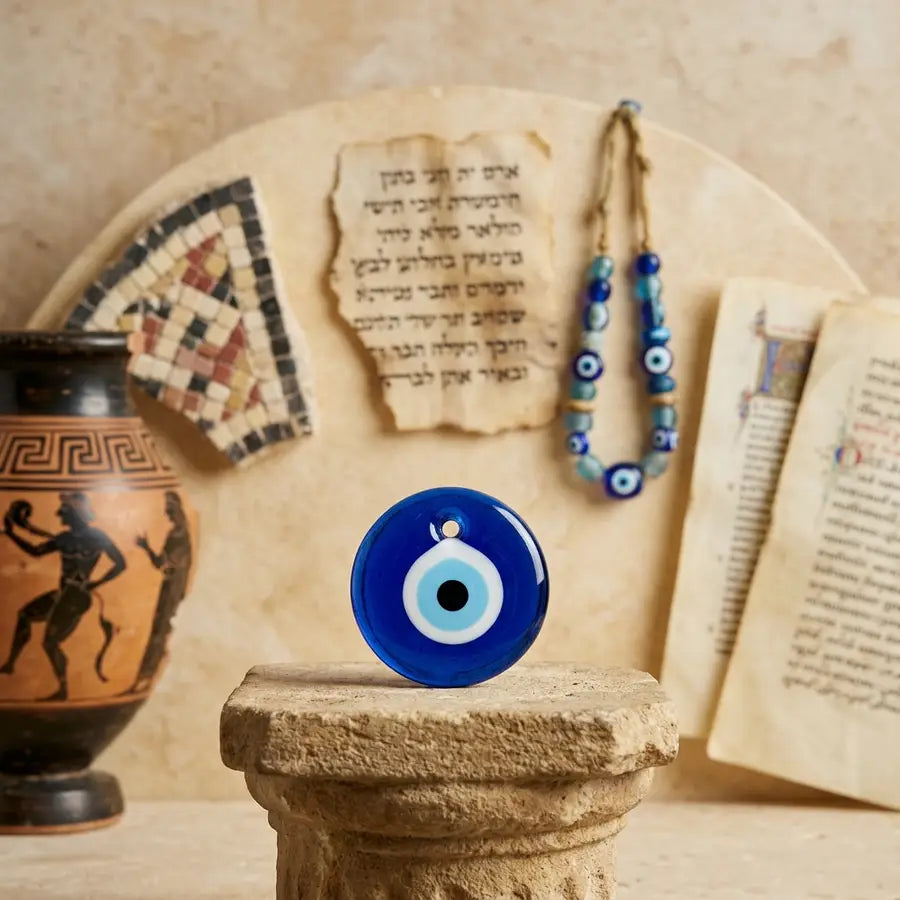
A timeline of evil eye beliefs across ancient cultures
The history of the evil eye is not a neat invention story. It looks more like a map of overlapping routes, shaped by trade, migration, conquest, and religious contact across the ancient Near East, Greece, Rome, Turkey, and the wider Middle East.
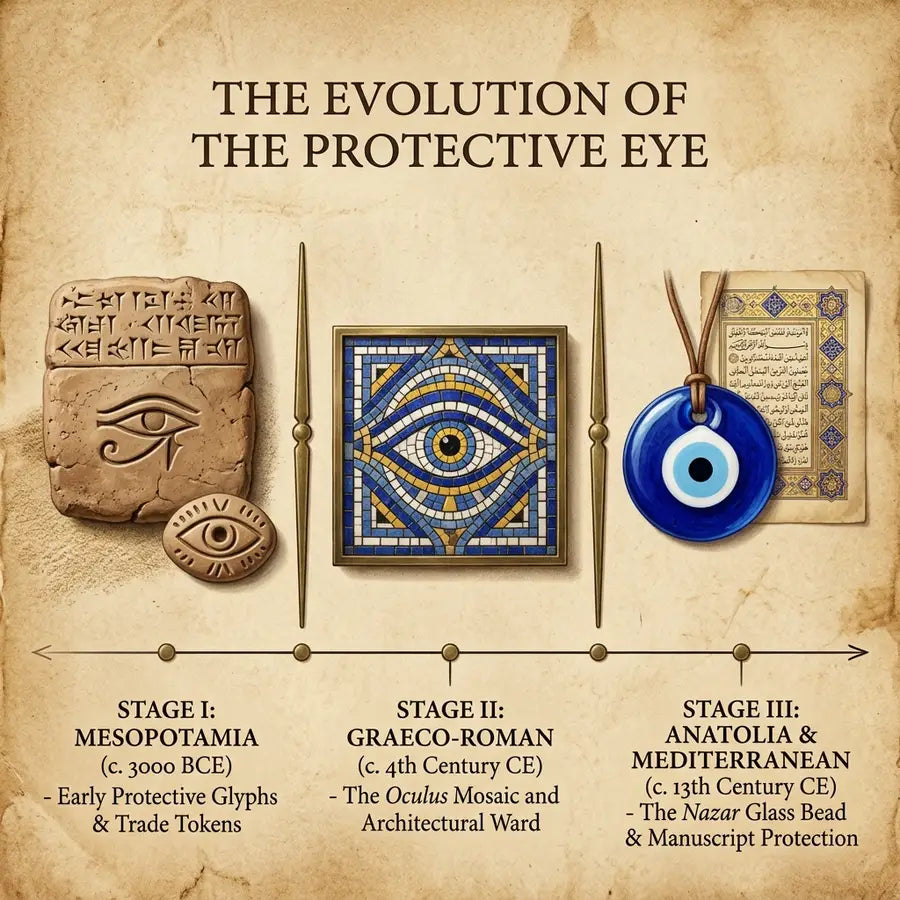
Before 1180 BC, ancient Ugarit gives one early Near Eastern setting for ancient evil eye belief. Its material shows a world where speech, divine force, illness, and ritual protection were bound together, though it does not prove a single birthplace.
Greek literature made the evil eye more visible in surviving texts. Stories about envy, dangerous praise, and destructive sight gave the belief a mythic shape, while ordinary people used gestures and charms against the jealous gaze.
In Roman life, protection became physical and familiar. Amulets, phallic charms, eye symbols, and household objects guarded children, animals, doorways, and travelers from harm believed to arrive through hostile attention.
Across the Mediterranean and Middle East, Jewish, Islamic, and Christian communities kept the belief active through prayers, blessings, sayings, and protective customs. Each tradition fitted the idea to its own theology and family life.
Today, blue glass beads, hamsa hands, wall charms, and jewelry connect Greek Turkish Middle Eastern evil eye traditions to everyday protection. The evil eye protection meaning usually centers on guarding against envy, misfortune, and unwanted spiritual harm.
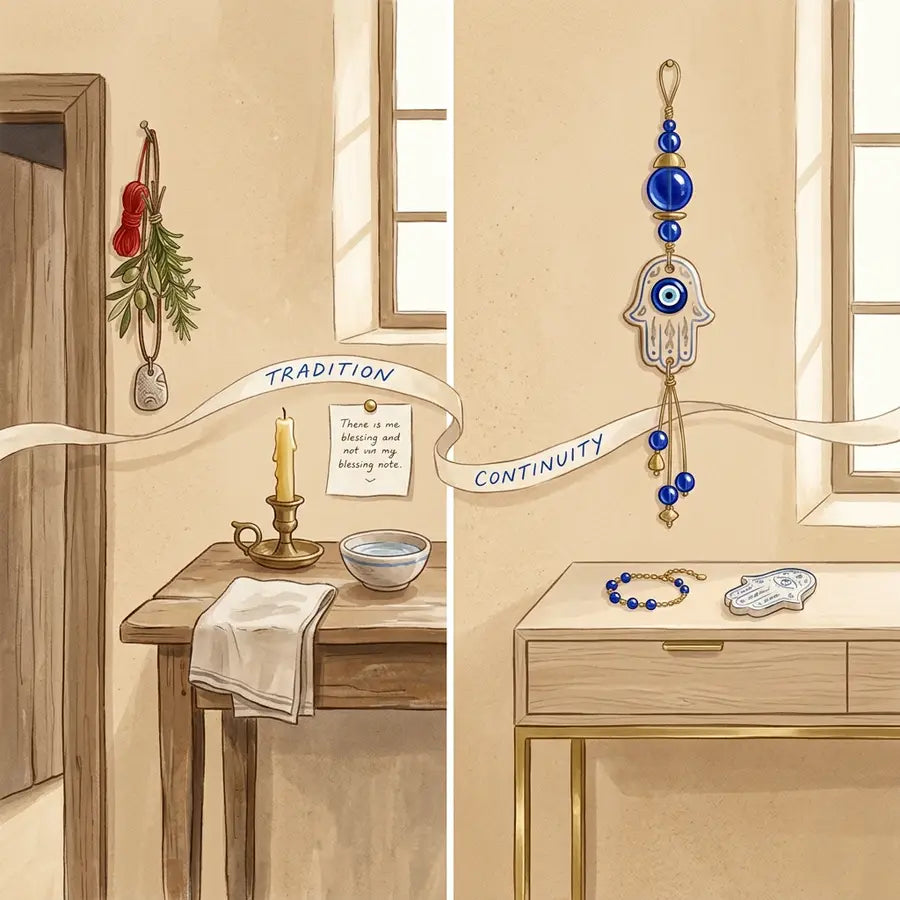
This timeline is not a straight road from one ancient city to the modern charm shop. The belief moved with people who traded goods, told stories, prayed, and borrowed symbols from neighbors.
That is why “where did evil eye originate” needs a careful answer. The strongest evidence points to an ancient Near Eastern and Mediterranean zone, and its later history grew through exchange rather than a clean line of descent.
Is the evil eye Greek, Turkish, or Middle Eastern?
The evil eye is Greek, Turkish, and Middle Eastern in different ways, but it is not the property of one modern nationality. Its older roots sit in the ancient Near Eastern and Mediterranean world, where neighboring cultures shared stories about envy, illness, praise, and protection.
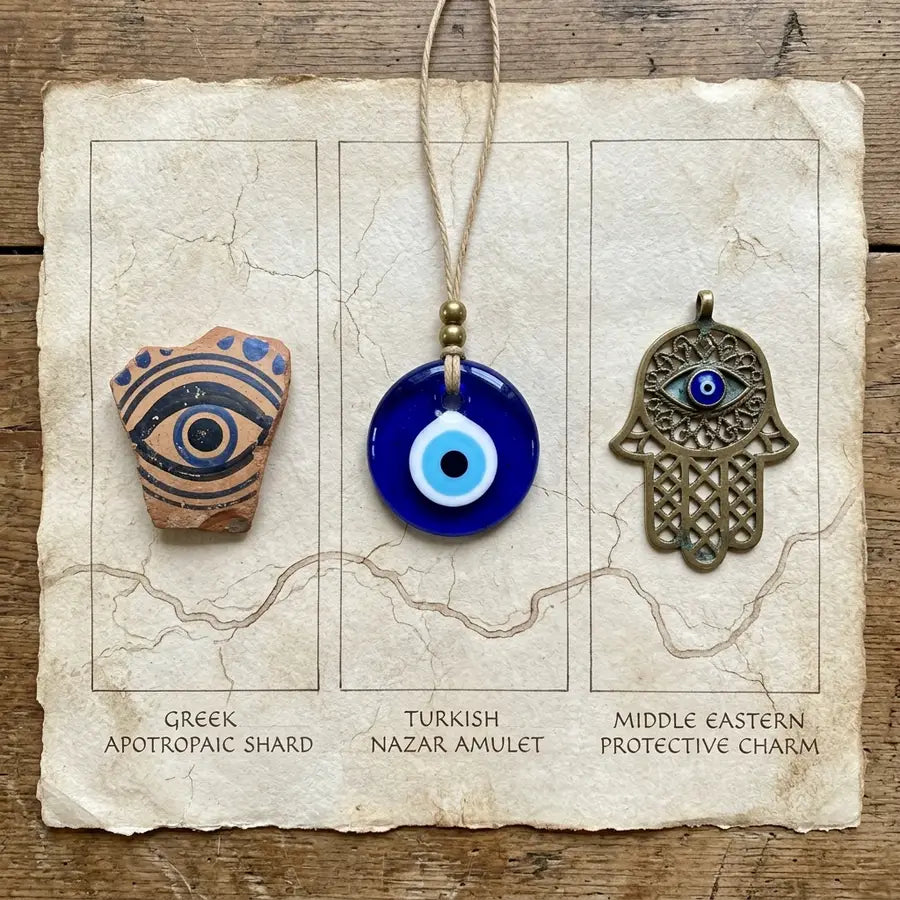
A clearer answer is that the belief crossed borders before modern borders existed. Greece preserved it in literature and myth. Turkey made the blue nazar widely recognizable. Middle Eastern traditions kept older protective customs active in family and religious life.
What Greek tradition contributed
Greek tradition gave the evil eye belief some of its clearest surviving language. Ancient writers described the harmful gaze as baskania, a force tied to envy, excessive praise, and social danger.
In myth and daily life, sight could carry more than attention. Greek culture did not create every part of the belief, but it gave later readers memorable examples of how a look could be feared, named, and answered with ritual.
What Turkish tradition contributed
Turkish tradition made one image famous far beyond its region: the blue nazar bead. In Turkish folklore, the nazar protects against jealous or admiring looks that might bring harm, even when the person looking does not intend it.
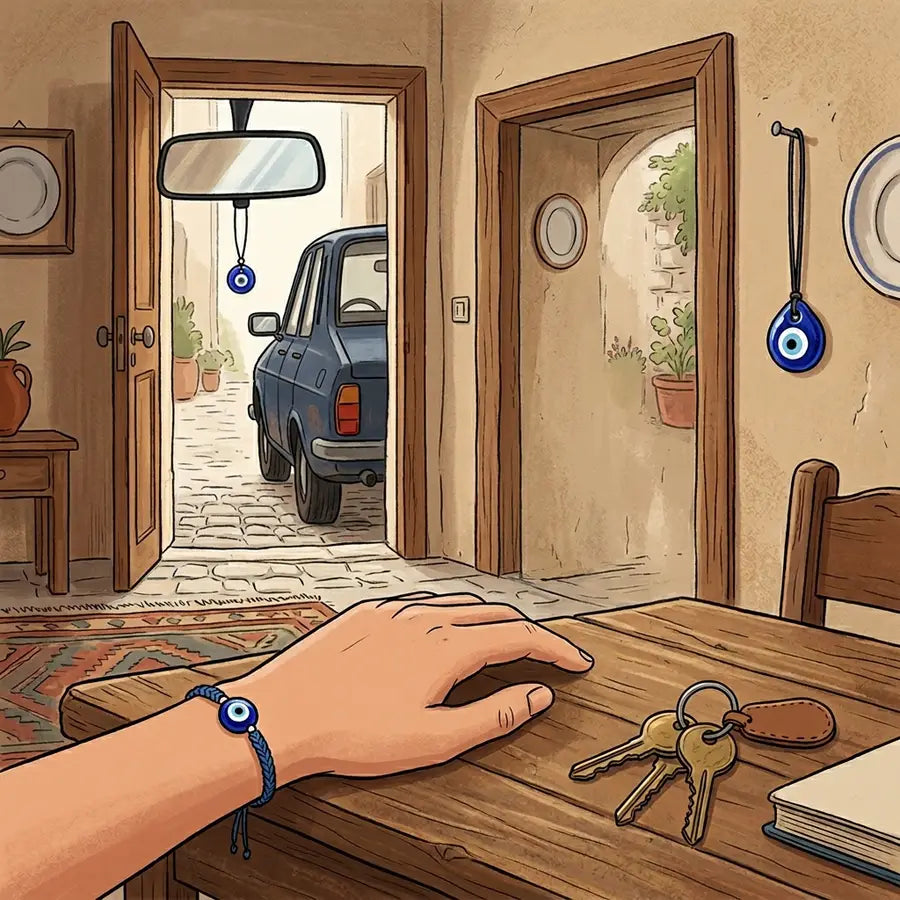
The bead’s eye-like shape watches back. It appears on doorways, cars, cradles, animals, bracelets, and necklaces, turning the threat into a visible guard. Its modern visibility is strongly Turkish, even though the ancient evil eye belief behind it is older and more widely shared.
What Middle Eastern traditions preserve
Middle Eastern traditions keep the evil eye as a living concern, not just an old idea preserved in books. Jewish, Islamic, and Christian communities have used prayers, blessings, amulets, and spoken formulas to guard against envy and misfortune.
These customs often appear around children, weddings, pregnancy, homes, and livestock. The evil eye protection meaning remains steady across those settings: people name the danger, soften praise, ask for blessing, and place a visible sign of protection where vulnerability feels close.
Legends that explain the power of the evil eye
Legends do not prove where the evil eye originated. They show why the belief stayed memorable. Across Greek, Turkish, and Middle Eastern settings, stories turned the fear of envy into images people could remember: a face, a stone, an animal, a charm near the door.
The Greek legend of Medusa’s dangerous gaze
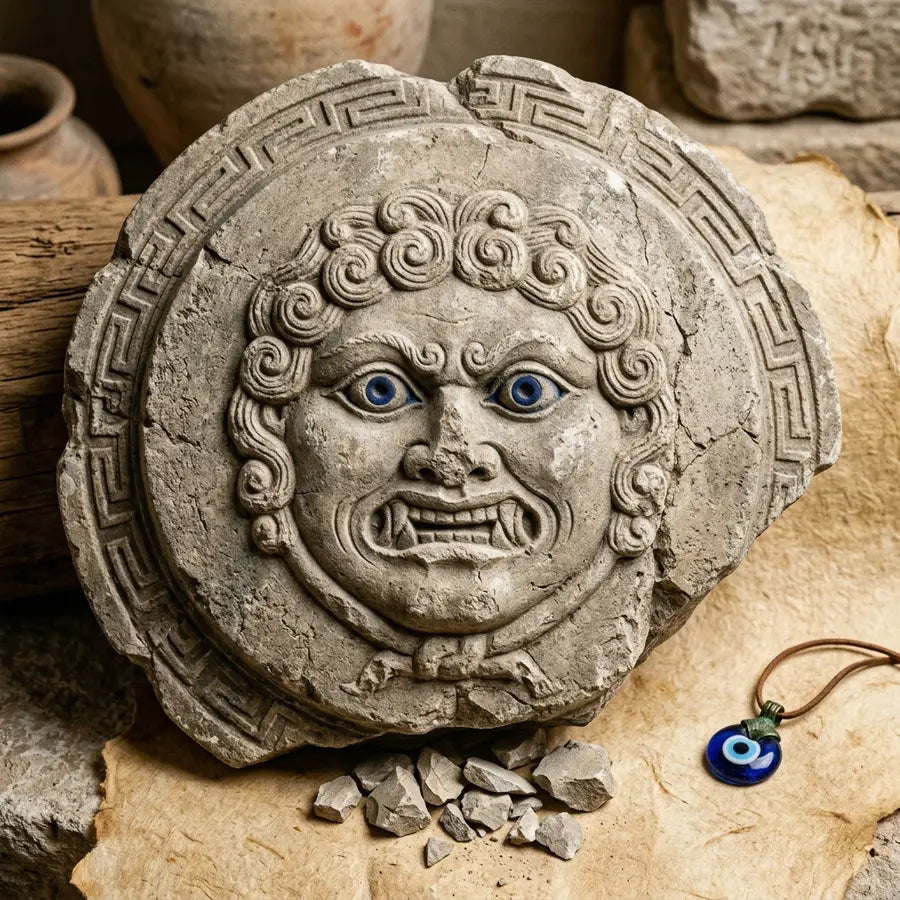
Medusa is not the origin of the evil eye belief, but her myth gave Greek tradition one of its sharpest images of harmful sight. In the story, her gaze turns living people into stone, making the eye itself a source of danger.
Later protective art sometimes used Medusa-like faces, called gorgoneia, on shields, buildings, and objects. The meaning was not simple decoration. A frightening face could meet danger with danger, pushing harm away before it reached the person or place being guarded.
The Turkish legend of the miraculous stone
One Turkish village legend tells of a large stone near the sea that no worker could move. Then a man known for the force of his gaze looked at it and praised its size.
Soon after, the stone cracked, as if admiration itself had carried a hidden charge. The story explains why praise can feel risky in evil eye folklore. A compliment may sound kind, yet an intense admiring look can attract misfortune if it is not softened by blessing, humility, or protection such as the blue nazar bead.

The rich man’s jealous eyes
Another Turkish tale speaks of a poor family with a healthy cow. A rich man saw the animal and stared with jealousy, angered that people with so little owned something so valuable.
After his look, the cow weakened or died, depending on the version told. This legend makes envy more direct than the stone story. The harm comes not from praise, but from resentment.

These legends share a plain pattern: sight becomes powerful when it carries envy, excessive admiration, or hostile attention. They also explain the evil eye protection meaning in practical terms. Charms, prayers, and careful words help people manage the social danger of being noticed too strongly.
Why the evil eye is connected to envy and jealousy
In evil eye stories, envy gives the gaze its charge. A child becomes ill after praise, a cow weakens after a jealous stare, or a new house attracts trouble after neighbors admire it too openly.
Folklore used these moments to explain sudden misfortune without treating every accident as random. Ancient evil eye belief turned a social feeling into a visible danger: the look of someone who wants, resents, or admires too intensely.

Admiration without protection can feel risky in folklore because praise draws attention to good fortune. A blessing, modest reply, or protective phrase softens the compliment before envy can attach to it.
Wealth, beauty, children, and livestock appear often because they are visible forms of luck. In village life, a healthy baby or strong animal could attract admiration from one neighbor and resentment from another.
Protective words and objects answer that fear directly. A nazar bead, hamsa, prayer, or blessing marks the person or home as guarded from a harmful or jealous gaze.
The belief still feels meaningful because envy is a real social emotion, even when the supernatural claim is treated with caution. Being noticed can bring pride, pressure, gossip, or resentment, especially around family milestones, possessions, and public success.
That is why the evil eye protection meaning remains practical in many cultures. It gives people a respectful way to name vulnerability, protect joy, and keep praise from feeling too exposed.
From ancient belief to modern evil eye protection
Modern protection objects carry an old idea into ordinary life: a harmful gaze can be noticed, answered, and turned away. The evil eye protection meaning has moved from spoken blessings and household rituals into beads, charms, jewelry, and decor, but it remains tied to guarding people and spaces from envy or misfortune.
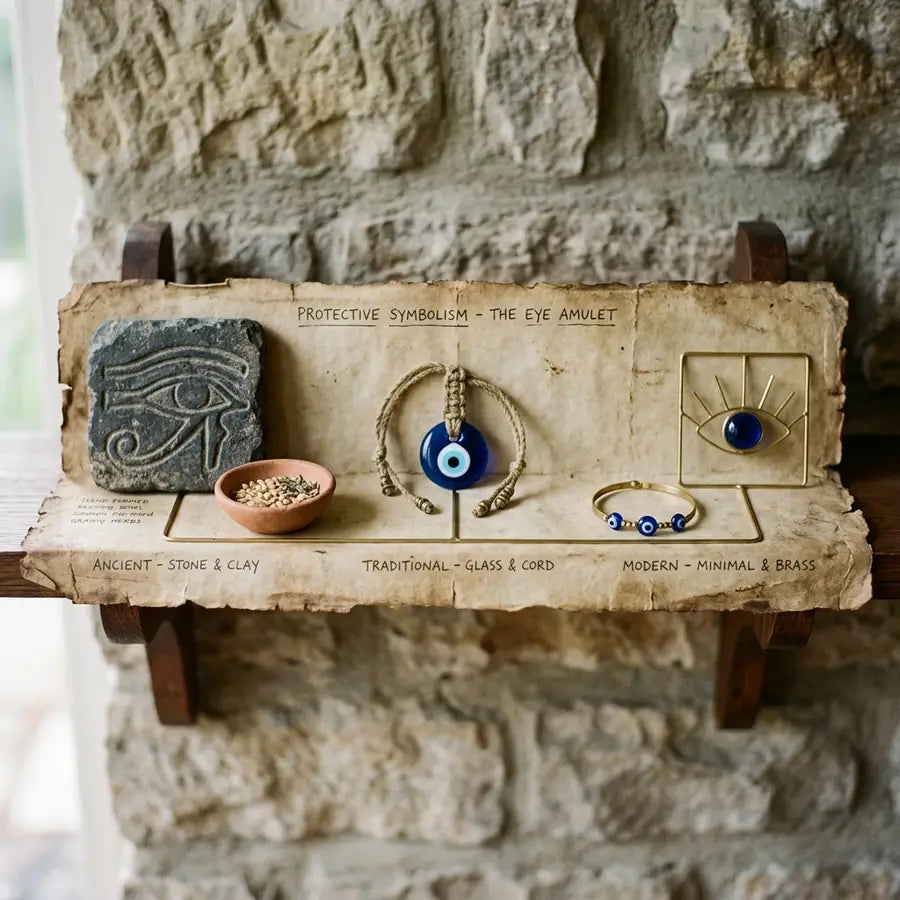
Evil Eye jewelry today can work as a personal symbol and a cultural reminder. A bracelet or necklace may mark protection during travel, family events, new work, or other moments when good fortune becomes visible.
For people with Greek, Turkish, Middle Eastern, or Mediterranean roots, the symbol can also connect back to family custom. For others, respectful use means recognizing that it comes from a long history, not a simple fashion trend.
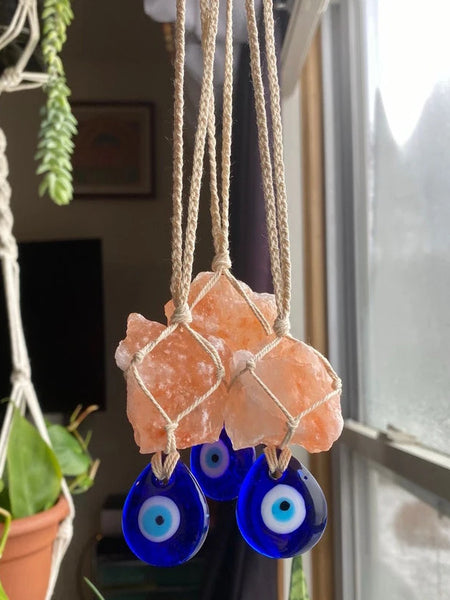
Handcrafted Blue Turkish Evil Eye Pendant with Natural Ore Stone for Home and Car Decor
$11.35
View
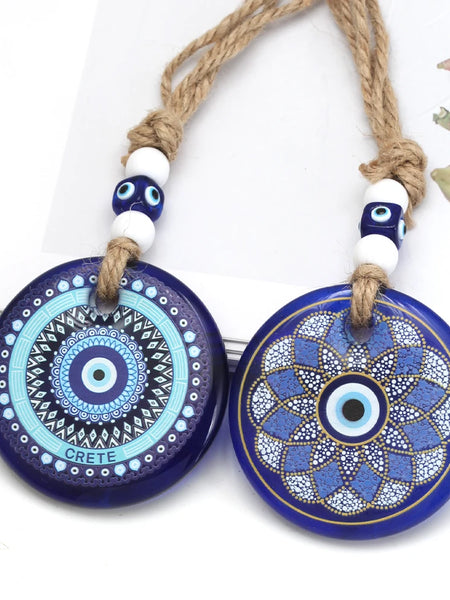
Elegant Blue Turkish Evil Eye Glass Pendant Wall Hanging Keychain with Flower Pattern Rope Chain
$16.58 - $19.95
View
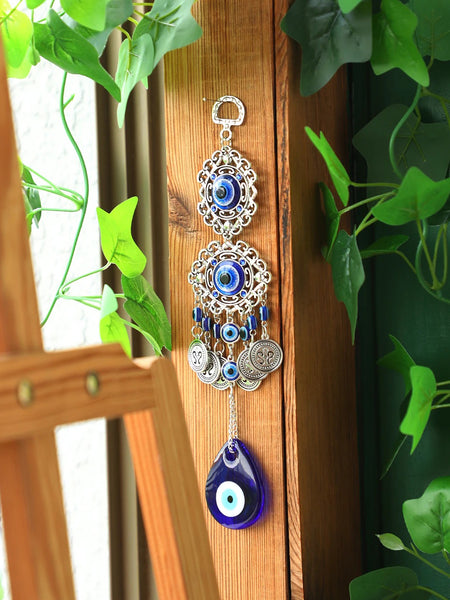
Enchanting Blue and Silver Evil Eye Metal Wall Art for Home and Garden Decor
$15.80 - $15.85
View
How the evil eye appears in home protection
In homes, the Evil Eye often appears near doors, windows, living rooms, nurseries, and gathering spaces. Those placements follow an older belief that entrances and shared rooms need watching, because guests, praise, and outside attention pass through them.
Wall charms, blue glass eyes, hamsa symbols, and small hanging ornaments are not only decoration in this context. They mark the home as protected while keeping the symbol visible where family life and visitors meet.

179
Products
Evil Eye Jewelry
Shop Evil Eye jewelry in symbolic necklaces, bracelets, rings, earrings, pendants and charm styles for everyday layer...
Explore
50
Products
Evil Eye Home Decor
Shop Evil Eye home decor, from wall hangings and decorative accents to stylish pieces for shelves, tables, and everyd...
ExploreWhen choosing Evil Eye items, context matters more than size or shine. Look for pieces that explain their origin, avoid treating the symbol as a joke, and recognize the difference between a general protective charm and a specific religious or regional form.
A respectful choice does not need to copy one culture exactly. It should keep the link between ancient evil eye belief, envy, blessing, and protection clear. A doorway charm may fit a home setting, while a small bracelet may make sense for travel or a family ceremony.
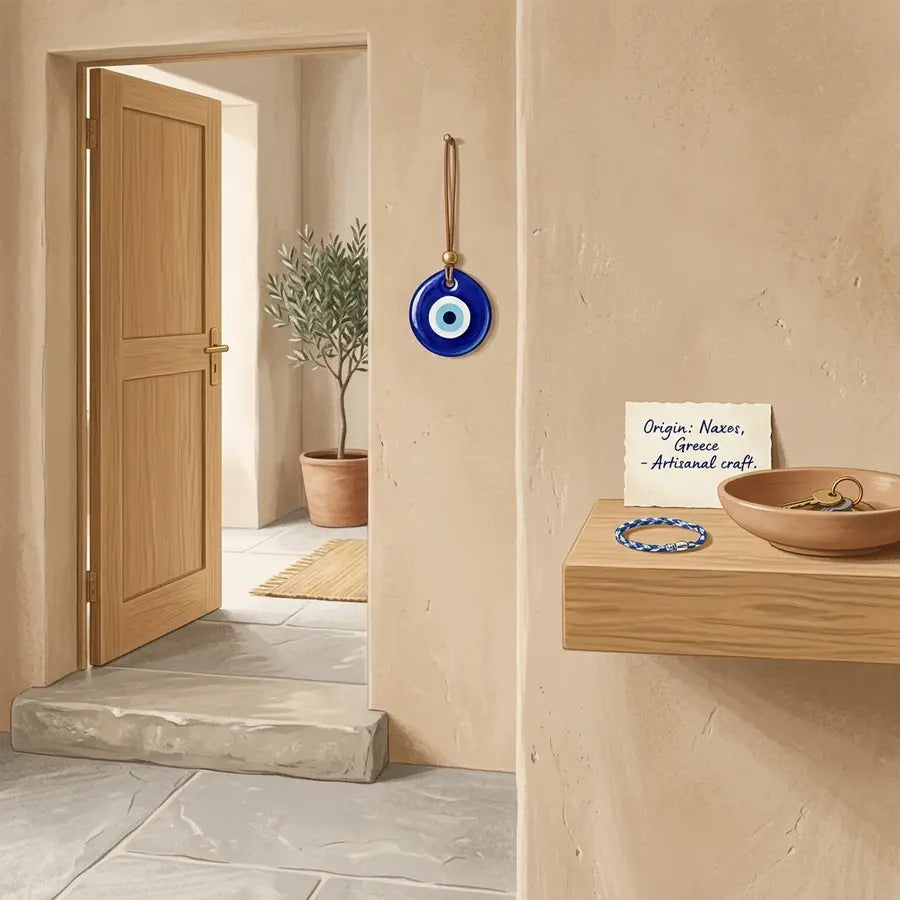
Evil Eye gifts read most clearly when the meaning is stated plainly. A short note can say the charm is offered as a wish for protection, calm, and good fortune, rather than as a claim that danger is certain.
This can matter for housewarming gifts, baby gifts, travel jewelry, or wedding tokens, where protection symbolism may feel personal rather than decorative. If the recipient comes from a tradition where the symbol has religious meaning, plain wording is usually safer than playful language.
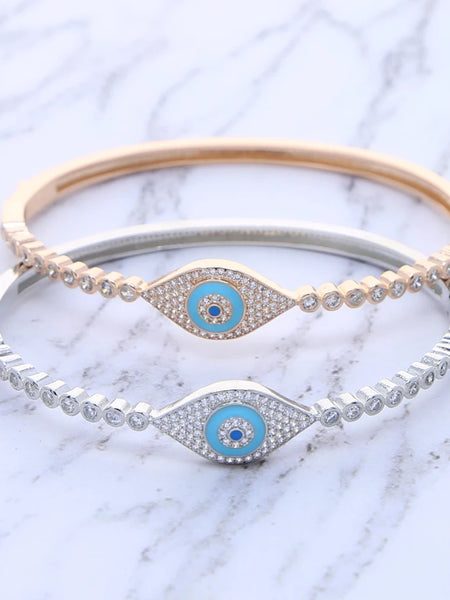
Elegant Rose Gold Evil Eye Bracelet with CZ Crystals and Hamsa Hand Charm for Women
$19.78
View
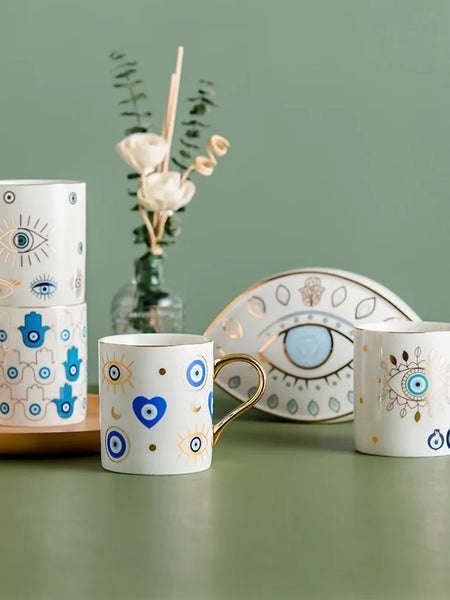
300ml Ceramic Coffee Mug with Blue Evil Eye Print for Tea Coffee Reusable and Stylish Gift
$20.59 - $22.28
View

Elegant Blue Turkish Evil Eye Floral Pendant Necklace - Stainless Steel, Trendy Geometric Design for Women, Perfect for Weddings and Gifts
$10.99 - $13.99
View
From ancient stories to modern objects, the Evil Eye has stayed useful because it gives visible form to an old social fear: being noticed too strongly. Used with care, it remains a symbol of protection, blessing, and guarded joy rather than a detached decorative motif.
FAQ about evil eye origin and protection
These answers focus on the origin, early evidence, and modern protection meaning of the Evil Eye, with careful wording for a belief shared across several ancient cultures.
Where did the evil eye originate?
The evil eye origin is usually placed in the ancient Near East and Mediterranean, not in one single country. Mesopotamia, Egypt, the Levant, Greece, and Rome all shaped the history of the evil eye through ideas about envy, praise, illness, and protective ritual.
Is the evil eye originally Greek or Turkish?
It is not only Greek or only Turkish. Greek tradition preserved strong literary and mythic forms, while Turkish culture made the blue nazar bead widely recognizable. The Greek Turkish Middle Eastern evil eye is clearer when understood as a shared regional heritage with local expressions.
What is the oldest evidence of the evil eye belief?
Ancient Ugarit in the Levant is often cited in discussions of early evil eye evidence, especially before 1180 BC. Still, this does not prove Ugarit invented the belief. It points to an older regional world where curses, envy, divine power, and protection were closely linked.
Why do people wear evil eye amulets today?
People wear Evil Eye amulets today to express protection, blessing, and care. Jewelry, blue glass beads, hamsa charms, and home ornaments often mark a wish to guard the wearer or household from envy, misfortune, or harmful attention.
For some families, the charm connects directly to inherited Greek, Turkish, Middle Eastern, or Mediterranean custom. For others, respectful use means understanding the evil eye protection meaning before treating the symbol as decoration.
Carrying an old symbol with clearer meaning
The evil eye began as an ancient fear of envy carried through a look, shaped across the Near East and Mediterranean rather than in one single place. Its legends gave that fear memorable forms, from Greek dangerous gazes to Turkish stories of praise, jealousy, and cracked stone.
Today, its protection meaning is clearest when the symbol is used with context. A bead, charm, or home sign can carry a respectful wish for blessing and protection from harmful attention, especially when the wearer understands the older belief behind the image.
