Back to Evil Eye
A brown evil eye is commonly associated today with grounding, stability, practicality, and an earthy visual mood. These are contemporary color associations, not one ancient definition shared by every evil eye tradition.
The best-documented Turkish nazar is an eye-shaped blue glass bead. A brown version can still carry personal or decorative meaning, but it cannot promise protection, healing, luck, or any other result.
Brown can express steadiness and earthy style, while its meaning remains a modern interpretation rather than a universal traditional rule.
Brown evil eye meaning at a glance
Brown evil eye meaning usually centers on feeling grounded, steady, reliable, or connected with natural colors. The association comes from familiar brown materials and settings, such as soil, wood, clay, autumn leaves, and warm neutral interiors. It is a useful present-day interpretation, not a fixed doctrine.
- Common modern associations: grounding, stability, practicality, endurance, and quiet warmth.
- Traditional context: blue has the clearest documented identity in Turkish nazar bead culture.
- Everyday uses: jewelry, home decor, or a gift chosen for its symbolism and appearance.
- Important limit: the object can represent an intention or belief, but it cannot guarantee an outcome.
These boundaries make the color easier to understand. Brown adds a quieter, earth-toned layer to the wider meaning of the evil eye; it does not replace the history of the symbol or create a separate ancient tradition.

Traditional nazar and modern brown interpretations
What the traditional record supports
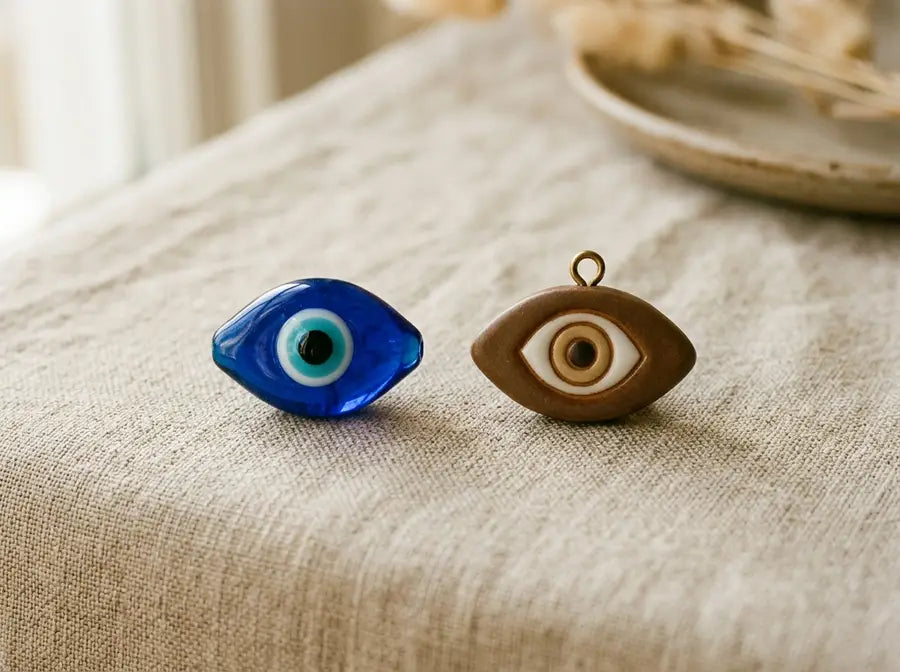
The evil eye belief appears in different regions, languages, and religious settings, so no single object represents every version. In Turkish material culture, however, the nazar boncuğu is strongly identified with an eye-shaped blue glass bead used within a protective folk belief.
A study in Millî Folklor describes that blue form and also records how modern bead makers updated colors, shapes, and presentation while continuing the craft. That distinction matters: a living tradition can change without making every newer color meaning ancient. The blue evil eye guide covers the more established color context.
Where brown fits
A Turkish Ministry of Trade craft reference explains that manganese can produce brown glass. This confirms that brown can exist within the maker's color range, but it does not assign brown a special spiritual function. A material fact and a symbolic interpretation are different kinds of claim.
Modern brown associations come instead from the color's visual language. Some people use it as a reminder to stay present, move steadily, or value simplicity. Others choose it because warm neutrals suit their wardrobe or home. Both uses are reasonable when they are described as personal choices.
How to wear a brown evil eye
Brown works easily with cream, olive, denim, black, gold-toned finishes, and other warm neutrals. It can make the eye motif feel quieter than cobalt blue, bright red, or turquoise. For daily wear, practical details matter more than a dramatic claim about the color.
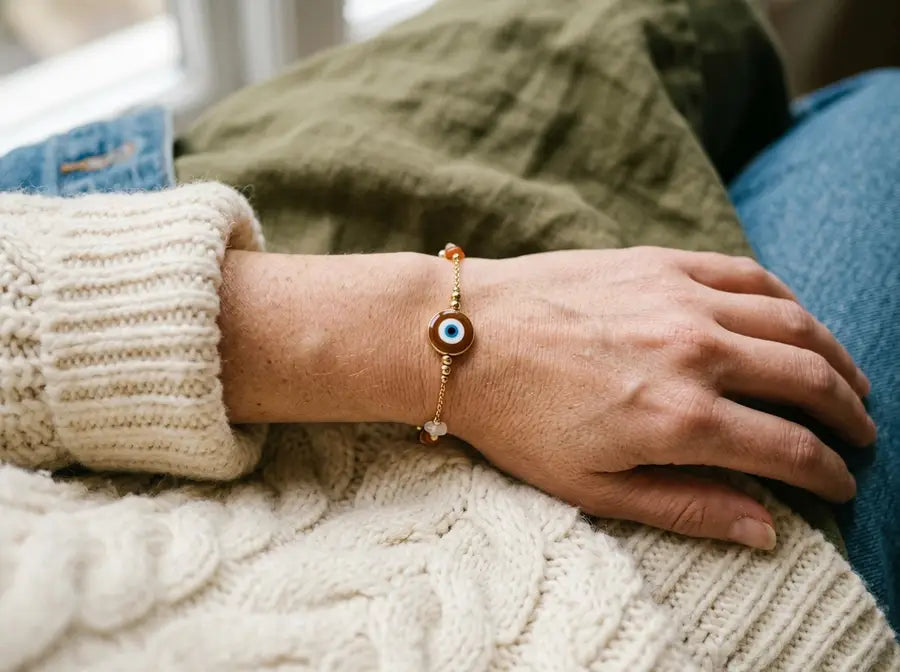
Check the actual listing for dimensions, closure, weight, materials, and care instructions. A bracelet should fit your routine as well as your preferred symbolism. The daily evil eye bracelet guide explains comfort, sizing, and styling choices in more detail.
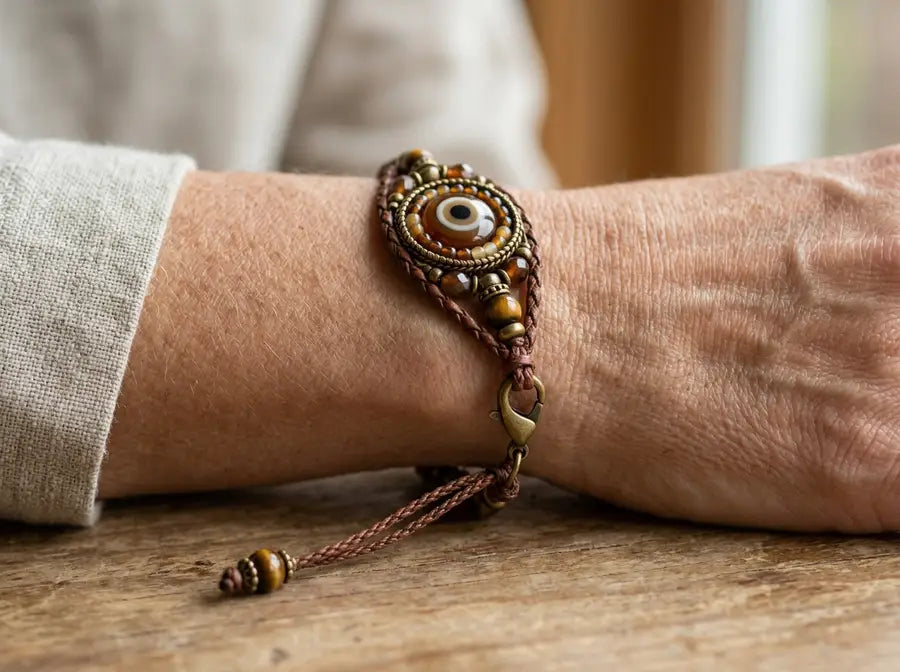
You do not need a prescribed wrist or ritual for the color to feel meaningful. A family or cultural practice may guide some wearers, while others choose placement for comfort and visibility. Avoid turning one person's custom into a rule for everyone.


Evil Eye Beaded Bracelet with Scroll Spacers and Black Cord
$10.75 - $10.99
View


Triple Blue Evil Eye Beaded Bracelet with Paired Chevron Spacers
$10.28 - $10.88
View
 BEST SELLER

Evil Eye Beaded Bracelet with Round Blue Centerpiece and Bead-Tipped Cord
$11.12 - $11.53
View
Brown compared with nearby evil eye colors
Near-color comparisons are useful for styling and personal interpretation. They do not create a traditional hierarchy or a ranking of protective power. Start with the mood each shade gives the object, then choose the distinction that feels clear enough to explain.
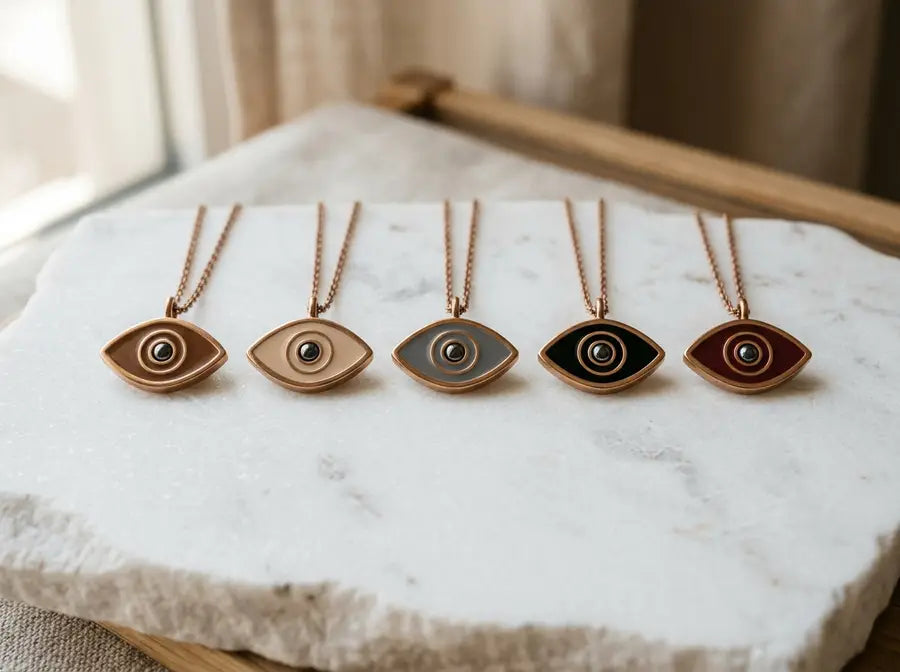
- Brown vs. beige: brown usually feels earthier and more substantial, while beige evil eye meaning leans toward softness, simplicity, and understated warmth.
- Brown vs. grey: brown suggests warmth and natural texture; grey evil eye meaning often reads as cooler, restrained, or neutral.
- Brown vs. black: brown can feel organic and approachable, while black evil eye meaning is often framed around composure and firm boundaries.
- Brown vs. maroon: brown is more muted and natural; maroon evil eye meaning carries a redder, richer sense of resolve.
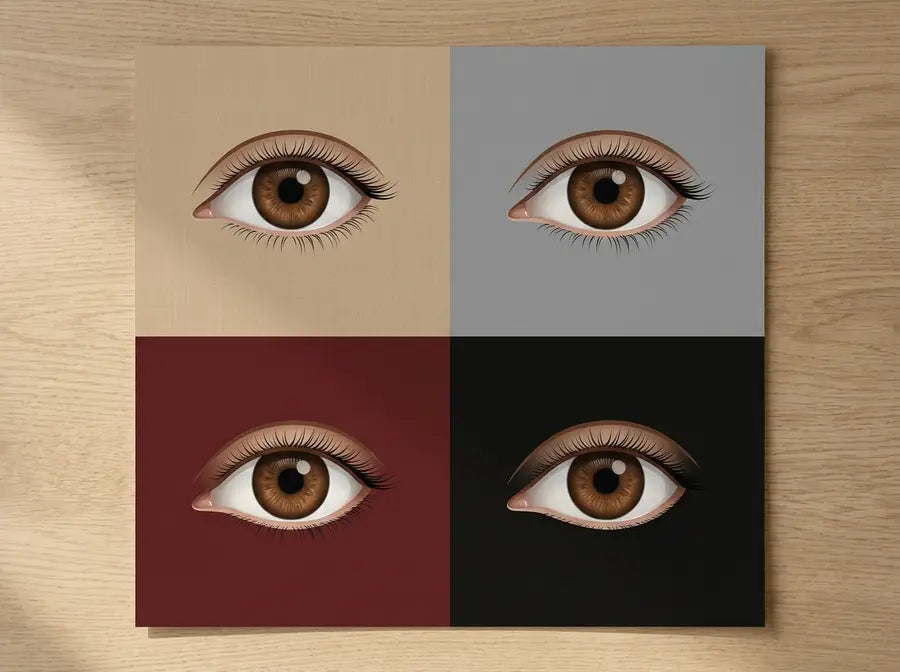
If historical continuity matters most, blue has the strongest documented relationship to the Turkish nazar. If you want a warm neutral associated with steadiness, brown may fit better. The broader evil eye color guide can help when another shade remains in consideration.
Does a brown evil eye protect you?
Within evil eye traditions, amulets have been worn or displayed with the intention of averting a harmful gaze. Museum collections preserve that belief context. They show that people used objects in protective practices; they do not prove that an amulet prevents harm.

There is no reliable basis for claiming that a brown evil eye blocks misfortune, absorbs negative energy, heals a condition, improves a relationship, or changes an outcome. Brown does not make the object stronger or weaker than another color in a measurable way.

Someone may still wear one as a personal cue to slow down, keep perspective, or maintain steady boundaries. That is a symbolic use. It can be meaningful without being presented as a tested effect or a substitute for practical care and sound decisions.
How to choose a brown evil eye
Start by deciding what you want the color to contribute: a connection with tradition, a private intention, or a warm neutral that works with your clothes or room. That answer keeps a product description or social-media chart from assigning a meaning you do not share.
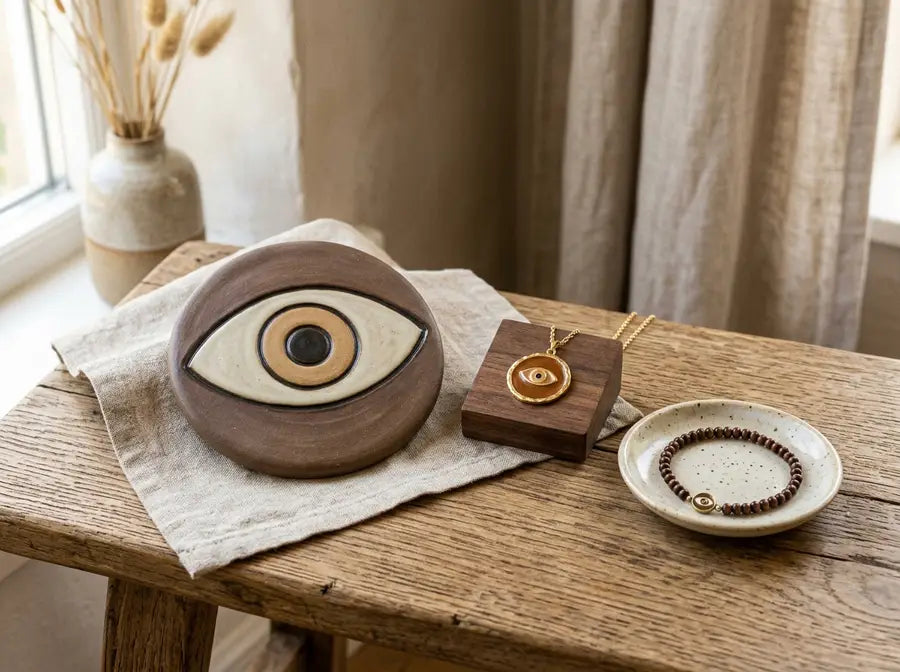
- Set the context. Decide whether the piece is for daily wear, occasional styling, home display, or a gift.
- Compare the shade. Dark chocolate brown creates more contrast; tan or amber-brown feels lighter. Treat these as visual differences, not separate powers.
- Check the real object. Use verified listing details and photographs for materials, size, finish, care, and availability.
- Name the meaning honestly. “I associate this with steadiness” is clearer than claiming the object will protect or heal someone.
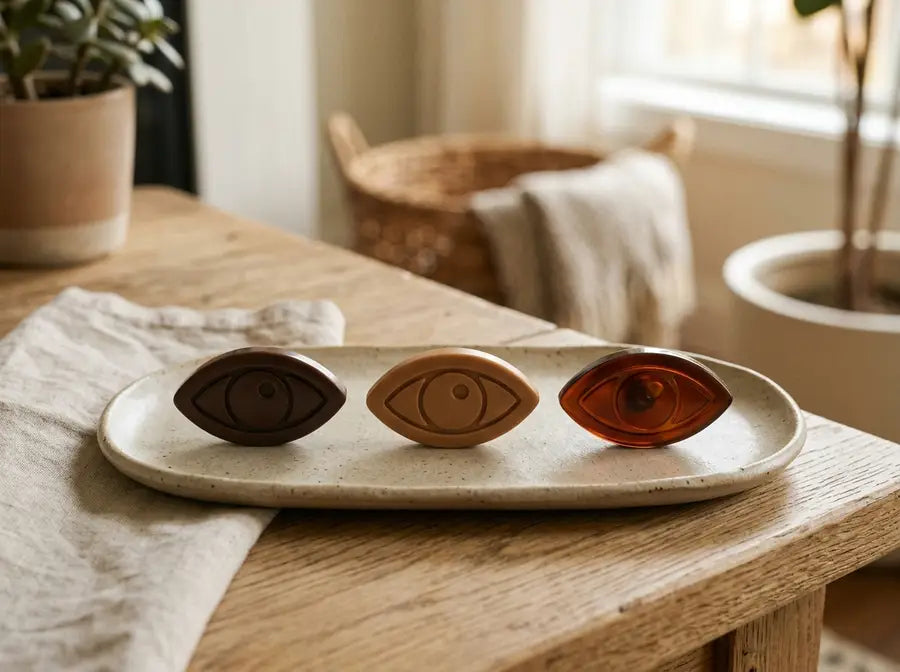
A good choice aligns appearance, practical details, and stated meaning. If none of those factors points to brown, another shade may be more natural. Color is a way to personalize the motif, not a test you can fail.
55
Products
Evil Eye Home Decor
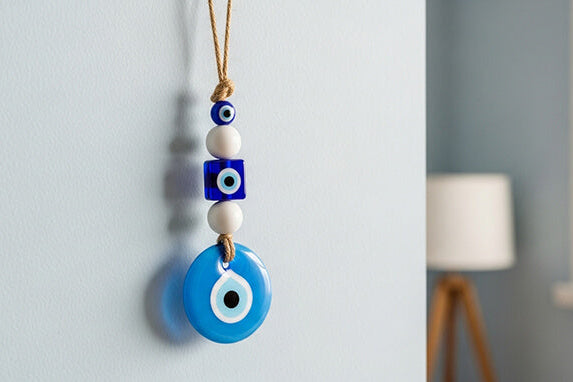
Shop Evil Eye home decor, from wall hangings and decorative accents to stylish pieces for shelves, tables, and everyd...
Explore
178
Products
Evil Eye Jewelry
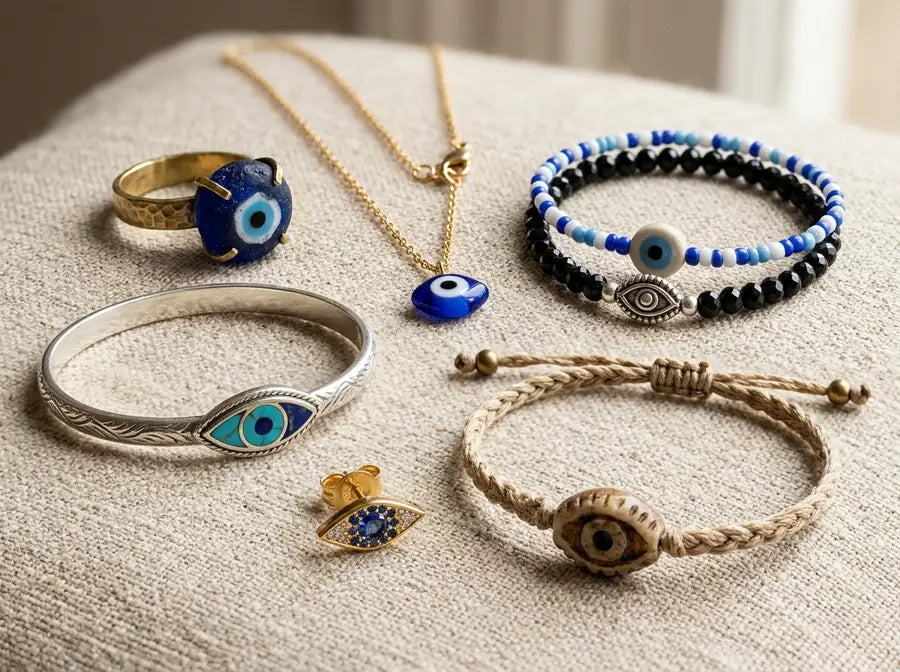
Shop Evil Eye jewelry in symbolic necklaces, bracelets, rings, earrings, pendants and charm styles for everyday layer...
ExploreDisplaying or gifting a brown evil eye
Using the motif at home
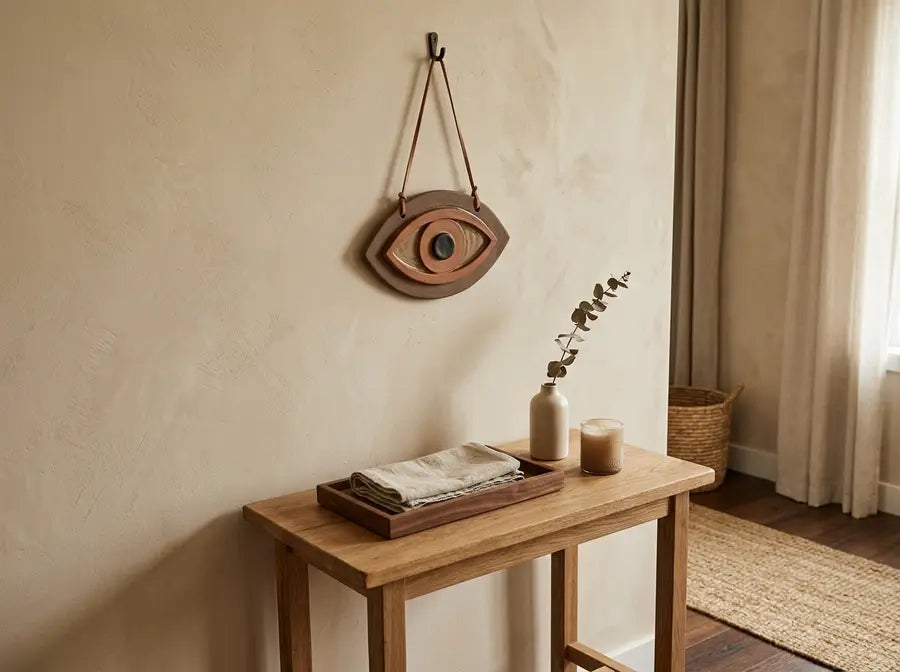
In a home, a brown eye motif can suit an entryway, desk, reading area, or neutral gallery wall. Choose the location for visibility, scale, and connection to the room rather than expecting the object to produce a guaranteed atmosphere.
Giving one as a gift
A brown evil eye can mark a new home, new job, period of change, or wish for steadiness. A short note can explain that you chose brown for its grounding association while leaving room for the recipient's own beliefs.

Keep the message personal rather than absolute. “I chose this as a reminder of steady support” communicates care without promising luck, safety, or spiritual protection on someone else's behalf.
 UP TO 33% OFF

Evil Eye Knotted Cord Bracelet with Single Eye, Five Eyes or Charm Motifs
$10.68 - $10.83
View


Evil Eye Ring with Beaded Halo and Colored Iris
$10.95
View


Hamsa Hand Crystal Display Shelf with Evil Eye and Celestial Patterns
$16.79
View
Brown evil eye FAQ
What does a brown evil eye symbolize?
In contemporary interpretations, it often symbolizes grounding, stability, reliability, practicality, or connection with earthy colors. These meanings are flexible and personal rather than one ancient definition shared across cultures.
Is the brown evil eye traditional?
Brown glass can be made within a living bead craft, but the Turkish nazar is most clearly documented as an eye-shaped blue glass bead. Brown is better described as a modern color variation unless a specific maker or community documents a local interpretation.
Does brown mean protection from nature?
No reliable traditional source establishes “protection from nature” as a universal brown evil eye meaning. Brown may remind someone of soil, wood, or the outdoors, but that visual association does not create a proven protective function.
Can you wear a brown evil eye every day?
Yes, if the actual item's size, comfort, fastening, and care requirements suit daily use. Wearing it regularly can support a personal routine or style preference, but frequency does not increase or prove a supernatural effect.
Is a brown evil eye a good gift?
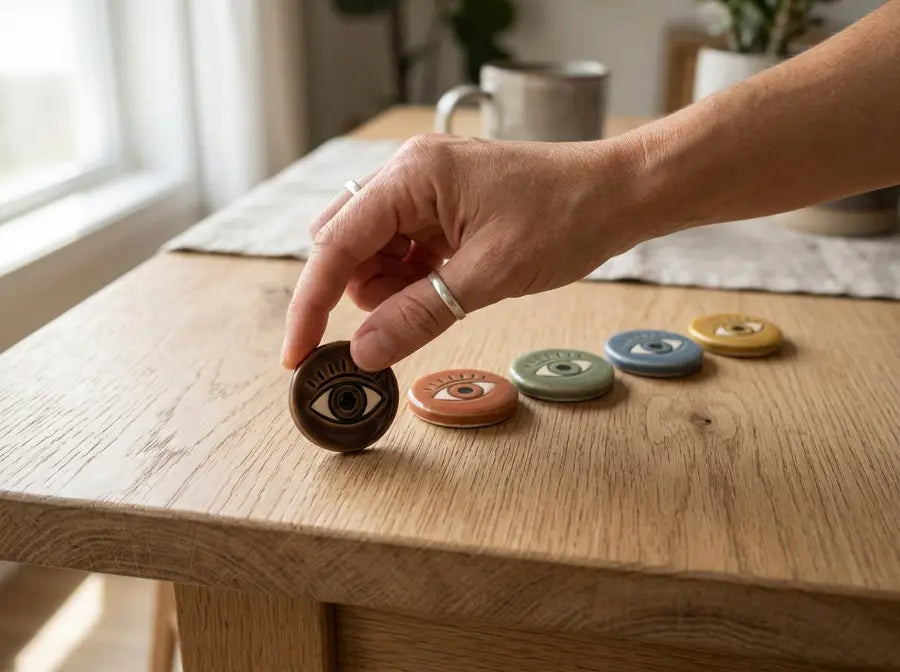
It can suit someone who likes warm neutrals or connects with ideas such as steadiness and resilience. Explain your intention and leave room for the recipient's beliefs rather than presenting the gift as a guarantee.
Choosing brown with context
The brown evil eye makes the most sense as a modern, earth-toned interpretation of a much older symbol. It can represent steadiness, practicality, or a return to what feels solid, while the blue glass eye remains the clearest traditional reference point in Turkish nazar culture.
Choose brown because its appearance and personal association fit you, not because someone promises a result. That approach respects the historical distinction and gives the object an honest place in daily life.