

Back to Evil Eye
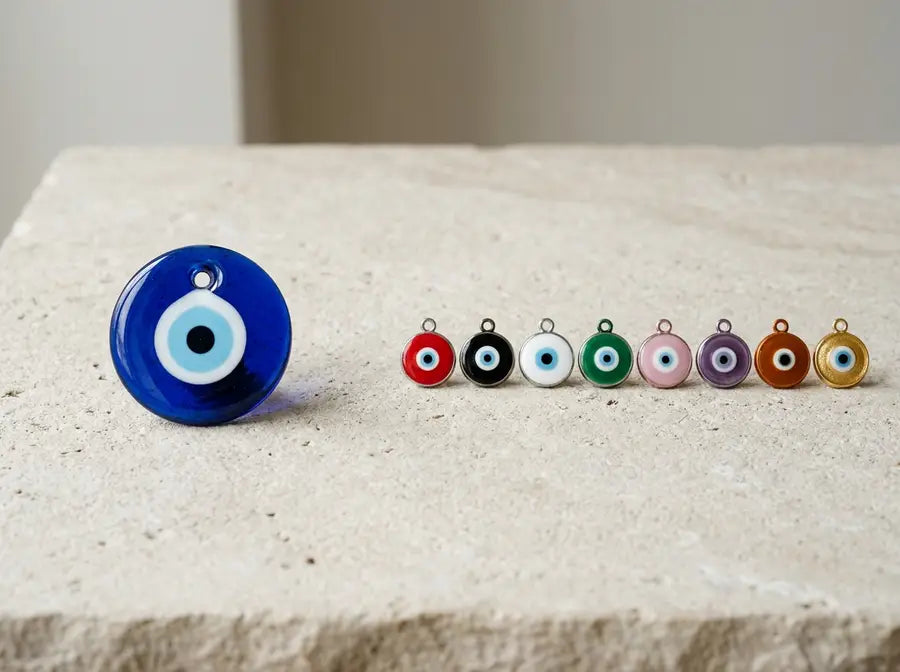
In contemporary guides, different evil eye colors are commonly linked with different intentions. Blue is the traditional choice for protection; black suggests boundaries, white clarity, red courage, green growth, pink affection, and purple reflection or spiritual focus.
These meanings are best read as modern symbolic associations, not one ancient color code shared by every culture. Use the quick reference below to identify a color, then compare the context before choosing jewelry, a gift, or decor.
Blue carries the clearest traditional link; the wider palette adds newer symbolic choices rather than one universal code.
Evil eye colors and meanings at a glance
This list is a quick guide to common contemporary associations. The eye-shaped charm keeps its broader protective meaning across the palette, while each color adds a different mood or intention. Follow any color link for a more detailed explanation and examples of how that shade is used.
- Blue evil eye: traditional protection, watchfulness, and calm.
- Black evil eye: firm boundaries, composure, and protection from unwanted attention.
- White evil eye: clarity, simplicity, and a fresh perspective.
- Red evil eye: courage, vitality, and active protection.
- Turquoise evil eye: calm protection, open expression, and balance.
- Green evil eye: growth, renewal, and emotional balance.
- Silver evil eye: reflection, clarity, and quiet dignity.
- Gold evil eye: prosperity, confidence, and warmth.
- Yellow evil eye: optimism, mental brightness, and fresh energy.
- Purple evil eye: wisdom, intuition, and inward focus.
- Lavender evil eye: gentleness, grace, and calm reflection.
- Pink evil eye: affection, compassion, and emotional openness.
- Grey evil eye: neutrality, stability, and emotional balance.
- Maroon evil eye: grounded courage, restraint, and steady boundaries.
- Orange evil eye: creativity, enthusiasm, and social energy.
- Brown evil eye: grounding, endurance, and practical stability.
- Beige evil eye: simplicity, quiet, and understated protection.
- Multicolored evil eye: layered intentions or a personal mix of meanings.
Are evil eye color meanings traditional?
The phrase “evil eye” can describe both a harmful gaze and the eye-shaped charm used against it. Here, color refers to the charm or bead. The wider meaning of the evil eye comes from beliefs about envy, attention, and protection that vary across regions and communities.
Why blue comes first
The cobalt-blue nazar boncuğu has the clearest traditional color identity. Turkish sources and collections describe a blue glass eye bead used as a visible protective object, while related blue charms appear across Mediterranean and Middle Eastern settings. That evidence supports blue more strongly than a fixed chart for every modern shade.
Traditional examples often combine dark blue, white, light blue, and black in concentric circles. The recognizable eye pattern matters alongside the color: it makes the protective sign easy to see on jewelry, at an entrance, in a vehicle, or near an object people wish to guard.
Where modern color meanings fit
Today, makers and wearers use a much wider palette. Research on Turkish evil eye beads notes the spread of different colors while blue remains culturally central. Meanings such as pink for affection or orange for creativity are therefore better understood as contemporary symbolic layers, not rules inherited unchanged from antiquity.
That distinction does not make the newer meanings useless. A color can still help someone name an intention, choose a thoughtful gift, or match a charm to a personal space. It simply means two shops, families, or communities may describe the same shade differently without either supplying a universal code.
When two color guides disagree, look first at what they share: the protective eye motif and blue’s established place in nazar tradition. Then treat each extra color label as the maker’s or wearer’s interpretation. This keeps historical evidence separate from personal symbolism and makes comparisons clearer.
That context is especially useful for gifts. You can explain that the charm belongs to a long protective tradition while the selected shade adds a present-day message chosen for the recipient. The meaning remains thoughtful without pretending every modern color has a single ancient definition.
Choose a color by the intention it represents
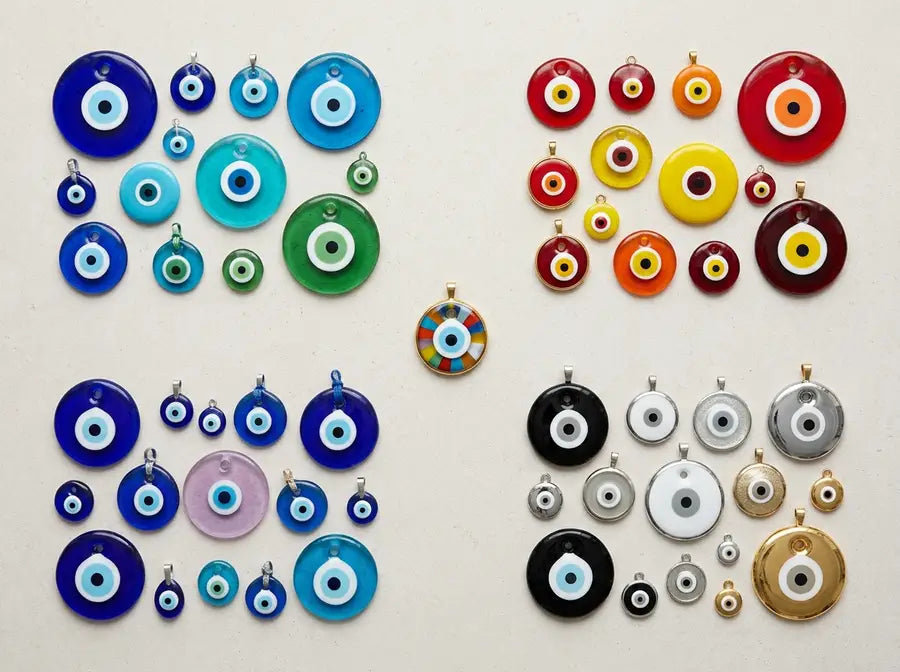
Once the traditional and modern layers are separated, the palette becomes easier to use. Start with the quality you want the charm to represent, then compare neighboring shades. The useful distinction is usually tone and emphasis, not a claim that one color has more power than another.
Classic protection and clear boundaries
Choose blue when tradition and general protection matter most. Turquoise keeps that protective association but feels lighter and more open. Black is often used for firm boundaries and composure, while white shifts the emphasis toward clarity, simplicity, and a clean visual start.
Courage, movement, and motivation
Red, maroon, orange, and yellow form the warmer part of the palette. Red suggests direct courage; maroon makes that courage steadier and more restrained. Orange is commonly linked with creativity and sociability, while yellow works as a reminder of optimism and alert, forward-looking energy.
Growth, affection, and inward focus
Green is often chosen for growth and balance, while pink brings affection and compassion to the protective symbol. Purple turns inward toward wisdom or spiritual reflection; lavender softens that mood with calm and grace. These meanings describe intentions and emotional tone, not guaranteed changes in a person’s life.
Grounding, reflection, and prosperity
Brown, beige, and grey are quiet choices associated with stability, simplicity, neutrality, and staying grounded. Silver adds a reflective quality, while gold is commonly linked with prosperity and confidence. Treat wealth language as a symbolic wish or reminder, never as a promise of financial results.
What a multicolored evil eye represents
A multicolored evil eye can hold several associations at once, or simply celebrate the full palette without assigning a separate task to every shade. It suits someone who values flexibility, wants a less formal choice, or prefers to let the shared eye motif carry more meaning than any single color.
Does color change what an evil eye does?
Color changes the message people attach to the charm; it does not create a measurable tier of protection. The eye motif carries the older protective role, while color adds personal tone. A blue, black, pink, or multicolored piece can be equally meaningful when its context is understood.
Is there a strongest evil eye color?
There is no verified strongest evil eye color. Blue has the clearest traditional association, but that is a matter of cultural history rather than a tested power ranking. If someone describes another color as stronger, read the statement as a belief or personal practice, not a result that can be guaranteed.
What about healing, luck, or prosperity?
Healing, health, luck, and prosperity appear often in modern color charts. They are safest understood as hopes attached to a symbol. An evil eye charm cannot promise medical improvement, safety, or wealth, and it should never replace practical care, professional help, or sound financial decisions.
How to choose an evil eye color
A useful choice should make sense in both symbolism and daily use. If cultural continuity matters most, begin with blue. If the charm is a personal reminder, choose the association that feels specific enough to be useful without treating a color chart as a rulebook.
- Start with context. Decide whether tradition, personal intention, a gift message, or visual preference matters most.
- Compare nearby meanings. Red and maroon both suggest courage, but red feels active while maroon feels restrained; blue and turquoise both suggest protection, but turquoise reads lighter.
- Match the setting. A visible bracelet can act as a daily cue, while entryway decor may place more emphasis on welcome, boundaries, and the attention entering a home.
- Choose a color you will keep using. Respectful, consistent use matters more than selecting a shade because someone called it the most powerful.
You can compare the full store palette on the Shop by Colors page. For a wearable piece, the daily evil eye bracelet guide covers comfort and use. For a room or entryway, see the guide to using evil eye decor at home.
Compare color across real formats
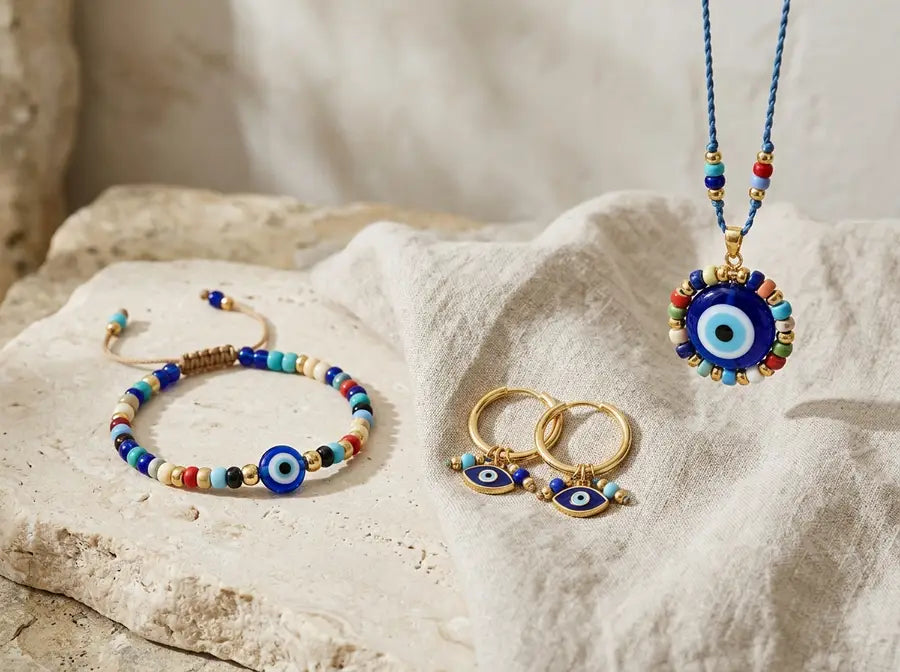
Once a color feels right, compare how it appears on an object you will actually use. A bracelet keeps the motif visible during the day, earrings make it part of an outfit, and a hanging pendant turns the palette into a room or entryway accent.


Evil Eye Mesh Bracelet with Eyelash Detail and Open Eye Accent
$12.15
View


Evil Eye Cord Bracelet with Faceted Side Beads and Gold Tone Spacers
$11.96 - $12.04
View


Evil Eye Braided Cord Bracelet with Hamsa or Sunburst Charm
$11.37 - $11.46
View
Browse jewelry and home decor
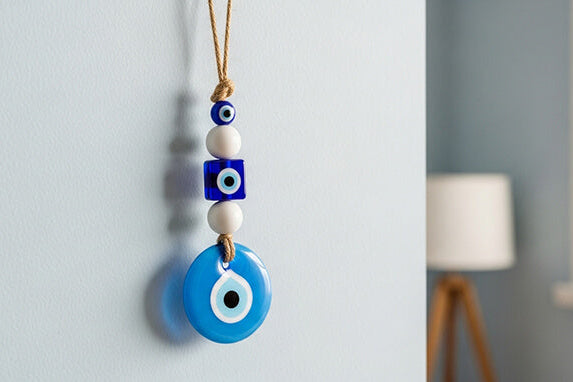
Product examples help compare a few formats, while collections provide a wider path when size, finish, placement, and color availability matter. Use the jewelry collection for wearable options and the home decor collection for wall, shelf, entryway, or hanging formats.
55
Products
Evil Eye Home Decor
Shop Evil Eye home decor, from wall hangings and decorative accents to stylish pieces for shelves, tables, and everyd...
Explore
178
Products
Evil Eye Jewelry
Shop Evil Eye jewelry in symbolic necklaces, bracelets, rings, earrings, pendants and charm styles for everyday layer...
ExploreEvil eye color questions
What is the most traditional evil eye color?
Blue, especially cobalt or deep blue, has the strongest documented connection with the familiar nazar bead. Traditional designs commonly add white, light blue, and black rings around the center. Other colors are widely used today, but they do not all carry the same depth of historical evidence.
What do evil eye bracelet colors mean?
Evil eye bracelet color meanings generally follow the same contemporary associations: blue for protection, red for courage, green for growth, pink for affection, and black for boundaries. The bracelet format keeps the symbol close and visible, but wearing it does not make those outcomes automatic.
Can you wear more than one evil eye color?
Yes. A multicolored piece or a group of charms can combine several personal intentions, and there is no universal rule requiring one shade at a time. Keep the combination readable to you: it may represent several qualities, a changing season of life, or simply a color palette you enjoy.
Does the same color mean the same thing everywhere?
No. Evil eye belief crosses many regions, and color symbolism also changes by culture, community, maker, and period. Blue has the clearest shared history around the nazar, but modern interpretations of pink, purple, orange, grey, and other shades should be read with their source and context in mind.
Can you choose an evil eye only for its appearance?
Yes. Some people use the symbol within a living tradition, while others appreciate its design or keep it as a cultural reminder. Choosing by appearance is reasonable when the symbol is treated respectfully and its background is not replaced with claims that every color has one ancient, guaranteed effect.
Choose a color with context
Choose blue when you want the strongest link to the traditional protective bead. Choose another shade when its contemporary association gives the charm a clearer personal message. In either case, let context, use, and visual preference guide the decision rather than a promise that one color controls health, luck, or outcomes.
The most useful evil eye color meaning is one you can explain honestly: where the older symbol comes from, what the chosen shade suggests today, and where personal interpretation begins. That approach keeps the guide practical while leaving room for cultural difference and individual choice.
