

Back to Evil Eye
Mal de ojo means “evil eye” in Spanish: the belief that an envious, admiring, or intense look can bring harm, discomfort, or bad luck. In English, mal de ojo points less to a literal eye than to the meaning of the evil eye: the harmful force carried by a gaze in many Latin American, Mediterranean, Middle Eastern, and related traditions.
People often ask what is mal de ojo because the phrase can name both the belief and the condition it is thought to cause. Its meaning sits close to family life: protection, vulnerability, envy, blessing, and the small rituals people use when someone they love feels exposed.
Mal de ojo holds envy and protection together: a harmful gaze may unsettle a person, while family rituals and symbols restore care and safety.
Quick answer: what is mal de ojo?
Mal de ojo is the Spanish name for the evil eye belief. In plain English, mal de ojo meaning refers to the idea that a person can be affected by an envious, jealous, admiring, or unusually intense gaze. The phrase may describe the look itself, the harm linked to it, or the protective customs used to guard against it.
Across Latin American, Mediterranean, Middle Eastern, and other traditions, mal de ojo is not just a superstition about eyesight. It is a cultural way to speak about vulnerability, sudden discomfort, bad luck, and the need for protection from family or community.
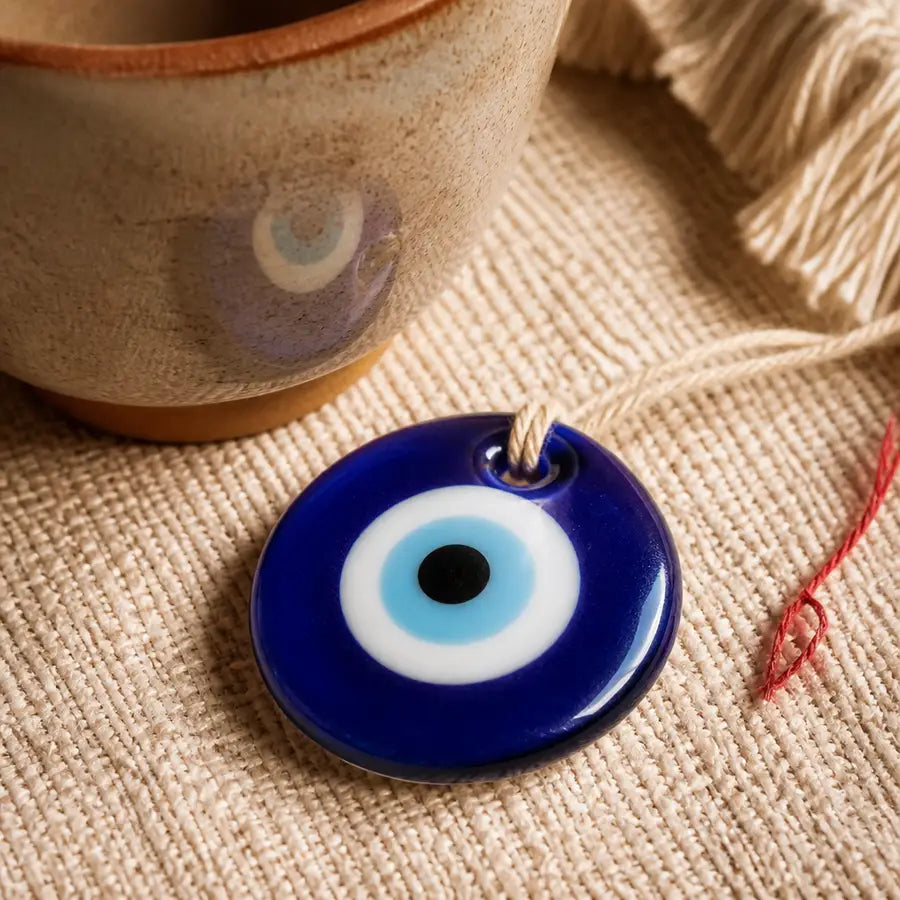
Envy matters because admiration can feel charged when it falls on someone who seems especially fortunate, healthy, beautiful, or loved. Within this belief, a gaze may carry unwanted force even when the person looking means no harm.
Children are often described as especially vulnerable, though adults may also worry about mal de ojo after sudden fatigue, unease, headaches, or a short streak of misfortune. The language changes from household to household, shaped by region, religion, and family memory.
- Basic meaning: Mal de ojo means “evil eye” or “bad eye,” often searched as evil eye in Spanish.
- Common cause: Envy, jealousy, strong praise, or intense admiration are familiar cultural explanations for how it begins.
- Common concern: People may connect it with misfortune, illness, fatigue, restlessness, or unexplained unease in daily life.
- Common protection: Amulets, red bracelets, eye symbols, prayers, rituals, and home charms are often used for protection.
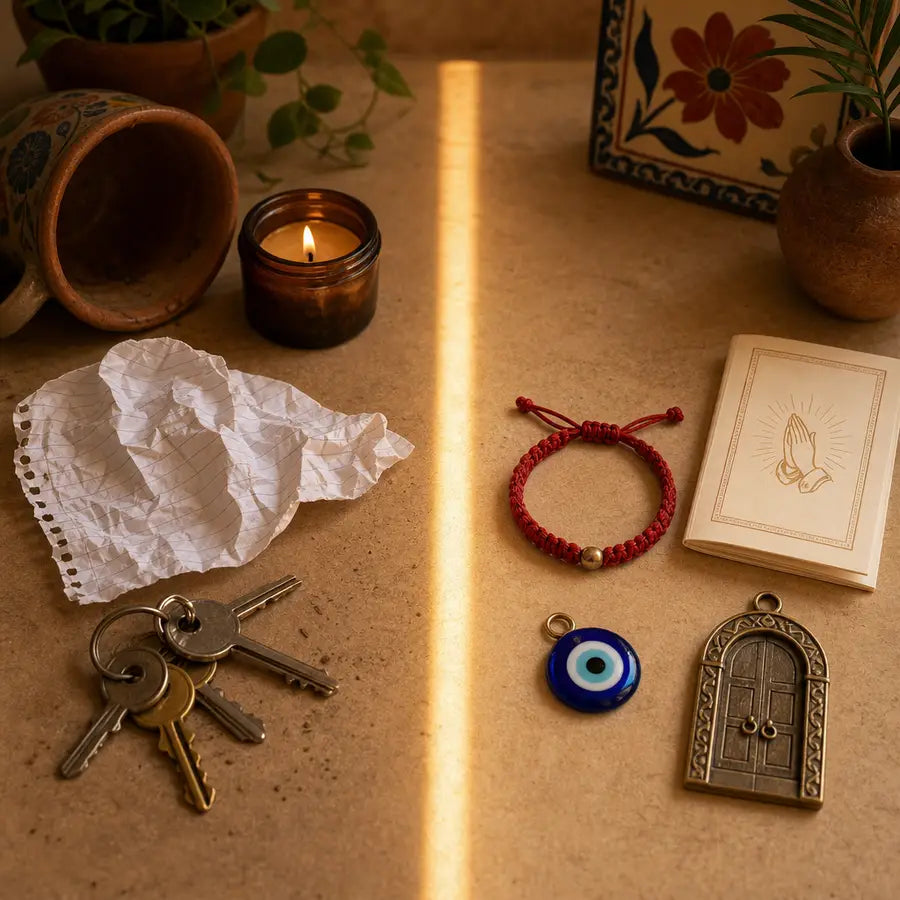
Mal de ojo is best understood as a cultural and spiritual belief, not a medical diagnosis. If someone has persistent pain, fever, severe fatigue, anxiety, or other worrying symptoms, medical care should come first. Cultural practices can still bring comfort, identity, and family support alongside practical health decisions.
Mal de ojo in English and evil eye in Spanish
Mal de ojo in English is usually translated as “evil eye,” though the phrase carries more than a neat word-for-word meaning. In Spanish-speaking families and communities, it can name a harmful gaze, the condition blamed on that gaze, and the customs used for protection.
What does mal de ojo mean in English?
The literal translation of mal de ojo is “bad eye” or “evil eye.” Culturally, mal de ojo meaning points to the belief that envy, admiration, or a strong look can affect a person’s luck, health, or emotional balance. The phrase works as both translation and cultural shorthand.
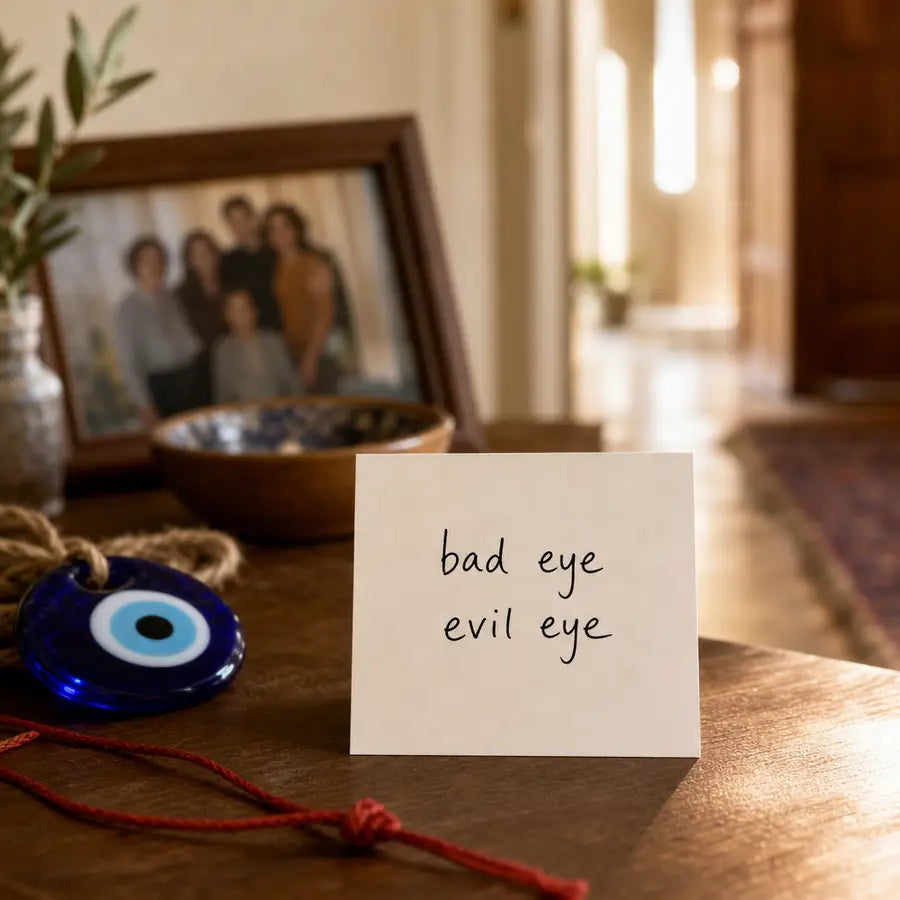
Is evil eye in Spanish called mal de ojo?
Yes. The common way to say evil eye in Spanish is mal de ojo. You may hear it around babies, compliments, illness, jealousy, or protection, depending on the household.
In English conversations, people often use “evil eye” for the wider belief and “mal de ojo” for the Spanish or Latin American context.
Is mal ojo the same as mal de ojo?
Mal ojo is sometimes used casually, especially by bilingual speakers shortening the phrase, but mal de ojo is the standard expression. The word “de” matters because it links the harm to the eye. Still, everyday speech is not always tidy, and context often matters more than correction.
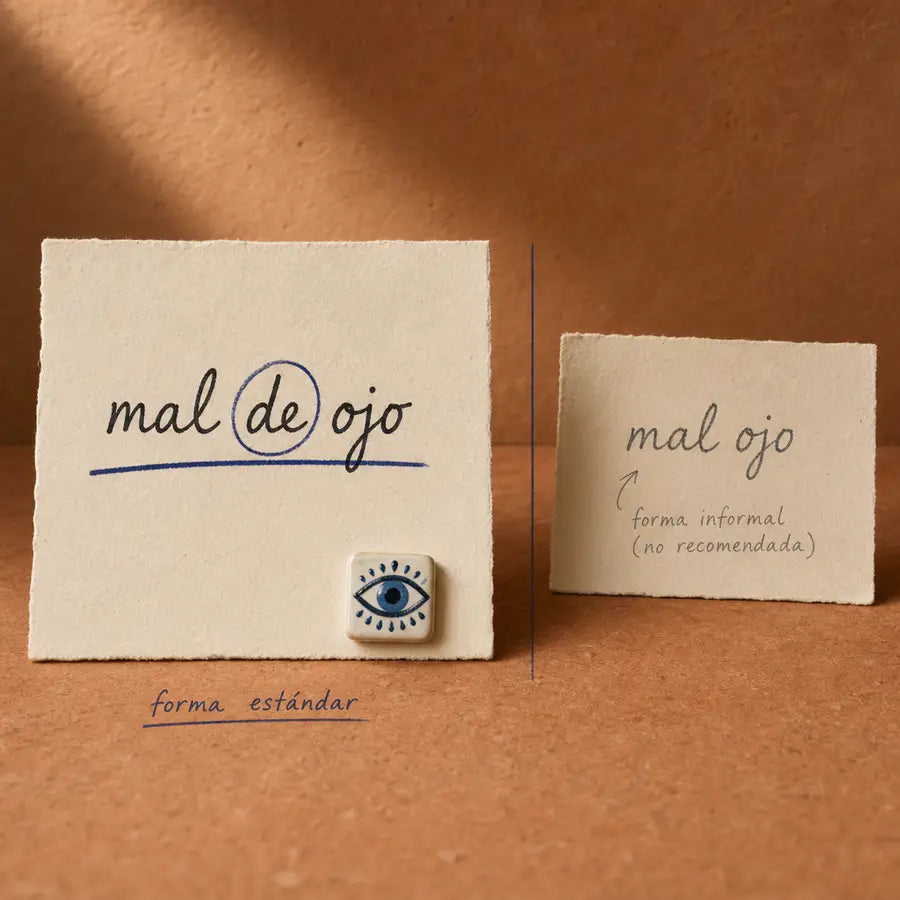
Wording shifts as beliefs move through migration, religion, family memory, and ordinary conversation. One family may say mal de ojo, another may say the evil eye, and another may use a local nickname. Most of the time, they are circling the same concern: protection from a harmful or envious gaze.
Where mal de ojo comes from
Mal de ojo belongs to a much older history often discussed as the origin of the evil eye, with beliefs found around the Mediterranean, North Africa, and parts of the Middle East. The Spanish phrase came later, but the idea behind it is ancient: a gaze shaped by envy, praise, or power could disturb a person’s well-being.
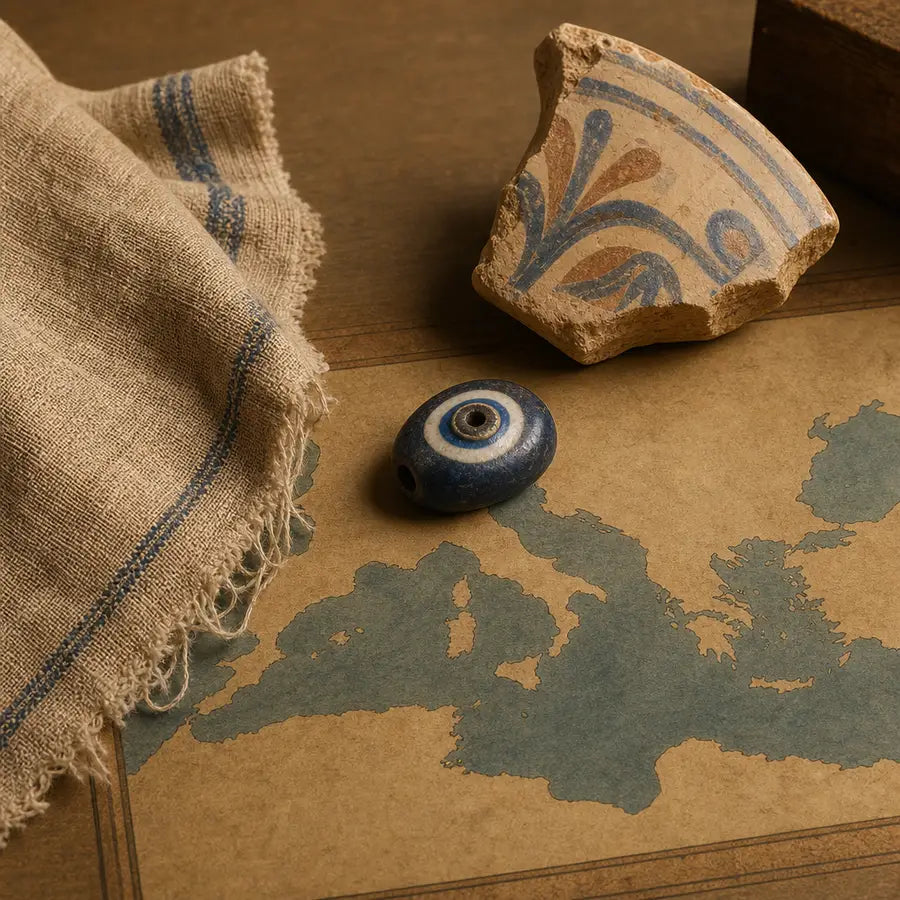
Ancient Mediterranean and North African roots
Ancient texts and objects suggest that evil eye ideas circulated in Egypt, Mesopotamia, Greece, and North Africa, including Carthaginian and Phoenician settings. Scholars do not treat these traditions as one single origin story. It is more accurate to see related beliefs developing across trade routes, cities, households, and religious practices.
The evil eye symbol appeared through protective eye motifs, amulets, painted marks, and spoken warnings that helped people manage fear of envy or sudden misfortune. In Greek and Roman worlds, the harmful gaze was often tied to jealousy, excessive admiration, or social imbalance, themes that still shape mal de ojo meaning today.
How the belief entered Spanish tradition
The belief entered Spanish tradition through the long, layered history of the Iberian Peninsula. Roman rule brought Mediterranean evil eye ideas into local life, while later Christian, Jewish, and Muslim communities used prayers, charms, and household protections in their own ways.
Over time, Spanish speakers used mal de ojo to name both the harmful look and the condition blamed on it. The phrase brought an older evil eye belief into everyday speech, especially around children, illness, compliments, and protection inside the family.
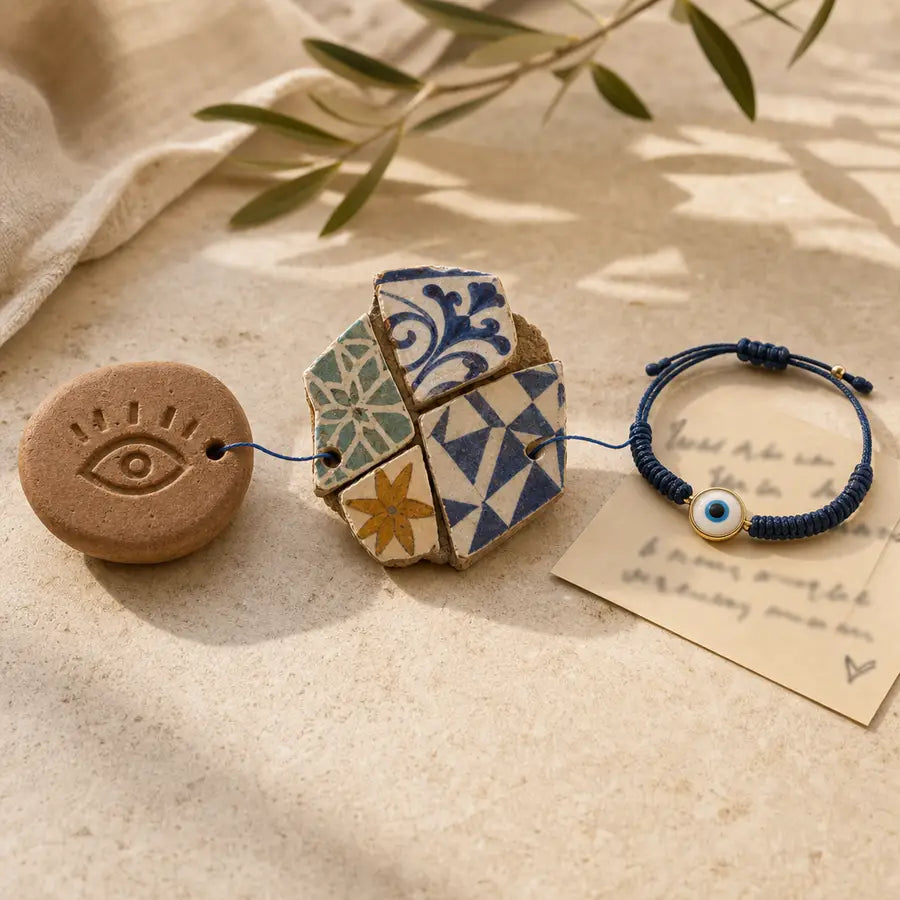
As Spanish-speaking communities moved through Latin America, the Caribbean, and later diaspora neighborhoods, mal de ojo traveled with family memory, religion, and local healing customs. Its forms changed by region: some homes used red bracelets, others prayers, egg cleansings, saints, or eye-shaped charms. The concern remained recognizable.
How mal de ojo works in cultural belief
In cultural belief, mal de ojo works through the gaze as a social force. A look may carry envy, admiration, jealousy, or attention that feels too strong for the person receiving it. So the evil eye in Spanish is less about eyesight than about how people manage vulnerability in daily relationships.
Why babies and children are often mentioned
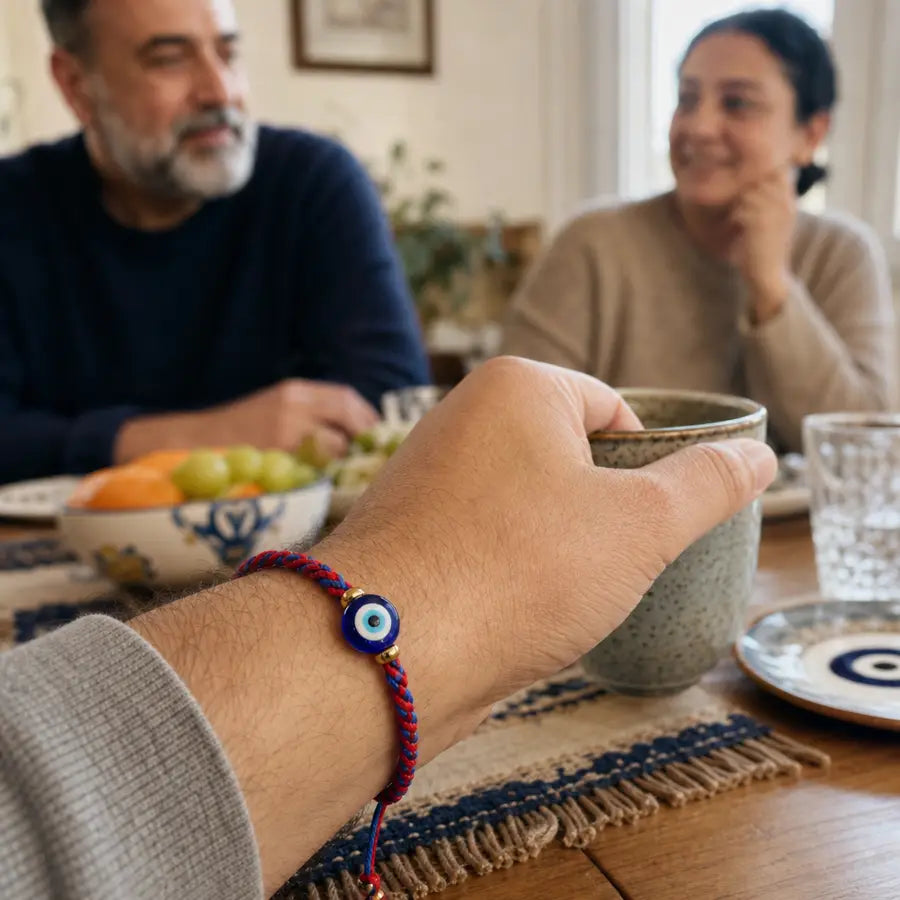
Babies and young children are often named because they are seen as especially open to outside influence. Families may worry when a child receives repeated praise, attention from strangers, or admiring looks without a protective word or gesture. These beliefs express care and caution, not medical certainty.
Why admiration can be treated carefully
Admiration can be handled gently because praise may blur into envy in mal de ojo belief. Someone might touch the child, say a blessing, add “God bless,” or soften a compliment with a protective phrase. The point is not to reject kindness, but to keep praise socially safe.
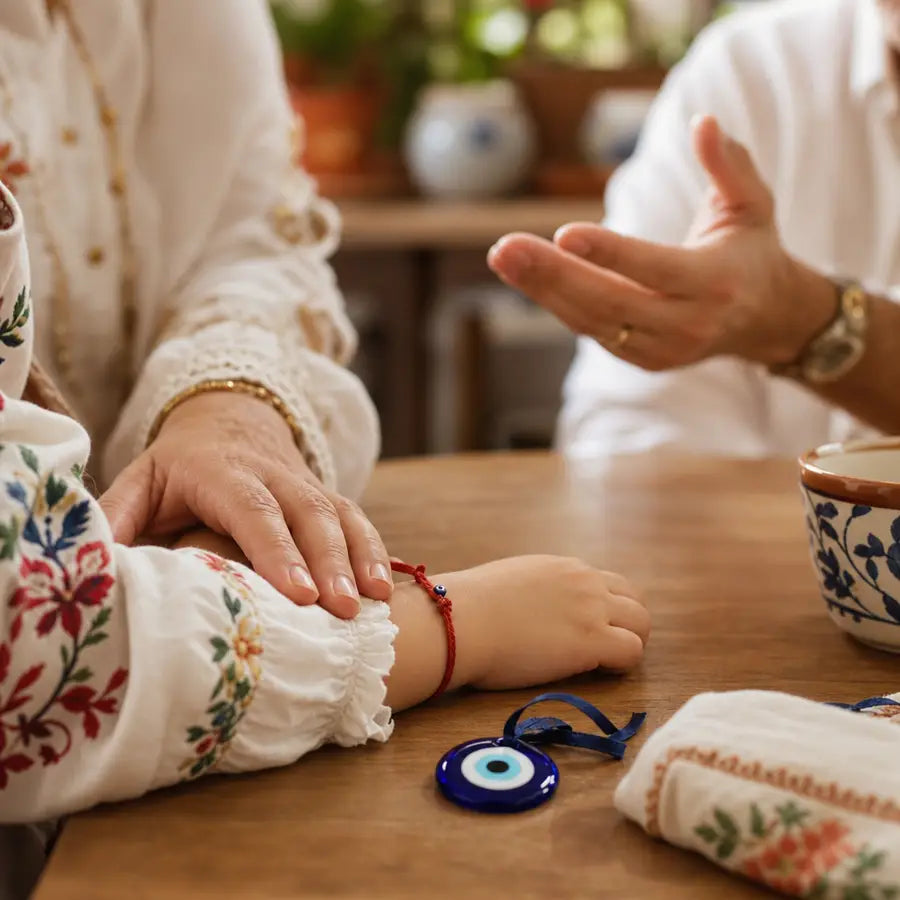
Practices around mal de ojo vary by family, region, religion, and personal belief. One household may use a red bracelet, another may rely on prayer, and another may treat the idea as symbolic rather than literal. Adults may also mention mal de ojo symptoms in adults, though health concerns still call for practical care.
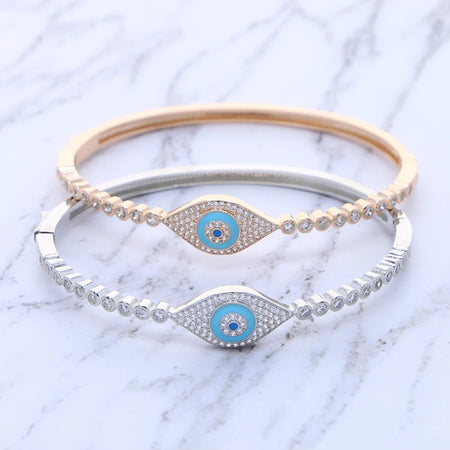
Elegant Rose Gold Evil Eye Bracelet with CZ Crystals and Hamsa Hand Charm for Women
$19.78
View
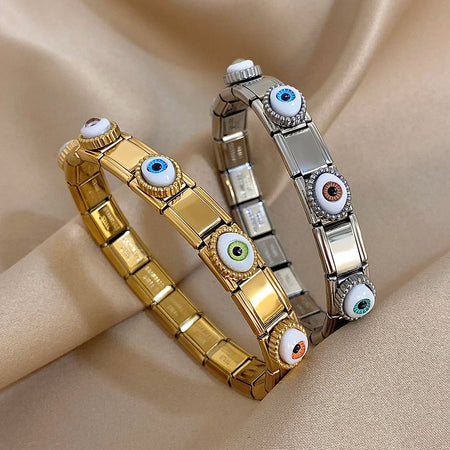
Waterproof Stainless Steel Evil Eye Cuff Bracelet for Women and Men Colorful Protective Talisman Bangle
$18.34 - $19.36
View
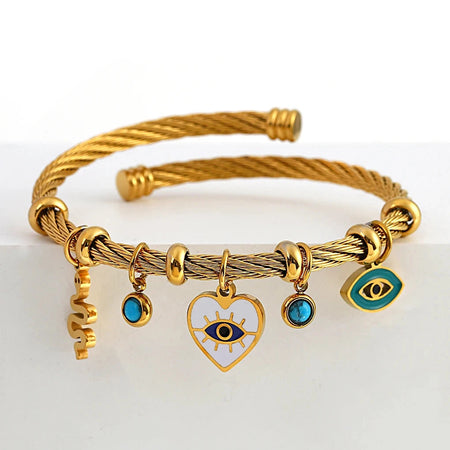
Flashbuy Enamel Snake Heart Evil Eye Stainless Steel Charm Bangles Bracelets for Women Gold Plated Waterproof Fasion Jewelry
$13.48 - $13.49
View
When choosing evil eye jewelry, context matters more than trend. A bracelet, charm, or necklace can carry protection, memory, or cultural identity, especially when worn with respect for its meaning. If you give one as a gift, explain the intention rather than treating the symbol as decoration alone.
Mal de ojo symptoms in adults and children
Mal de ojo symptoms are best read as cultural signs reported within a belief system, not as a medical diagnosis. Families may use the phrase when discomfort, mood changes, or bad luck appear suddenly and seem tied to envy, praise, or an intense gaze.

What are mal de ojo symptoms in adults?
Adults who describe mal de ojo often mention headaches, heavy fatigue, irritability, low mood, restless sleep, or a vague feeling that something is off. Some also connect it with a short run of misfortune after public attention, conflict, or admiration. The meaning depends on family tradition and personal belief.
- Headaches or pressure around the temples, forehead, or eyes, especially when the discomfort feels sudden or difficult to explain.
- Unusual tiredness that feels heavier than normal fatigue and appears after attention, praise, or a tense social encounter.
- Sudden low mood, emotional heaviness, irritability, or feeling unusually sensitive without a clear everyday cause.
- Restless sleep, repeated waking, uneasy dreams, or feeling unrefreshed after a night that should have been restful.
- A run of misfortune, delays, arguments, or small accidents that family members interpret as culturally linked to mal de ojo.

How symptoms are described in children
In family tradition, children may be described as crying more than usual, sleeping poorly, running a fever, losing appetite, or having stomach upset after receiving intense attention. These signs are treated with special concern because children are seen as more vulnerable, but ordinary childhood illness should not be brushed aside.
Seek medical care first for high fever, breathing trouble, dehydration, severe pain, confusion, persistent vomiting, or symptoms that worsen. Cultural practices around mal de ojo can comfort a family, but serious or lasting symptoms in adults or children need practical health attention.
How people protect against mal de ojo today
Modern evil eye protection methods often blend family ritual, wearable symbols, and home objects. For some people, these practices are spiritual; for others, they are reminders of care, ancestry, and caution around envy. The most meaningful choices usually come from a known tradition, not from treating the symbol as a trend.
Egg cleansing and curandera traditions
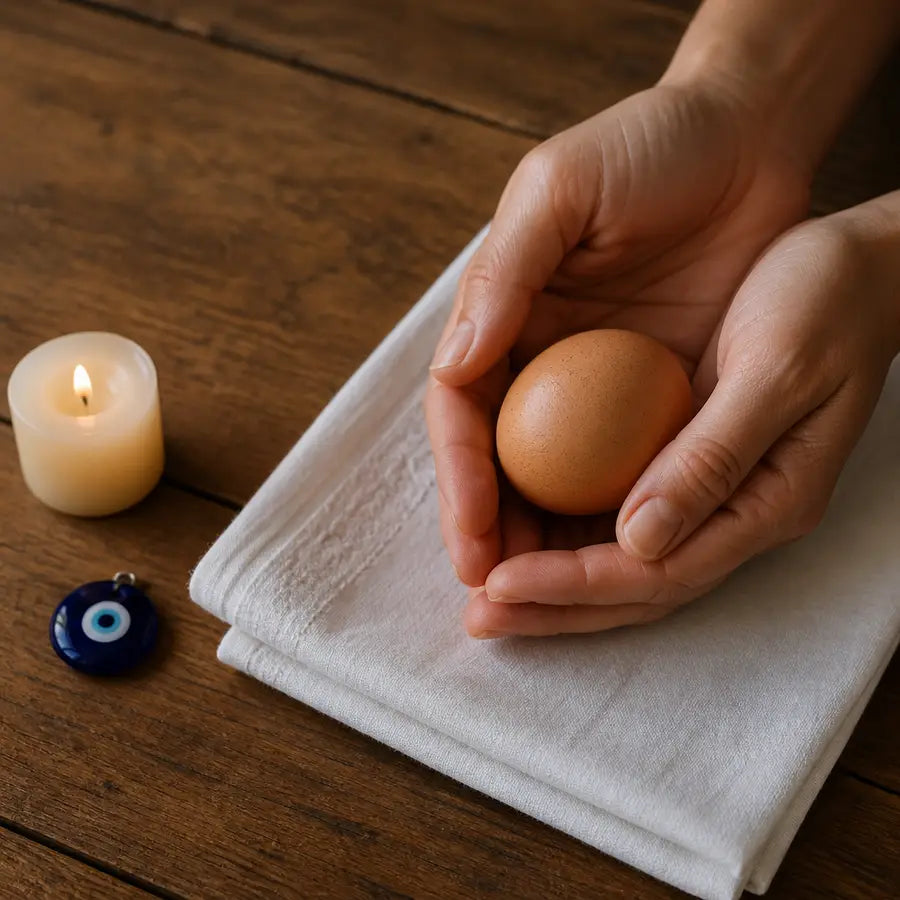
In some Latin American traditions, an egg cleansing, or limpia, is used when a person is thought to be affected by mal de ojo. A curandera, elder, or family member may pass an egg over the body with prayers or protective words. Details vary by region, so it is better to describe this as a folk healing custom than a fixed ritual with one universal method.
Wearing mal de ojo bracelets, necklaces, and earrings
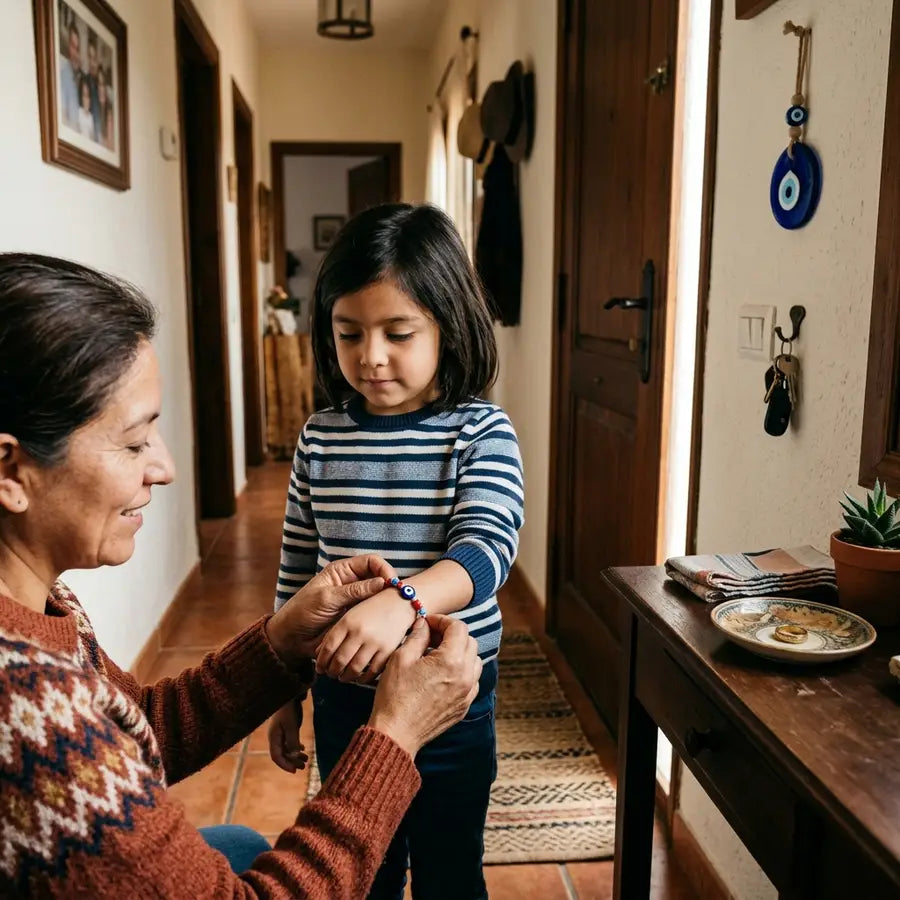
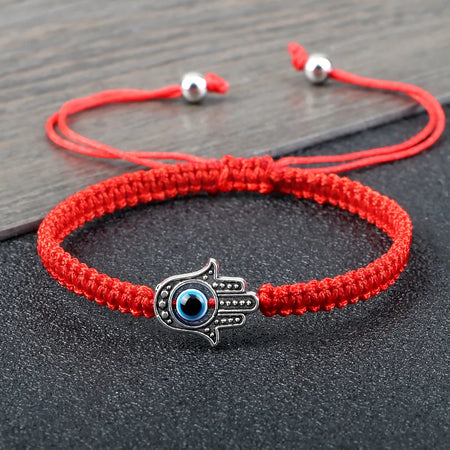
Jewelry keeps protection visible and close to the body. A mal de ojo bracelet, necklace, or pair of earrings may carry an eye symbol, red thread, or blue bead, choices that often reflect evil eye color meanings through small charms. People often choose these items for children, partners, or themselves as a daily sign of blessing and attention.
Hand of Fatima-Inspired Red & Black Braided Bracelet with Lucky Evil Eye Charm – Unisex, Adjustable, and Fashionably Trendy for All Occasions
$10.31 - $10.42
View

Exquisite Gold & Silver Plated Zircon Evil Eye Chain Bracelet, Elegant Fashion Accessory for Women, Perfect for Parties and Gifts
$25.17
View

Handmade Evil Eye Bracelet with Colored Beads - A Unisex Accessory for Parties, Anniversaries and More
$11.51
View
When choosing wearable protection, start with comfort: a bracelet should fit securely, and earrings should suit sensitive ears if they will be worn daily. Visibility matters too. Some people prefer a noticeable eye charm, while others choose a small symbol with private meaning.
Respectful use begins with understanding why the symbol is worn.
Protecting a home with evil eye decor
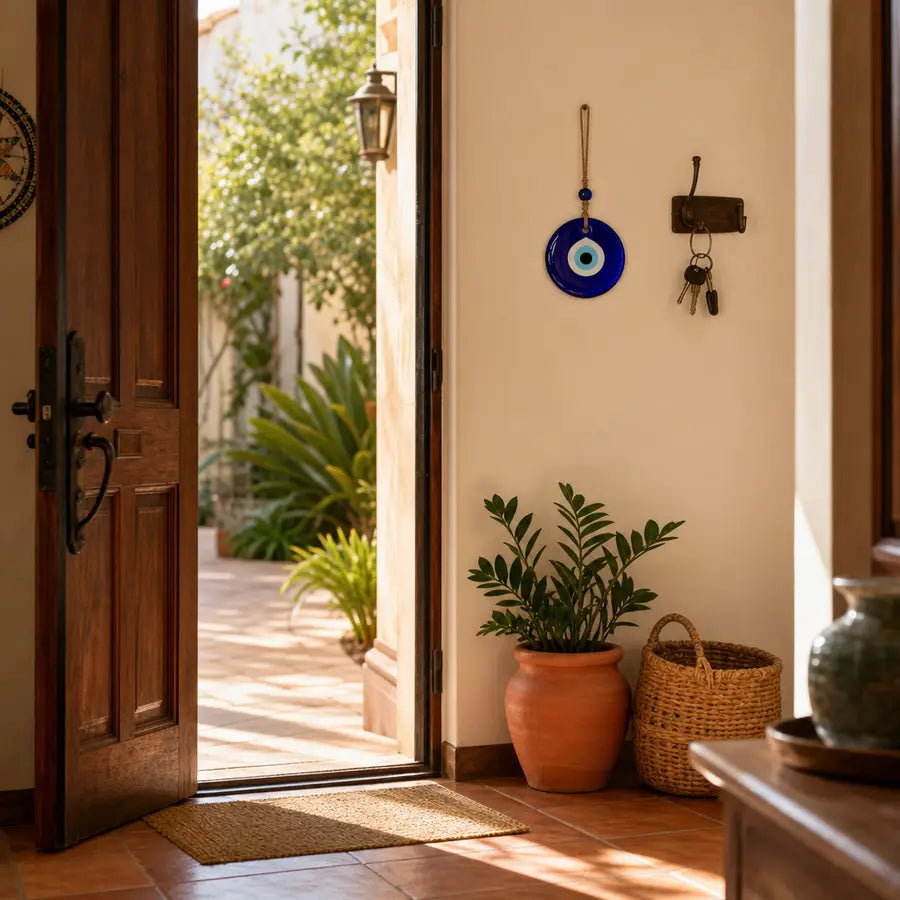
Home protection often appears near doors, entryways, kitchens, nurseries, or shared rooms where visitors gather. In the home, evil eye home decor may include wall hangings, small charms, ceramic pieces, or framed symbols. Placement near an entrance follows the idea of guarding the household from unwanted attention before it settles inside.

50
Products
Evil Eye Home Decor
Transform your space with our Evil Eye Home Decor. From artistic wall hangings to unique ornaments, each piece is a b...
Explore
179
Products
Evil Eye Jewelry
Discover our Evil Eye Jewelry collection, a perfect blend of ancient protection and modern style. Each piece is caref...
ExploreChoose home pieces that suit the room without stripping away the meaning. A small wall hanging may work in an entryway, while a subtle charm may feel better in a bedroom or workspace. Sacred or protective objects deserve more care than random props.
Using protection with respect means recognizing that mal de ojo belongs to living family and cultural traditions. If you do not share the background, learn the meaning before wearing or displaying the symbol. If you do, choose items that reflect the way your family names protection.

Elegant Silver Evil Eye Necklace with Sparkling Cubic Zirconia, Perfect Gift for Women
$14.36
View

Uniquely Handcrafted Beaded Choker: Trendy Turkish Evil Eye Necklace with Gold Plated Seed Beads for Women
$12.49
View

Turkish Evil Eye Necklace - Blue Crystal Glass Pendant on Stainless Steel Clavicle Chain Choker - Lucky Eye Charm Jewelry for Women
$12.27 - $12.69
View
Mal de ojo items are often given as gifts because protection is personal. A bracelet for a baby, a necklace for a friend, or a wall charm for a new home can say, “I want you to be safe.” The gift carries more weight when the intention is spoken clearly.
Mal de ojo and evil eye beliefs around the world
Mal de ojo is the Spanish name for a wider pattern of evil eye beliefs across cultures, but it is not the only version. Similar ideas appear in Mediterranean, Middle Eastern, African, Caribbean, and Latin American settings, where people link envy, praise, or a powerful look with harm, bad luck, or the need for protection.
- In Italy, the related belief is often called malocchio, a harmful eye associated with envy, misfortune, and protective charms.
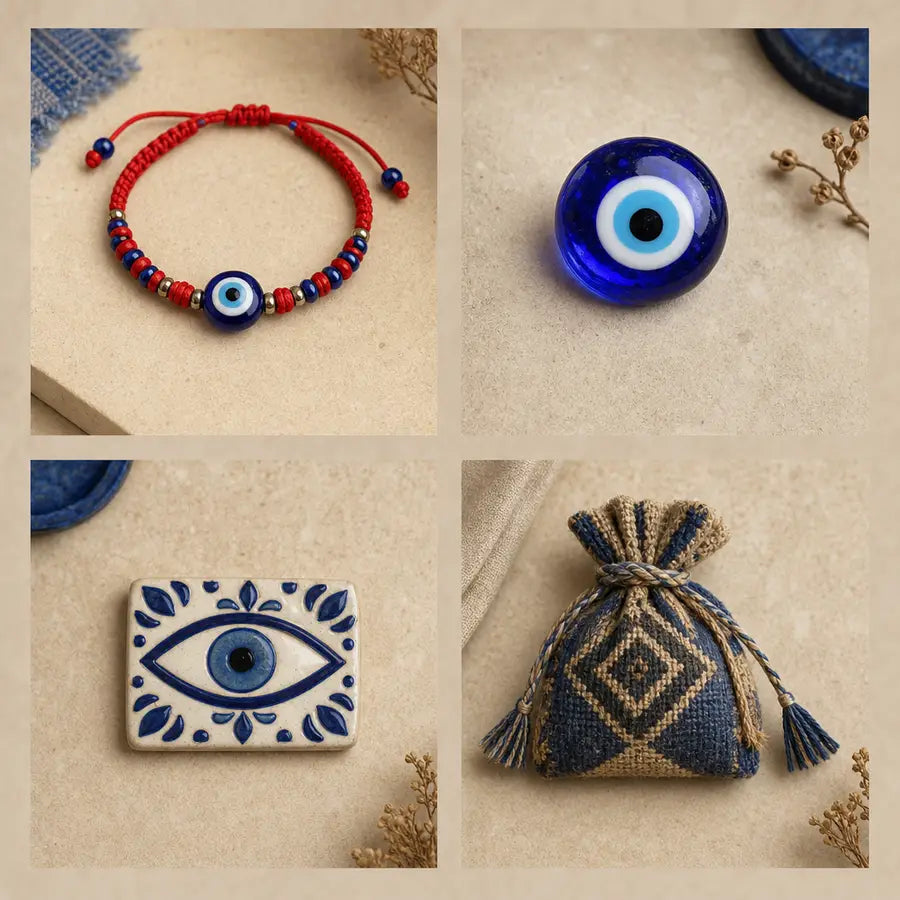
- In Turkey, nazar names the evil eye, often represented by blue glass beads used in homes, cars, and jewelry.
- In Latino and Caribbean traditions, mal de ojo may involve family blessings, red bracelets, prayers, egg cleansings, or protective words after praise.
- West African contexts include related concerns about envy, spiritual vulnerability, and protection, though names and practices vary by people and region.
These traditions share a concern that attention can carry force, especially when it comes from envy or intense admiration. Still, the details are not interchangeable. A Turkish nazar bead, an Italian horn charm, and a Latin American mal de ojo bracelet may all address the evil eye, but each belongs to a local history.
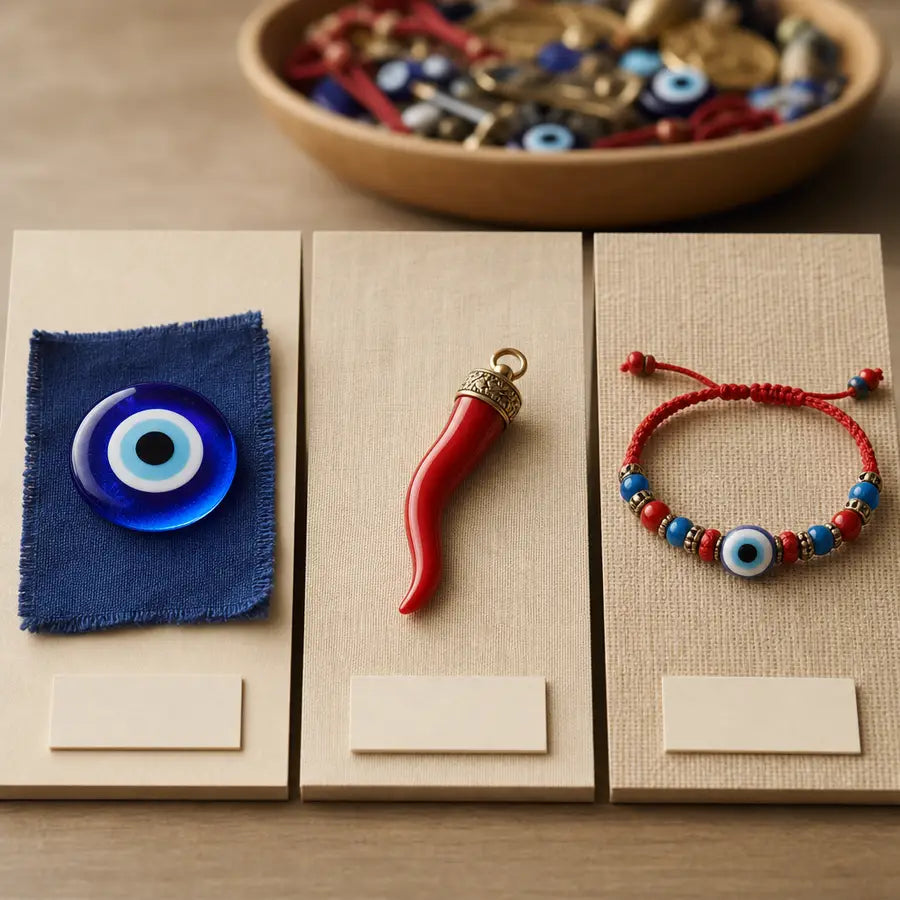
Local context matters because symbols are carried by families, religions, languages, and migration histories. Translating mal de ojo in English as “evil eye” is useful, but it can flatten the meaning if the Spanish, Latino, or Caribbean setting disappears. Respect begins by naming the tradition carefully.
FAQ about mal de ojo
These short answers cover common searches about mal de ojo meaning, translation, symptoms, and origin. They keep the belief in cultural context, where language, family practice, and protection shape how people explain the evil eye.
What is mal de ojo?
Mal de ojo is the Spanish evil eye belief: an envious, admiring, or intense gaze may bring harm, discomfort, or bad luck. It can describe the look, its effect, or protection against it.
What does mal de ojo mean in English?
Mal de ojo in English means “evil eye” or, more literally, “bad eye.” The phrase refers to a harmful gaze, not simply to a physical eye or ordinary looking.
Is evil eye in Spanish called mal de ojo?
Yes. The common phrase for evil eye in Spanish is mal de ojo. Spanish speakers may use it when discussing envy, praise, illness, babies, adults, or protective objects and rituals.
What are mal de ojo symptoms in adults?
Mal de ojo symptoms in adults are often described as headaches, fatigue, restless sleep, irritability, low mood, or sudden bad luck. These are cultural signs, so persistent or severe symptoms should be checked medically.
Where did mal de ojo originate?
Mal de ojo comes from older evil eye beliefs across the Mediterranean, North Africa, and the Middle East. The Spanish phrase developed through Iberian history and later spread through Latin American and diaspora traditions.
What does mal ojo mean?
Mal ojo is a shortened or casual form some people use for mal de ojo. The standard Spanish phrase is mal de ojo, which literally links the harm to the eye.
Reading mal de ojo with respect
Mal de ojo is best read as a living cultural belief, not a single fixed rule. Its meaning changes across families, regions, and languages, but it often returns to the same concern: how envy, admiration, illness, and protection are understood in daily life.
If you use the phrase, wear a symbol, or give a protective gift, begin with respect for its context. Learn the tradition behind it, listen to family meanings, and keep health concerns grounded in practical care.
