

Back to Style Guides
A practical place to begin is near the main entrance—above or beside the door, opposite the entry, or over a console. In a living room, bedroom, or workspace, choose one visible but practical spot that does not add clutter. Historical sources describe different cultural contexts; they do not establish one placement direction that applies everywhere. Treat these ideas as symbolic and decorative guidance, not a guarantee that a particular location will prevent harm.
Place one evil eye where attention naturally gathers—a doorway, seating area, bedside surface, or desk—so it feels intentional, visible, and part of the room’s rhythm.
Quick room-by-room evil eye placement checklist
-
Entryway
- Placement: Beside or above the door, opposite the entrance, or above a console.
- Practical reason: Easy to notice when entering.
- Avoid: Hiding it behind coats or storage.
-
Living room
- Placement: Near the main sightline, a sideboard, or the seating area.
- Practical reason: Creates one natural focal point.
- Avoid: Competing with many small objects.
-
Bedroom
- Placement: Near the door, above a dresser, or on a side wall.
- Practical reason: Keeps the sleep area visually quiet.
- Avoid: Crowding the headboard with high-contrast decor.
-
Workspace
- Placement: On a shelf, at the side of the desk, or within sight of the entry.
- Practical reason: Keeps the work surface usable.
- Avoid: Blocking the screen or adding desk clutter.
Use this guide as a starting point rather than a rulebook. The size and weight of the piece, available wall space, mounting safety, and normal traffic through the room should decide the final position. A secure, visible placement is more useful than copying a direction that does not fit your home.
Stand at each doorway and check three things: Is the piece easy to notice? Is it safely placed? Does the room still feel clear and usable? If the answer is yes, no additional symbol or special direction is required.

An evil eye wall hanging near the front door creates a clear decorative focal point while keeping the hallway practical and uncluttered.
Where to hang an evil eye near the front door
The entrance is a practical starting point because it marks a visible threshold between public and private space. If you are exploring traditional evil eye protection practices, you might place the symbol above or beside the door, opposite the entrance, or over a console. These are symbolic and decorative options rather than a universal placement rule.
In a small foyer, a medium wall hanging usually fits better than a large piece squeezed into a narrow passage. Renters can use a removable hook beside the door or lean a framed motif on an entry console. In a larger hall, center a hanging above a bench, entry table, or shoe cabinet while keeping the walkway clear.
Keep the piece within a natural sightline from the doorway. If it is too high, hidden behind a coat rack, or surrounded by an overloaded key station, it becomes difficult to notice. Leave enough open wall around it for the shape to remain clear without interfering with hooks, mirrors, storage, or the door itself.
Match the material to the room instead of building a themed display around it. Glass, ceramic, or metal can suit a modern entry; wood and woven textures work in boho spaces; one simple, larger piece often fits a minimalist hall. Choose a placement that feels respectful and practical for your home.

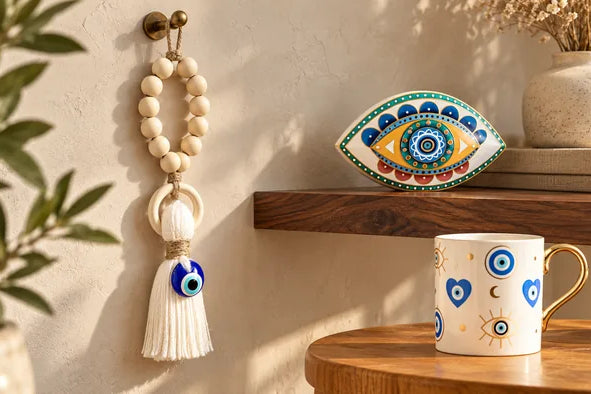
A restrained hallway palette shows how spiritual home accessories can feel natural in a modern home when one object holds the focus.


Evil Eye Jewelry Stand with a Patterned Hand Design
$18.24 - $18.40
View


Hamsa Hand Crystal Display Shelf with Evil Eye and Celestial Patterns
$16.79
View


Evil Eye Wall Hanging with Two Stacked Scrollwork Medallions and Coin Charms
$15.80 - $15.85
View
Where to place an evil eye in the living room
In a living room, choose a place that sits within the main sightline without taking over the room. Useful options include a wall above a console, a sideboard visible from the doorway, or an area near the main seating arrangement. If the room has a mantel, picture ledge, or gallery wall, the symbol can sit there as one clear part of the composition.
Match the scale to the wall and nearby furniture. A small hanging can look accidental on a large empty wall, while several small charms may compete with framed art, mirrors, and shelving. In a gallery wall, give the evil eye enough space to remain legible rather than letting it disappear among many similar-sized frames.
For a smaller accent, use a shelf, tray, or console surface that is not already crowded. Books, a candle, and one compact object are usually easier to read than a cluster of charms. If the room already has a patterned rug, bright cushions, plants, and open shelving, keep the evil eye simple and repeat a material or color already present.
Renters can lean a framed print on a picture ledge or use a lightweight removable hook. Families may prefer a stable tabletop piece away from traffic paths and shelf edges. The best location is visible, safely placed, and compatible with how people move, sit, and use the room.

In a gallery wall, one evil eye focal piece can hold the center while surrounding art and mirrors support the room instead of crowding it.


Evil Eye Dream Catcher with Eye-Shaped Frame and Blue Feathers
$15.63 - $15.69
View


Evil Eye Art Print with Circular Motifs and Lettering
$12.49 - $36.53
View


Evil Eye Wall Hanging with Blue Patterned Disc and Beaded Rope Loop
$16.58 - $19.95
View
Evil eye decor ideas for modern, boho, and minimalist rooms
- In modern rooms, one strong evil eye in glass, metal, or a simple framed print is usually enough. Keep the palette mostly neutral and let blue show up sparingly so the symbol feels deliberate.
- Boho interiors have more room for texture. Pair the amulet with woven materials, clay, linen, and wood, then stop before every shelf and wall starts carrying a symbol.
- Minimalist homes usually need less, not more. A single larger wall hanging or one tabletop accent tends to look more resolved than many small items spread around the room.

A softer boho room shows how textiles, ceramics, and one evil eye accent can sit together without making the space feel crowded.


Evil Eye Macrame Wall Hanging with Blue Pendant and Two Fringe Styles
$17.18 - $17.68
View


Black Dream Catcher with Lace Fringe - Triangle Evil Eye or Round Floral
$16.88 - $45.51
View


Round Evil Eye Rug with an Off-Center Ring Design
$33.80 - $92.68
View
Where to hang an evil eye in the bedroom
Some people place an evil eye in the bedroom as a symbolic reminder of protection or personal meaning. A bedroom usually benefits from a lighter decorative touch, so the piece does not need to dominate the wall or sit directly above the bed.
Practical locations include near the door, above a dresser, on a side wall, or on a shelf that is visible when entering. If a high-contrast piece feels too active near the headboard, move it to the doorway zone or another wall. There is no single bedroom direction required across every culture or family tradition.
Soft blues, off-whites, pale ceramics, natural wood frames, and fabric-backed pieces can sit quietly with bedding and low lighting. In a small bedroom that also holds open storage, mirrors, baskets, and charging equipment, replace an existing print or clear a surface before adding another object.
For a shared bedroom, understated placement is often easiest for everyone to live with. A small framed symbol near the entrance or a compact accent on a dresser can reflect a symbolic association with protection while the room still reads first as a place for sleep and privacy.

Subtle placement near the bedroom doorway keeps the symbol present while leaving the sleeping area visually calm.
55
Products
Evil Eye Home Decor
Shop Evil Eye home decor, from wall hangings and decorative accents to stylish pieces for shelves, tables, and everyd...
Explore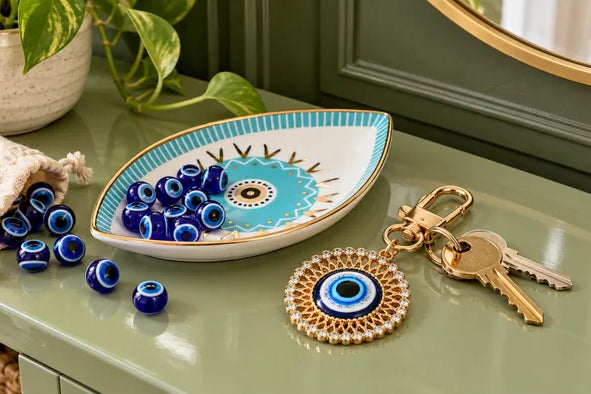
82
Products
Evil Eye Accessories
Crafters and gift-givers, start here—Evil Eye Accessories span beads for jewelry projects, pins and magnets, and deco...
ExploreWhere to place an evil eye in a home office
Some people use an evil eye in a workspace as a symbolic reminder of focus or personal boundaries. It should not be treated as a productivity tool. In a home office or shared room, practical placement matters more than adding another decorative layer.
A small piece can sit on a shelf behind the desk, beside a task lamp, near the edge of the work area, or on a wall visible from the entry. Keep it clear of the monitor, cables, notebooks, and the surface used for daily tasks. One visible object is usually enough for a compact desk.
In a dining-table workspace, choose something portable that can move when the table returns to everyday use. Renters can use a removable hook or lean a framed print on a bookcase. If the office corner is visible from the living room, match the frame or material to nearby furniture.
Before adding anything, clear one zone and check the view from both the chair and the doorway. If shelves already hold plants, framed quotes, containers, and supplies, use a wall or upper shelf rather than crowding the desk. The placement should keep movement and work surfaces unobstructed.

A compact amulet on a shelf keeps the desk practical while making the symbol visible from the work area.

A minimalist desk scene shows how one symbolic object can remain visible without turning the work area into visual clutter.
Placement questions readers often have
Where is the best place to hang an evil eye at home?
A common starting point is near the main entrance—above or beside the door, opposite the entry, or over a console. Other practical options include a living room wall visible from the doorway, a bedroom area near the door or dresser, and a workspace shelf that does not crowd the desk.
Should the evil eye face the main entrance?
Some people choose that arrangement because the entrance is a visible threshold and a practical place for a focal point. It is not a universal requirement. A nearby wall, side wall, shelf, or console can also be appropriate when it is more visible, respectful, and practical for the space.
How many pieces are enough in one home?
There is no required number. Start with one piece at the entrance or in the room where you most want it, then add another only if it has a clear location and purpose. If a room feels crowded or repetitive, stop rather than filling every wall and surface.
How can renters hang evil eye decor without damage?
Use removable hooks for lightweight wall hangings, lean framed prints on consoles or shelves, or place smaller objects on trays, bookcases, and dressers. Check the hook’s weight rating and the lease rules before mounting anything.
Can evil eye home decor fit with minimalist interiors?
Yes. Choose one piece with simple lines, repeat a material or color already in the room, and leave empty space around it. Avoid clusters of tiny charms if they make the wall or surface feel fragmented.
Can you hang an evil eye in the bedroom?
Yes. Practical bedroom locations include near the door, above a dresser, on a side wall, or on a shelf. Choose a secure position that suits the room and does not crowd the headboard. No single direction is universally required.

Visual context helps compare layered and restrained arrangements, especially for renters and anyone working with smaller rooms.
Choose a placement that works for your home
Start with the entrance, then use the room’s function as the final test. A living room can support one visible focal piece, a bedroom usually benefits from a quieter location, and a workspace needs clear surfaces. If the symbol is visible, safely placed, and leaves the room easy to use, the placement is doing its decorative job.
To compare wall hangings, tabletop accents, and other formats, browse evil eye home decor by size, material, and the space you actually have.
Sources & Further Reading
The sources below provide historical and cultural context for evil-eye beliefs and amulets. They do not establish one universal placement direction or prove that a specific location prevents harm.
- The Open University — The Evil Eye: historical context for evil-eye beliefs associated with envy and protective symbols.
- The Metropolitan Museum of Art — Ancient Egyptian Amulets: background on the materials, forms, and cultural contexts of amulets.
- Republic of Türkiye, İzmir Provincial Directorate of Culture and Tourism — Evil Eye Bead: cultural context for the traditional production and use of the nazar bead in İzmir.
