

Back to Hamsa Hand
For a first Hamsa purchase, do not start with the prettiest photo. Start with meaning, use, and source, then look at the hand direction, eye motif, material, and construction.
A Hamsa can be jewelry, wall decor, or a small keepsake. The right one should feel respectful, easy to explain, and practical enough that you will actually wear it or display it.
Beginner buying reminder: pause before choosing a Hamsa. Let its meaning, intended use, and cultural respect guide the purchase more than speed or trend appeal.
What does a Hamsa Hand represent
Before you compare metals or colors, get clear on what the Hamsa Hand commonly means. In several cultural and spiritual settings, the open hand is connected with protection, blessing, and watchfulness.
That does not make every Hamsa mean the same thing to every person. For a first Hamsa purchase, begin with meaning before decoration.
What protection meaning should beginners know
The Hamsa Hand is often linked to protection from negative energy, including the evil eye. Some people also see it as a sign of blessing or a quiet reminder to move through daily life with care instead of fear.
Meanings shift by community, faith background, and family tradition. If you are working through beginner buyer questions, describe the Hamsa as a protective symbol with layered cultural meaning, not as an object that guarantees an outcome.
How should shoppers respect the symbol
Respectful shopping starts with avoiding careless claims and costume-like treatment. If you are choosing a Hamsa for decor or jewelry, look for sellers who explain the symbol plainly and name the materials instead of treating it like a generic lucky charm.
You can still choose by taste. The point is that style should support the symbol, especially if you are giving a Hamsa as a gift or wearing it somewhere visible.
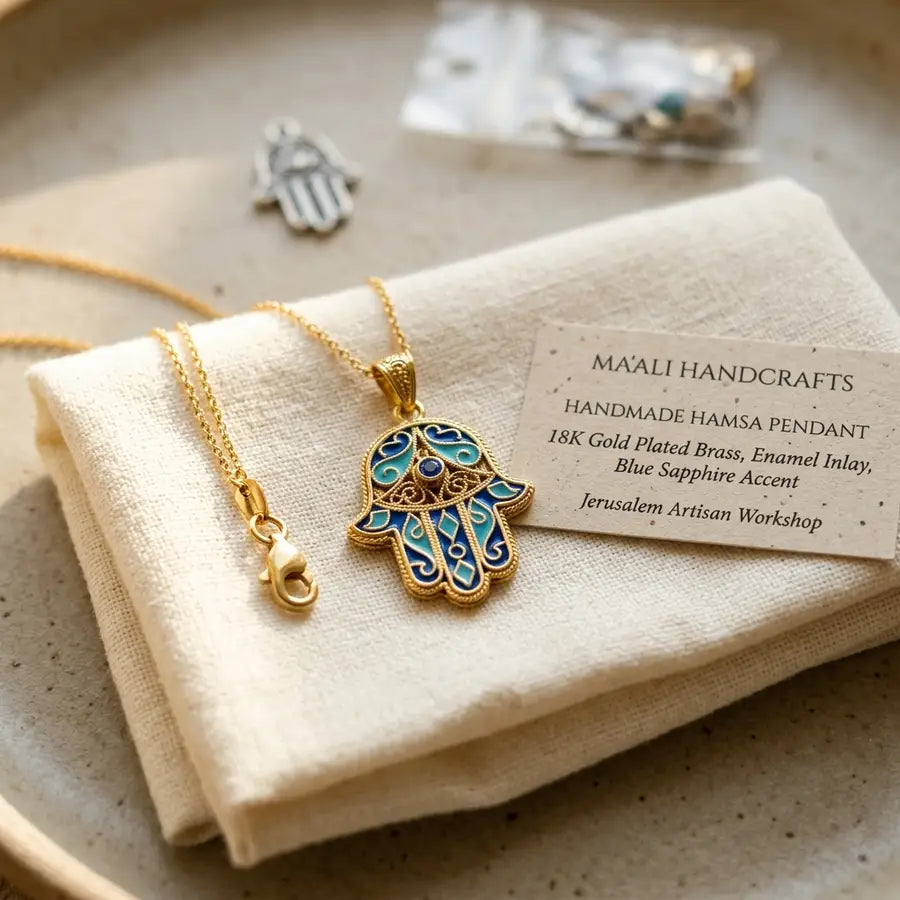
- The open palm is the main visual cue, tied to protection, blessing, and visible care rather than ordinary hand-shaped decoration.
- The eye motif often connects the Hamsa to watchfulness and protection from the evil eye, especially in jewelry and wall pieces.
- Patterns, enamel, stones, or metalwork may come from regional style, maker influence, or personal taste, so compare decoration with context.
- Choose a meaning you can explain simply. If your answer feels vague, keep looking before making your first Hamsa purchase.
What makes a good first Hamsa purchase
A good first Hamsa fits the way you will use it. A pendant may suit daily wear, while a wall hanging may make more sense for an entryway, desk, or quiet room.
When choosing a Hamsa, compare comfort, placement, material, and seller clarity before price alone. The strongest beginner choice is usually the one with clear symbolism and real practical use, not the most ornate design.
Should you choose Hamsa jewelry or home decor
For a first Hamsa purchase, ask where you want the symbol to live. Jewelry keeps it close to the body. Home decor gives it a visible place in a room, where other people may notice it too.
Orientation adds meaning, but it should not make the purchase feel like a test. Treat hand direction as one cue among several.
When is Hamsa jewelry the better fit
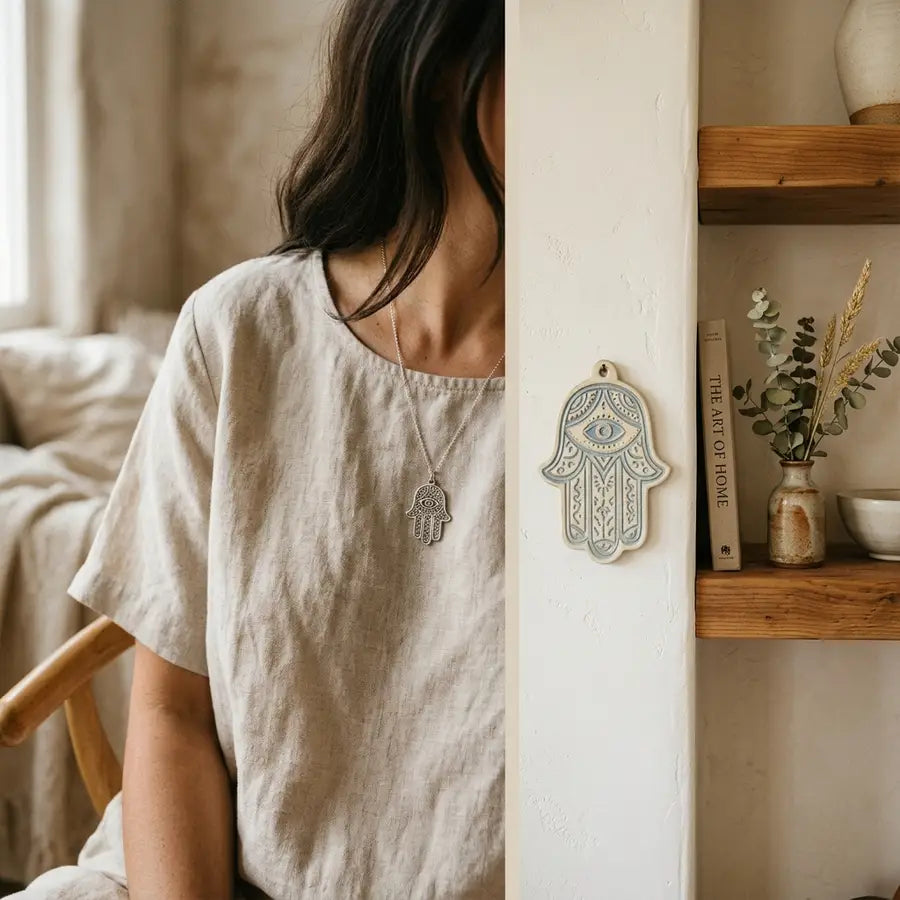
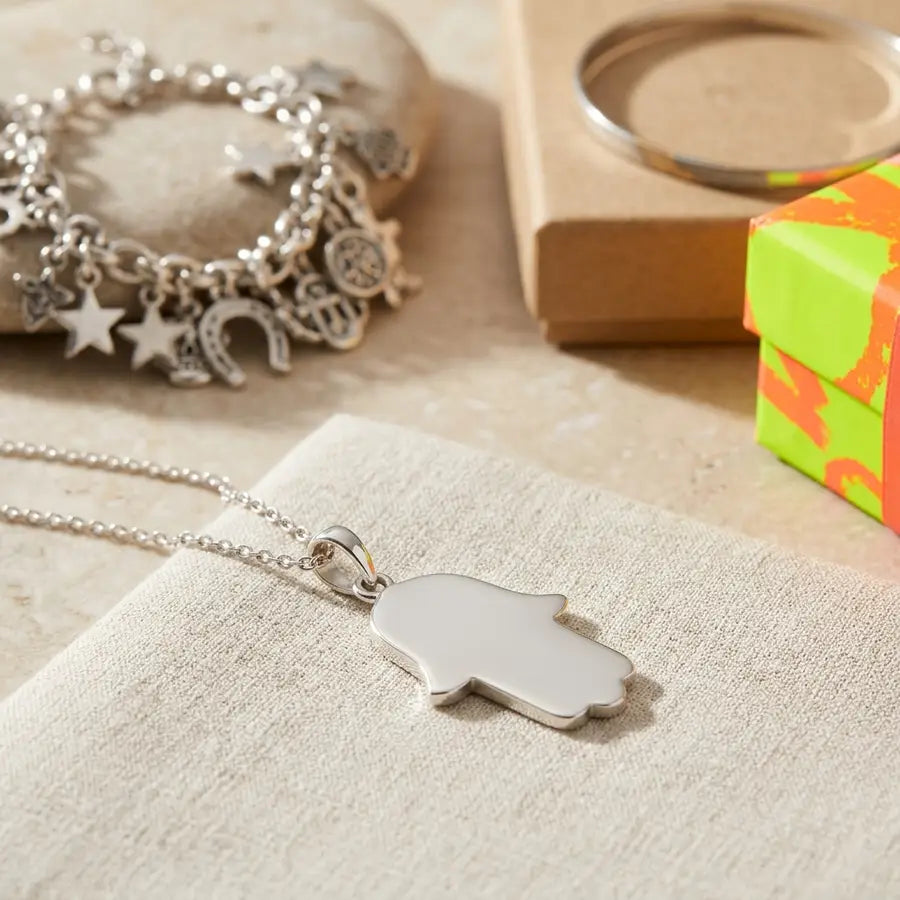
Hamsa jewelry usually makes more sense when you want a private daily reminder or something you can carry through work, travel, and ordinary routines. Necklaces, bracelets, and rings suit buyers who care more about personal meaning than room placement.
Size matters here more than people expect. A pendant that catches on collars or a ring with a raised profile may look good online and still be irritating by the second day.
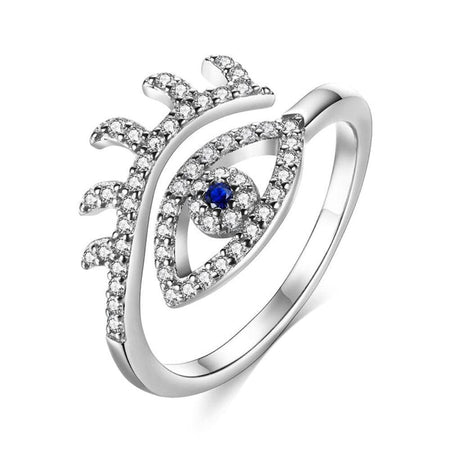
Evil Eye Rings 925 Sterling Silver Adjustable Crown Engagement Zircon Open Size Rings For Women Turkey Jewelry
$26.70
View
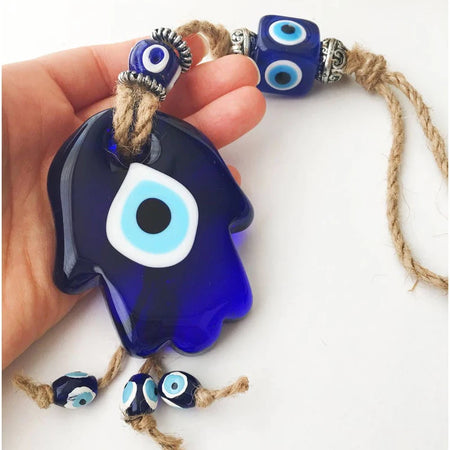
Handmade Hamsa Style Blue Turkish Evil Eye Wall Hanging for Home Protection Decor
$12.99
View

Luxurious Gold Plated Slipper Pendant Necklace with Blue Evil Eye and Rhinestones for Party and Summer Jewelry
$15.54 - $15.68
View
Compare chain length, clasp security, pendant size, ring profile, and skin comfort. For beginner Hamsa jewelry, wearability matters as much as the motif itself.
When is Hamsa home decor the better fit
Hamsa home decor works well when you want the symbol to greet guests, mark an entryway, or bring meaning to a shared wall, shelf, or meditation corner. It can feel less private than jewelry, but more present in the household.
That can be useful for a family space. It also means scale, hanging method, and room style deserve a closer look.

50
Products
Evil Eye Home Decor
Transform your space with our Evil Eye Home Decor. From artistic wall hangings to unique ornaments, each piece is a b...
Explore
65
Products
Evil Eye Accessories
Our collection of Evil Eye Accessories is designed to bring both protection and style into your everyday life. From p...
ExploreBefore buying, compare scale, hanging method, weight, and room style. A small charm can disappear on a large wall, while heavy decor needs secure placement.
Should the Hamsa Hand face up or down
Hand direction is one of the most common buyer questions. An upward Hamsa is often read as a protective gesture, while a downward Hamsa is often linked with blessing, openness, or abundance.
These meanings can shift by tradition and maker, so treat orientation as a meaning cue, not a fixed rule. If one direction matches your reason for buying more clearly, choose that one.
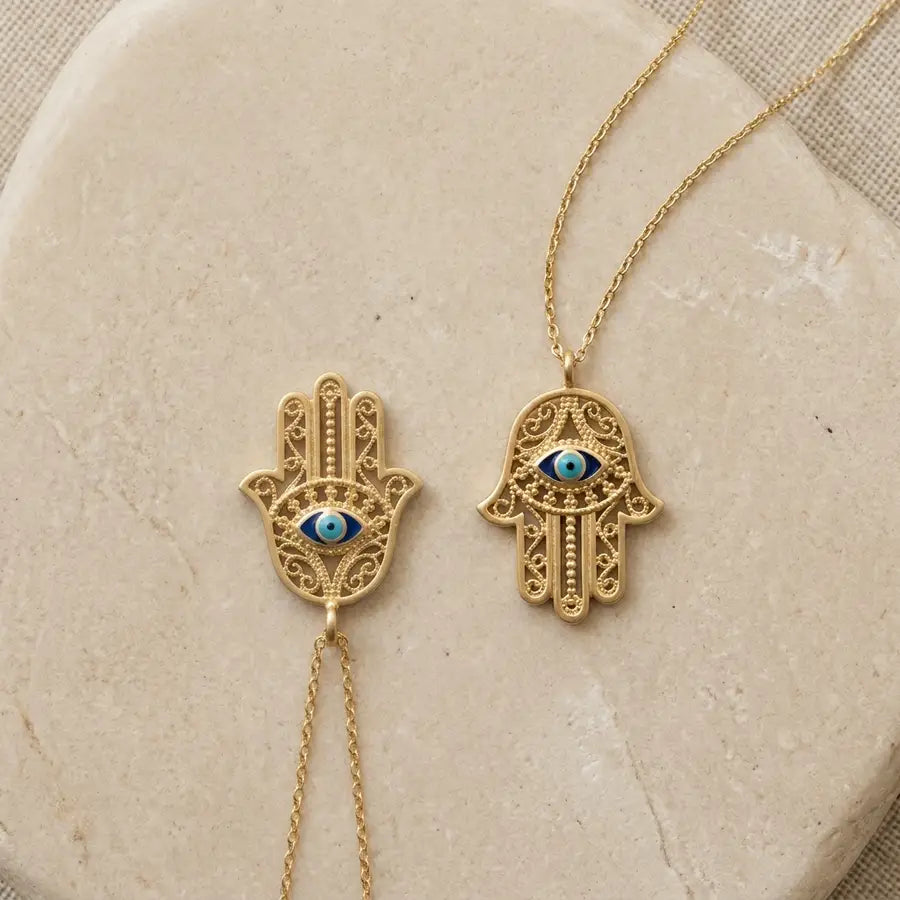
- Choose upward if protection is your main focus, especially for entryways, daily pendants, or gifts meant to signal watchful care.
- Choose downward if you connect more with blessing, welcome, generosity, or a softer visual flow in jewelry or wall decor.
- Choose the version you can explain respectfully, rather than copying a trend or buying a symbol you do not understand.
Which materials, colors, and gemstones should you compare
Once you know the use and direction, look closely at the surface details. Material, color, and stones affect how a Hamsa wears, how much care it needs, and what meaning it may suggest.
For a first Hamsa purchase, choose appearance with durability and context in mind. Pretty is not enough if the plating rubs off quickly or the wall piece feels too fragile for its spot.
What materials are common for Hamsa pieces
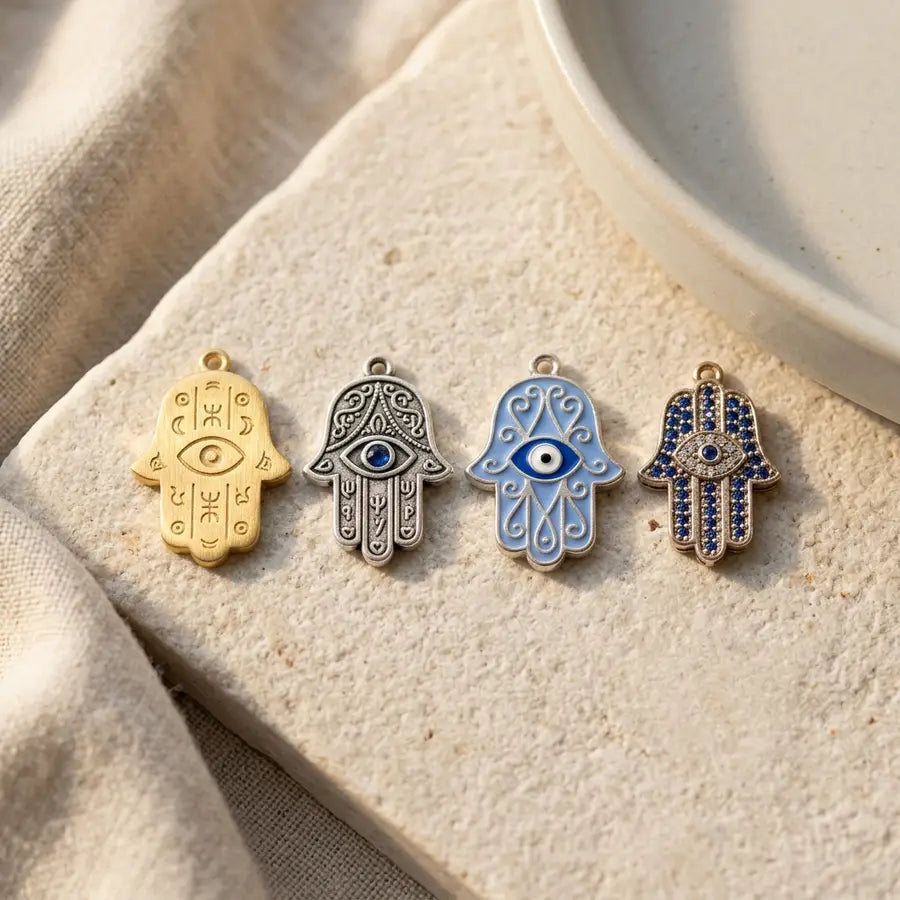
Common Hamsa materials include sterling silver, gold, plated metals, enamel, wood, ceramic, glass beads, and cord. Metal usually suits jewelry because it handles regular contact better than more fragile materials.
Wood and ceramic often feel warmer for home decor, but they need safer placement and gentler cleaning. A delicate ceramic Hamsa beside a busy doorway is probably the wrong match.
Budget changes the comparison too. A low price may mean simple materials, thin plating, or machine-made detail, while a higher price should come with clearer metal marks, maker information, or stronger construction.
- Sterling silver works for everyday wear, but it can tarnish. Check for a metal mark and expect occasional polishing.
- Gold or gold plating gives a warmer finish. Solid gold costs more; plating can fade where skin, water, or friction touch it.
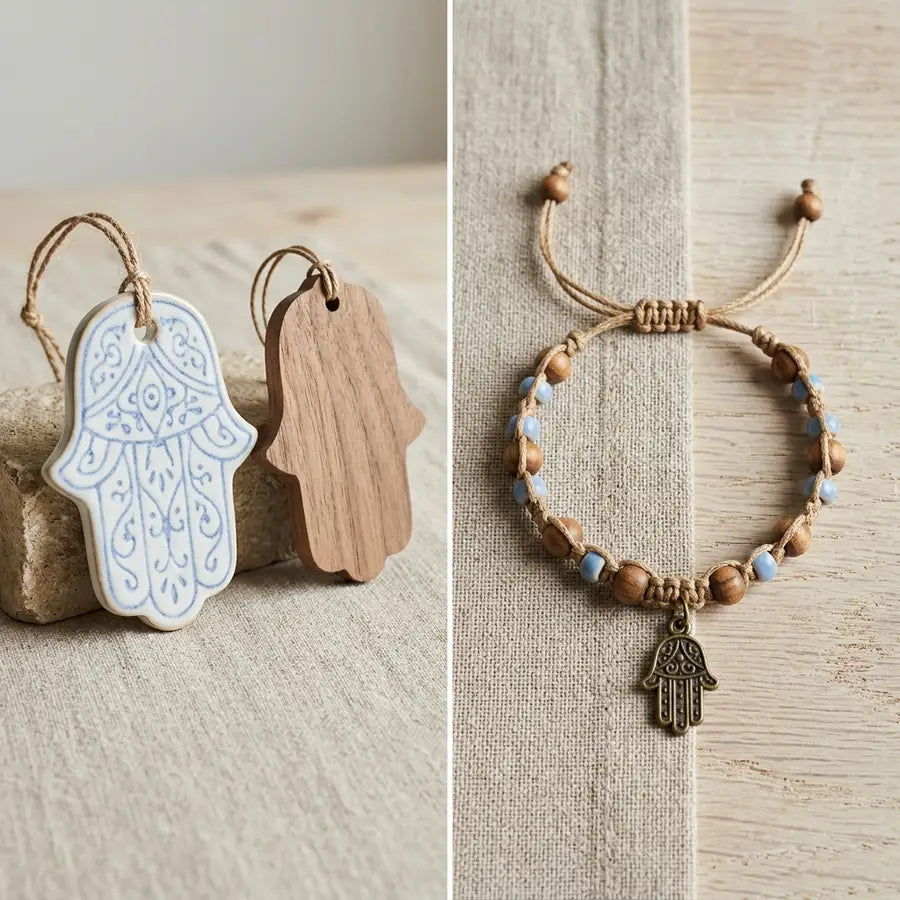
- Wood or ceramic adds texture for decor, especially on walls or shelves. Compare thickness, glaze quality, and the risk of chips.
- Beads and cord suit casual bracelets or charms. Check knots, stretch, closures, and whether the Hamsa charm feels secure.
Do Hamsa colors change the meaning
Color can change how people read a Hamsa, but there is no single universal code. Blue often connects with evil eye protection and broader evil eye color meanings in buyer questions, while neutrals and metallics feel quieter for daily wear.
Bright enamel can add personality, especially in decor or casual jewelry. Just make sure the color still feels respectful to the symbol and right for where the piece will live.
Should a first Hamsa include gemstones
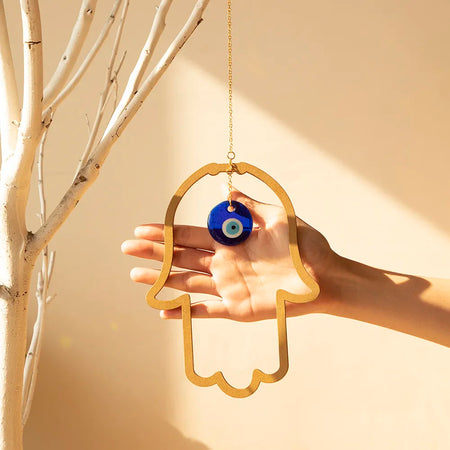
Gemstones are optional. Some buyers like turquoise, sapphire-colored glass, or clear stones because they add color and personal meaning.
If stones are included, compare setting security, smooth edges, and care needs before choosing sparkle. A loose stone or sharp setting is not a small issue if you plan to wear the piece often.
Unique Gold Wood Hamsa Hand Evil Eye Wall Hanging for Room Decoration, Good Luck, and Protection
$15.87
View
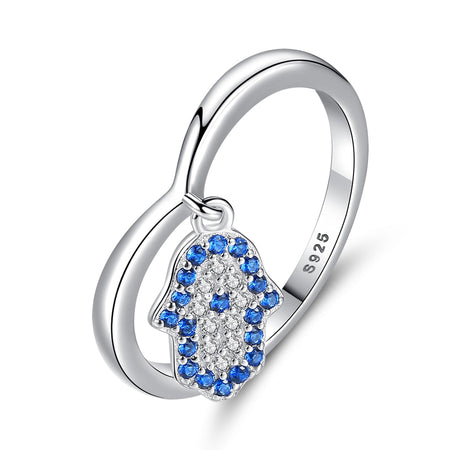
Exquisite 925 Sterling Silver Evil Eye Ring with Hamsa Hand Design and Grade AAA+ Cubic Zirconia for Weddings and Engagements
$27.52 - $29.52
View
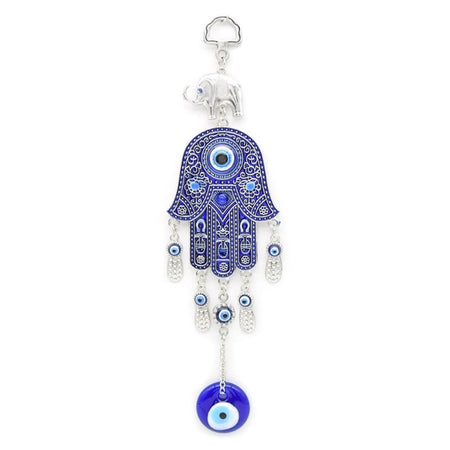
Authentic Turkish Blue Evil Eye Hamsa Amulet: Handcrafted Protection for Home & Garden Decor
$13.47 - $16.06
View
Before buying, inspect prongs, glue points, bead surfaces, and care notes. A stone that catches fabric, sits loosely, or needs cleaning you will not do is probably a poor match for daily use.
Can you wear or gift a Hamsa Hand every day
Daily use is a fair concern before choosing a Hamsa. A pendant, bracelet, or small charm may carry personal meaning, but it still has to fit your routine, clothing, skin, and care habits.
The same practical thinking helps when buying one as a gift. Sentiment cannot rescue a piece the recipient will not wear or place comfortably.

Is a Hamsa practical for daily wear
A Hamsa can be practical for daily wear when the size, edges, and fastening do not interfere with normal movement. Remove it before swimming, showering, heavy exercise, cleaning, or sleeping if the chain pulls, the finish is delicate, or stones could loosen.
For everyday jewelry, comfort and secure construction matter more than extra decoration. A simpler piece often wins if it sits flat, feels smooth, and fastens securely.
- Check the chain or cord for a smooth feel, secure clasp, and enough strength for pulling from bags, scarves, or hair.
- Check skin sensitivity by confirming metal content, especially with plated pieces, nickel concerns, or any history of irritation from jewelry.
- Check water exposure habits; showers, pools, sweat, and cleaning products can dull plating, weaken cord, or loosen glued stones.
Is a Hamsa Hand a suitable gift
A Hamsa Hand can be a thoughtful gift when the recipient already likes symbolic jewelry, protective motifs, or meaningful home objects. It may feel less suitable if you are unsure about their faith background, cultural comfort, or taste.
When in doubt, choose a simple design and frame it as a wish for care and protection, not a claim about belief. That keeps the gesture warm without putting meaning on the recipient that they did not choose.
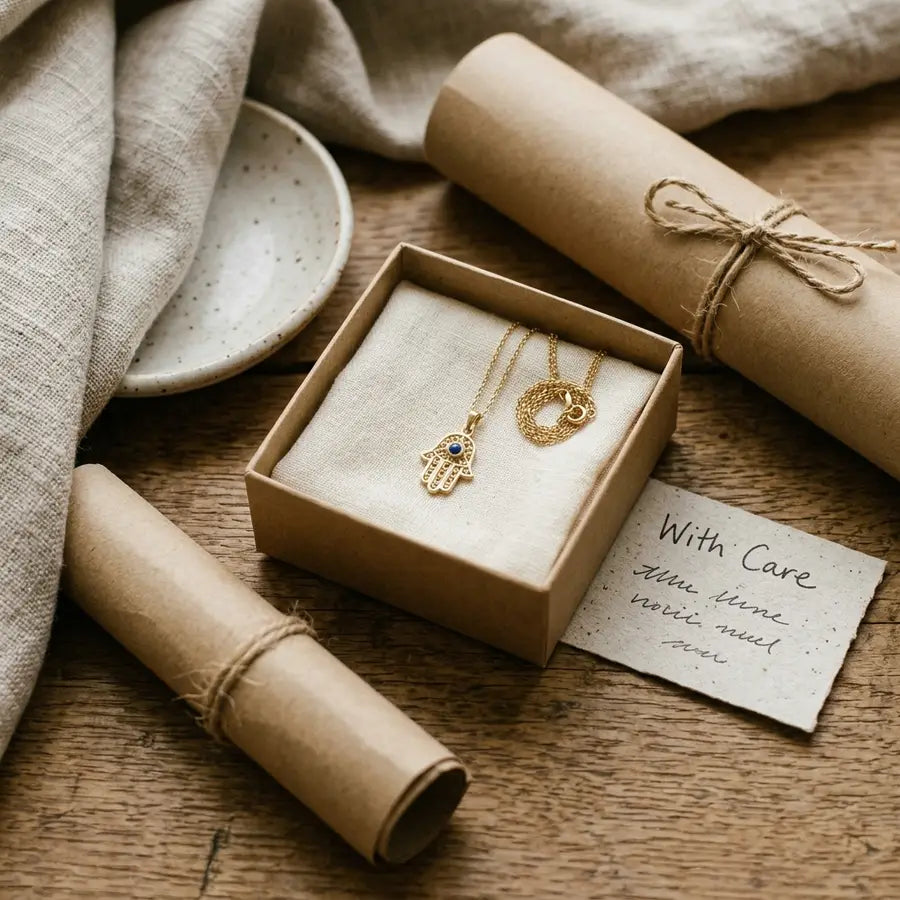
What should you say when gifting one
Keep the message short and respectful. You might say, “I chose this Hamsa as a small symbol of protection and good wishes for you.”
Avoid overexplaining the tradition unless the recipient asks. A calm note lets the gift feel personal without turning the moment into a lesson.
Where should you place a Hamsa at home and what should you avoid
Home placement turns symbol shopping tips into practical choices. Before you buy, think about where the Hamsa will sit, how visible it should be, and whether the material suits that spot.
This is where online photos can mislead you. A piece may look substantial in a close-up and feel tiny once it is on a real wall.
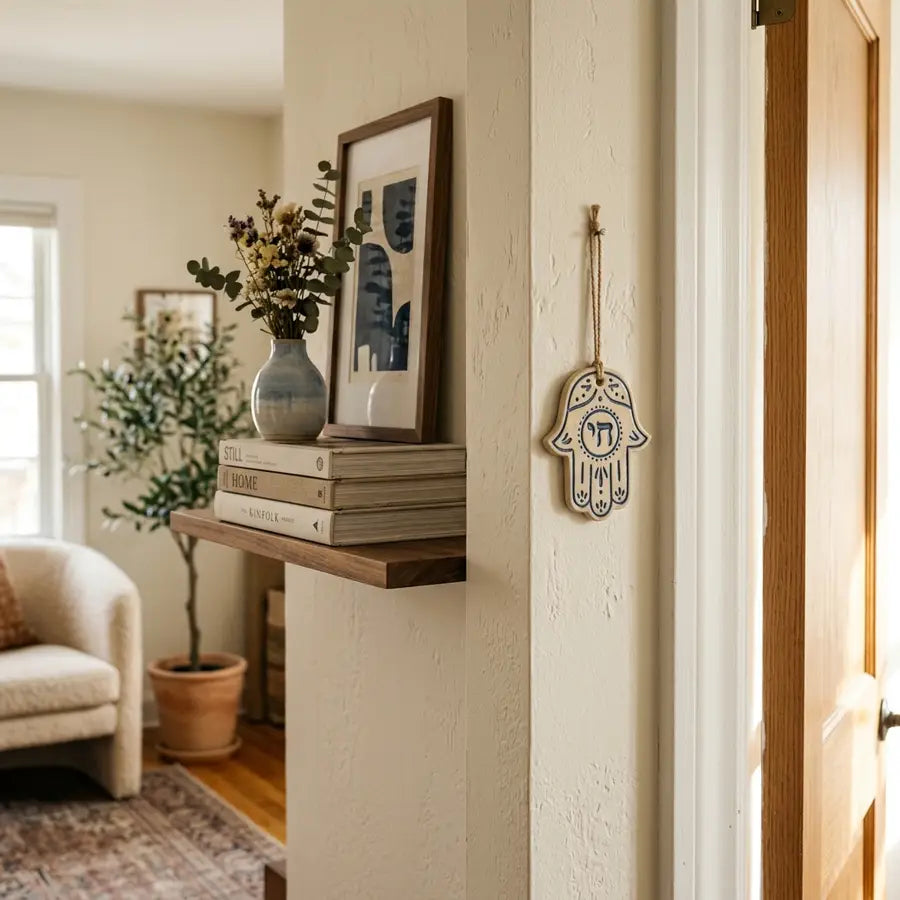
Where can you place Hamsa decor at home
Entryways are common because they connect the Hamsa with arrival, welcome, and protection. A hallway wall, small shelf, reading corner, or quiet room can also work if the scale fits.
For choosing a Hamsa as decor, match the placement to visibility, safety, and personal meaning. If the spot is busy, narrow, or easy to bump, avoid fragile materials.
- Near an entry, a Hamsa can mark the threshold and connect the home’s first impression with protection, welcome, and daily return.
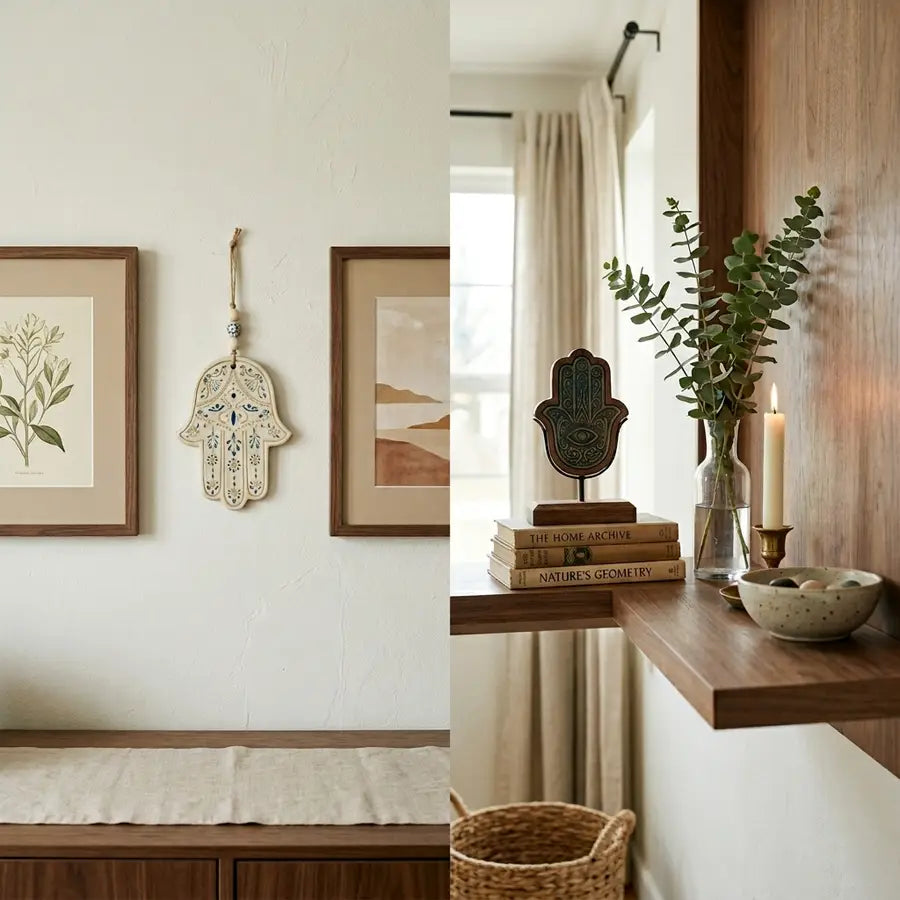
- On a gallery wall, compare size with nearby frames so the Hamsa reads as intentional, not lost or visually crowded.
- On a shelf or altar, smaller Hamsa decor can feel personal, especially beside candles, books, plants, or other meaningful objects.
What quality signals should beginners look for
Quality is easier to judge when you look beyond the front photo. Check for smooth finishing, clear markings, balanced weight, secure joins, and edges that will not scratch walls or skin.
A seller who explains materials, dimensions, hanging hardware, or care gives you useful buying clues. Vague listings are a warning sign, especially if the price seems oddly high for very little information.
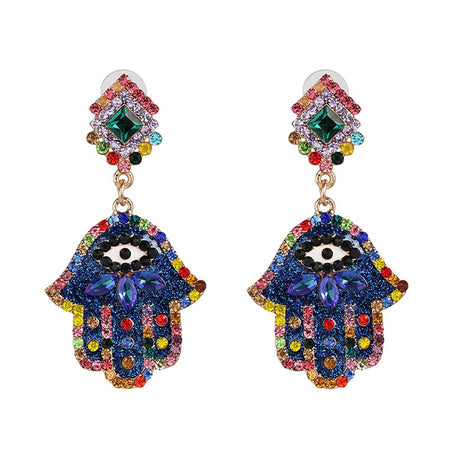
Enchanting Hamsa Evil Eye Drop Earrings: Vintage Crystal Jewelry Gift
$11.89 - $12.01
View
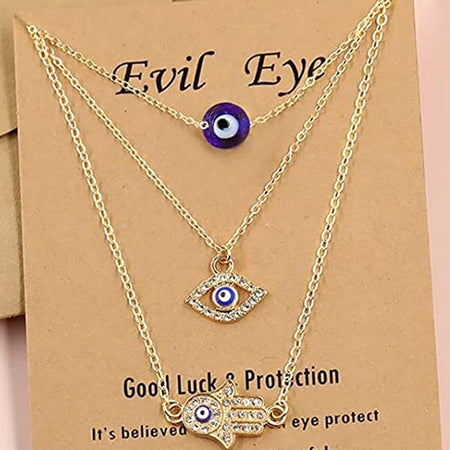
Mystical Turkish-Inspired Evil Eye and Hamsa Hand Zirconia Pendant Choker Necklace - Dainty, Lucky Charm Jewelry for Women and Girls
$9.58
View
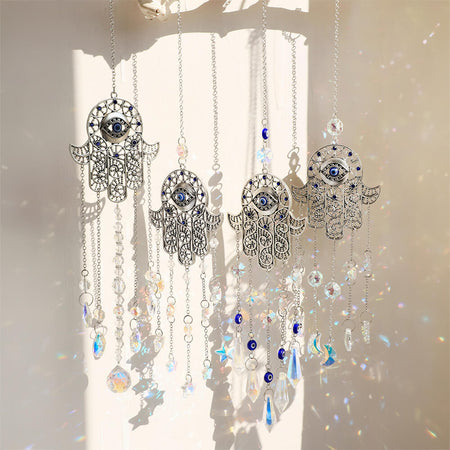
Elegant Hamsa Hand & Evil Eye Crystal Suncatcher: A Radiant Rainbow Prism for Home and Garden
$17.47 - $18.65
View
For beginner buyer questions, prefer a Hamsa with clear size and material details. That matters when you are comparing jewelry with wall decor, or handmade items with mass-produced versions.
What mistakes should first-time buyers avoid
- Buying only by photo can lead to the wrong scale, especially when a wall Hamsa appears larger or heavier than it is.
- Ignoring material details may leave you with thin plating, unclear metals, fragile ceramic, or decor that needs gentler care than expected.
- Overloading on symbols can make the Hamsa feel confused; choose motifs you understand and can explain with respect.
- Forgetting the recipient can make a gift miss the mark, so consider taste, beliefs, clothing style, and home decor first.
Outro
Choosing a Hamsa does not need to be rushed. Start with where it will live, how you want to use it, and which meaning you can explain without reaching for vague claims.
Then compare materials, size, orientation, and seller details until one Hamsa feels respectful enough to choose and practical enough to keep. For a first Hamsa purchase, that slower decision is usually the one you will feel better about later.
