

Back to Hamsa Hand
That palm-shaped charm with a single eye at its center is usually a Hamsa hand with an eye motif. It is what most people picture when they type evil eye hand symbol into a search bar.
The open hand holds a watchful eye, and across several traditions it carries a plain wish for protection and luck. Its name changes from one culture to the next, the eye and the Evil Eye overlap without being the same thing, and which way the hand faces can shift how people read it.
An open hand, a quiet eye at its center: across many cultures this pairing carries the same simple wish, that you stay protected and well.
Quick answer: what is the evil eye hand symbol?
An open palm with a single eye in the middle is the Hamsa hand, sometimes drawn with an Evil Eye set inside it. When people search for the evil eye hand symbol, this is usually what they mean.
Across the Middle East, North Africa, and the Mediterranean, the hand stands for protection and good luck. That is why it turns up on so much jewelry, and on amulets and wall hangings too.

Hamsa hand meaning: what the hand and eye represent
The Hamsa is a five-fingered open palm, and the spread fingers carry most of its meaning. In Jewish and Islamic tradition, and across the wider Mediterranean, the raised hand reads as a sign of protection and blessing, a gesture said to turn harm away. Take these readings as belief-based rather than promises.

The eye in the center is what gives the palm its watchfulness. It borrows the older Evil Eye idea, where an envious glance is thought to bring misfortune, so the eye stares back and sends that gaze elsewhere. For the broader belief, see our Evil Eye meaning guide.

Hamsa vs evil eye: similar but not the same
The two sit close together, yet they do different jobs. The Evil Eye is both a belief and a motif: the worry that an envious look can bring bad luck, usually drawn as a concentric eye or a blue glass bead. The Hamsa is the hand-shaped charm that often carries that eye in the palm.

So one is a concept and the other is an object. The evil eye names a belief about envy; the Hamsa is the thing people hold up against it. Because so many Hamsa designs set an eye at the center, the two terms blur in everyday use.
If it is the belief behind the gaze you are after, our Evil Eye meaning guide goes deeper. This page stays with the hand, what its names mean, and how people wear or display it.
Cultural names: Hand of Fatima, Hand of Miriam, and Hand of Mary
The same open hand shows up in Islamic, Jewish, and Christian settings, and each names it differently. No single tradition owns it; the names track who carried the symbol and which figure they tied it to. Read the labels below as common associations, not fixed history.
In Islamic tradition it is often the Hand of Fatima, after Fatima, daughter of the Prophet Muhammad. Jewish tradition calls it the Hand of Miriam, for Miriam, the sister of Moses and Aaron. Some Christian regions know it as the Hand of Mary.

Hand facing up vs facing down
Point the Hamsa up, fingers raised, and tradition reads it as a warding gesture. The open palm faces outward, like a hand held up to say stop, and people hang it this way to keep envy or unwanted attention away from a home or a wearer.

Turn it the other way, fingers down, and the same hand leans toward welcoming blessings and abundance. Now the palm pulls goodness inward instead of fending harm off, so the downward Hamsa is the one people choose when they want to invite a bit of luck and calm.
How people wear or display the Hamsa hand today
For most of us, the Hamsa first turns up as everyday jewelry. It might be a pendant on a necklace, a small charm on a bracelet, or a flat engraving on a ring. Worn close to the skin or layered with other pieces, the open hand stays small and easy to carry, which is part of why it travels so far.

At home, the hand usually hangs near an entrance. Some people mount it on the wall by the front door; others prop it on a shelf or frame it as art. The placement follows custom rather than any promised effect, marking a threshold and putting a familiar shape into the room.
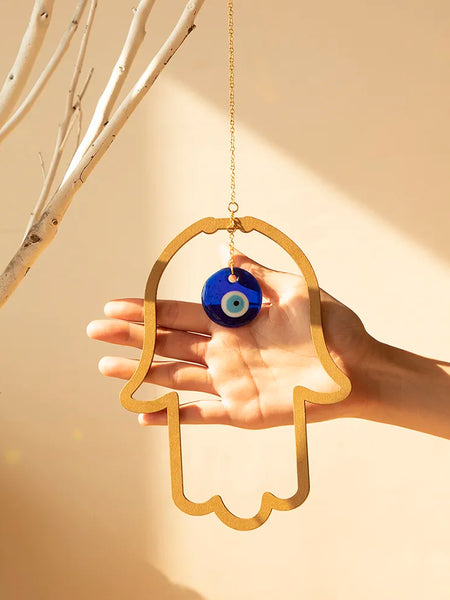
Unique Gold Wood Hamsa Hand Evil Eye Wall Hanging for Room Decoration, Good Luck, and Protection
$15.87
View
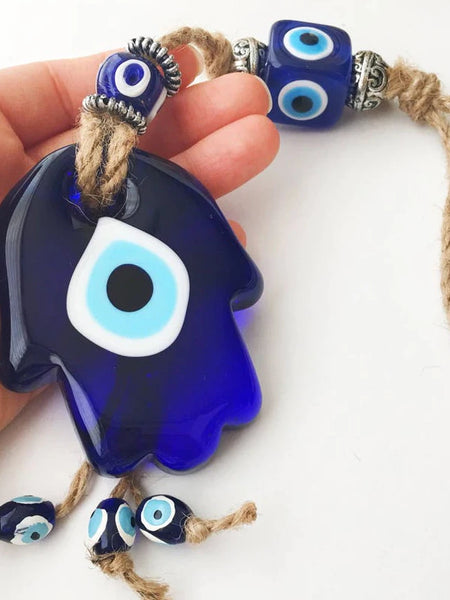
Handmade Hamsa Style Blue Turkish Evil Eye Wall Hanging for Home Protection Decor
$12.99
View
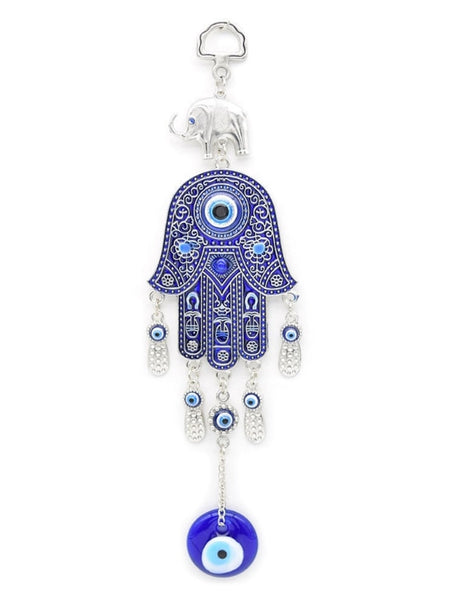
Authentic Turkish Blue Evil Eye Hamsa Amulet: Handcrafted Protection for Home & Garden Decor
$13.47 - $16.06
View
Choosing Hamsa jewelry, amulets, decor, or gifts respectfully
Start with the person and how they will use it. A small pendant or bracelet charm sits easily for daily wear, while a wall hanging suits a home better. Some people care whether the hand points up to ward off or down to welcome, so it is worth asking when the piece is a gift.

When you give one, keep the message plain. Offer it as a thoughtful, culturally rooted gift rather than a promise of luck or safety. A short line about the symbol's shared Islamic and Jewish roots, and its use in some Christian regions, shows respect and keeps you from overstating what the hand can do.
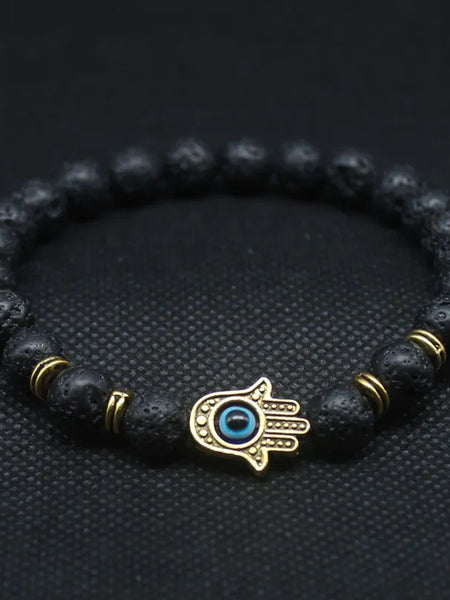
Elegant Unisex Black Lava Stone Bracelet with Geometric Fatima Hamsa Hand - Fashionable Evil Eye Protection Accessory
$10.97 - $11.09
View
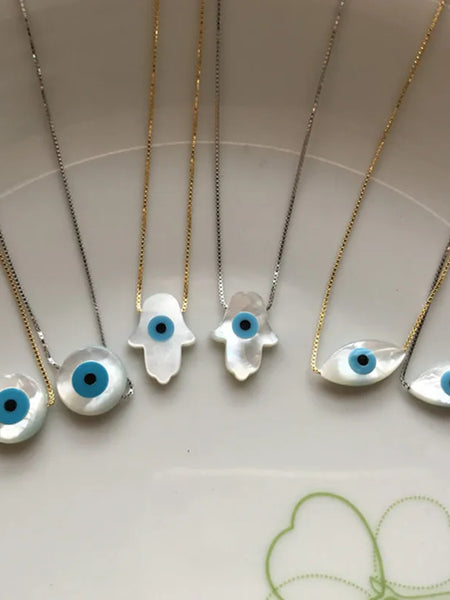
Elegant 925 Sterling Silver Evil Eye Hamsa Necklace with Natural Mother of Pearl Pendant Charm
$23.39 - $23.69
View
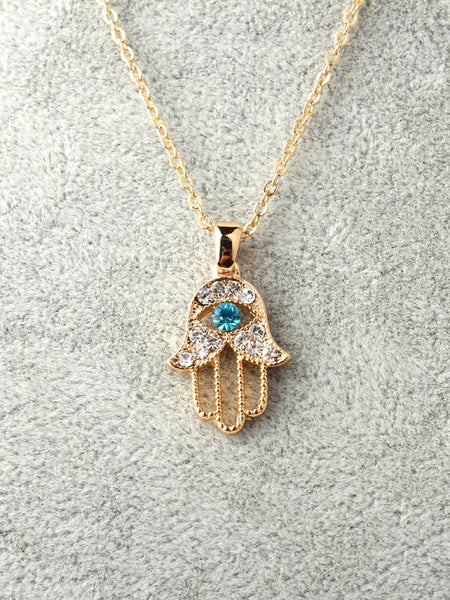
Elegant Turkish Crystal Evil Eye Hamsa Necklace – Women's Trendy Fashion Jewelry
$11.29 - $11.62
View
If you want to compare styles, the collections below gather Hamsa and Evil Eye jewelry, amulets, and decor in one place. You can weigh material and size, and which way the hand faces, before you decide.

181
Products
Evil Eye Jewelry
Shop Evil Eye jewelry in symbolic necklaces, bracelets, rings, earrings, pendants and charm styles for everyday layer...
Explore
73
Products
Evil Eye Accessories
Crafters and gift-givers, start here—Evil Eye Accessories span beads for jewelry projects, pins and magnets, and deco...
ExploreFAQ about the Hamsa hand and evil eye hand symbol
Short answers to what people ask most before they buy one or give it as a gift.
Is the evil eye hand symbol the same as the Hamsa hand?
They overlap but are not identical. The hand-with-an-eye people picture is a Hamsa carrying an Evil Eye motif in the palm. The Hamsa is the hand shape; the evil eye is the watchful eye and the belief about envy behind it.
Can anyone wear a Hamsa hand necklace or bracelet?
Yes. People wear it across many backgrounds, and you do not need any particular belief to put one on. What matters is wearing it with some respect for its Islamic, Jewish, and Mediterranean roots rather than treating the shape as empty decoration.
Does the Hamsa hand have a religious meaning?
It carries one in several traditions. The same hand appears in Islamic, Jewish, and Christian settings under different names. Plenty of people also wear it as a secular symbol, valuing the shape and its protective associations without any faith attached.
Is Hamsa jewelry appropriate as a gift?
It fits many occasions, from birthdays to housewarmings. Give it as a thoughtful gesture rooted in shared cultural history, not as something that promises luck. A short word about that heritage keeps the gift respectful.
How do I choose between Hamsa, evil eye, an amulet, or decor?
Let the use decide, and if it is really the two symbols you are torn between, our Hamsa vs Evil Eye guide weighs them side by side. Jewelry works for daily wear, while a wall piece or amulet suits a home or a fixed spot. Match the style to the recipient's taste, and check size and material before you commit.
Should the Hamsa face up or down?
Both directions are common, so it really comes down to preference. Fingers up reads as warding off; fingers down reads as welcoming blessings. The direction section above has the fuller meaning behind each.
Wrap-up and next step
So the hand with an eye at its center is the Hamsa, the symbol most people mean by the evil eye hand. Across Islamic, Jewish, and Mediterranean traditions it carries a wish for protection and good luck, with the eye nodding to the older Evil Eye belief.
For the gaze itself and the belief behind it, read our Evil Eye meaning guide. To see how the hand looks in real pieces, browse the Hamsa and Evil Eye collections and weigh size, material, and which way the hand faces for the person you have in mind.
