

Back to Evil Eye
An evil eye necklace is commonly worn as a symbol of protection from envy or ill will. Its meaning can also reflect cultural identity, personal intention, and care when given as a gift.
An evil eye necklace can carry protection symbolism, personal meaning, and a thoughtful message when given as a gift.
What Does an Evil Eye Necklace Mean?
An evil eye necklace is commonly worn as a symbol of protection from envy or ill will, though its meaning depends on cultural context and personal belief. The phrase evil eye can describe the harmful gaze feared in many traditions, while the eye-shaped bead or pendant is the amulet people use in response to that belief. In everyday conversation, both are often called the evil eye, which is why the symbol can sound threatening even when the jewelry is intended to express care or protection.
The idea appears across multiple cultures rather than belonging to one modern trend or a single faith. Museum collections document eye-like beads and composite amulets associated with protection against the Evil Eye. Today, a wearer may value that cultural association, treat the necklace as a personal reminder to stay grounded, or simply appreciate the design. Those meanings can coexist without turning a symbolic belief into a guaranteed result.
Readers who want the wider background can begin with what the evil eye means and then explore where the evil eye belief came from. This guide stays focused on what changes when the symbol is chosen specifically as a necklace or pendant.
Why Is the Evil Eye Worn as a Necklace?
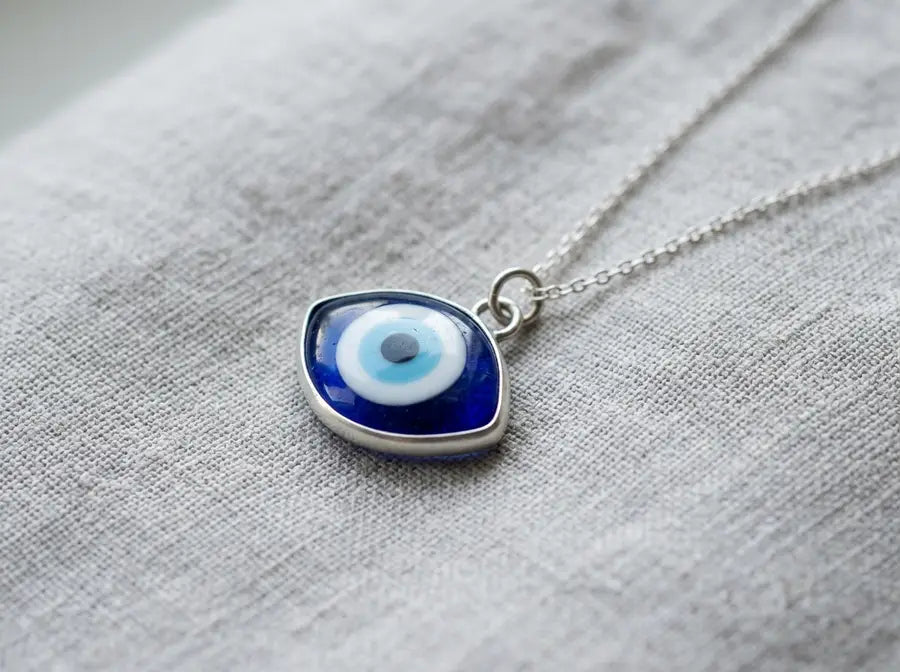
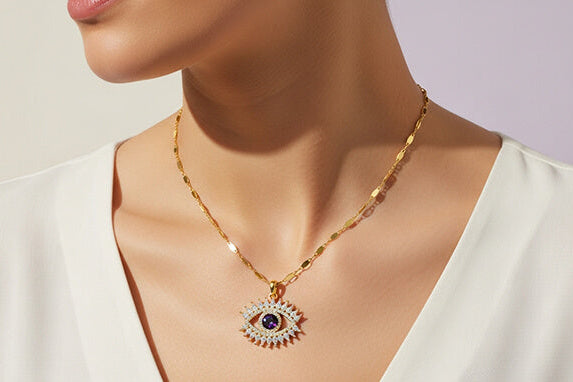
A necklace keeps the symbol close to the wearer and makes it easy to choose how visible it should be. A small pendant can sit quietly under a shirt, while a larger blue bead can become the focal point of an outfit. That flexibility helps explain why necklaces work for people who approach the symbol as heritage, personal intention, meaningful style, or some combination of the three.
The necklace format does not create a stronger or more authentic meaning than a bracelet, ring, or charm. It changes the experience of wearing the symbol: the pendant moves with the body, sits within the wearer's field of touch, and can be displayed or tucked away according to the setting. Someone may therefore choose a necklace because it feels personal, because it is easy to wear daily, or because the design suits their existing jewelry.
Style can support that personal use without redefining the symbol. Chain length, pendant scale, neckline, and comfort determine whether a piece feels discreet or expressive. Readers looking for practical combinations can use the separate guide to layer evil eye necklaces rather than turning this meaning guide into a full styling tutorial.
Does Wearing It Near the Heart Change Its Meaning?
There is no universal rule that an evil eye pendant must sit over the heart, and wearing it there is not proven to make the jewelry more protective. Necklaces naturally rest on the chest, so modern wearers sometimes connect that position with emotion, closeness, remembrance, or personal intention. That is a contemporary association or individual interpretation, not a rule that should be presented as shared by every culture.
Placement is better treated as a comfort and expression decision. A shorter chain can keep the pendant near the collarbone and make it easy to see, while a longer chain can feel more private or work better with a particular neckline. Neither position is spiritually correct for everyone. The most respectful answer is to distinguish documented belief from the meaning a wearer chooses for their own life.

What Does an Evil Eye Necklace Mean as a Gift?
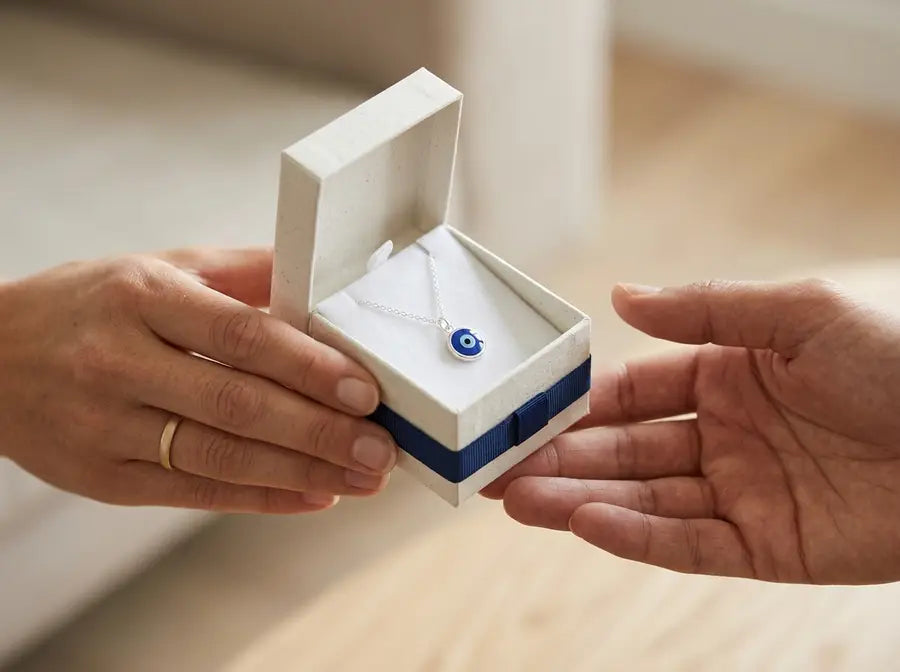
As a gift, an evil eye necklace can communicate care, good wishes, remembrance, or the hope that someone feels supported. It can suit a birthday, a new job, a move, an upcoming trip, graduation, or another transition because the giver can explain the intention in ordinary language: "I chose this as a reminder that I am thinking of you." That message is meaningful without promising that the jewelry will remove bad luck or negative energy.
The necklace does not have to be received from someone else to matter. Some families or communities may attach special value to gifting an amulet, while many contemporary shoppers also buy one for themselves. Neither choice creates a universal rule. What matters for a gift is whether the recipient is comfortable with the symbol and whether the design fits their taste and daily routine.
A gift note can acknowledge symbolism without making claims on the recipient's beliefs. Keep it personal, simple, and optional. For broader occasions and recipient ideas, the site's evil eye gift ideas provide the fuller planning guide.
Do Color and Pendant Design Change the Meaning?
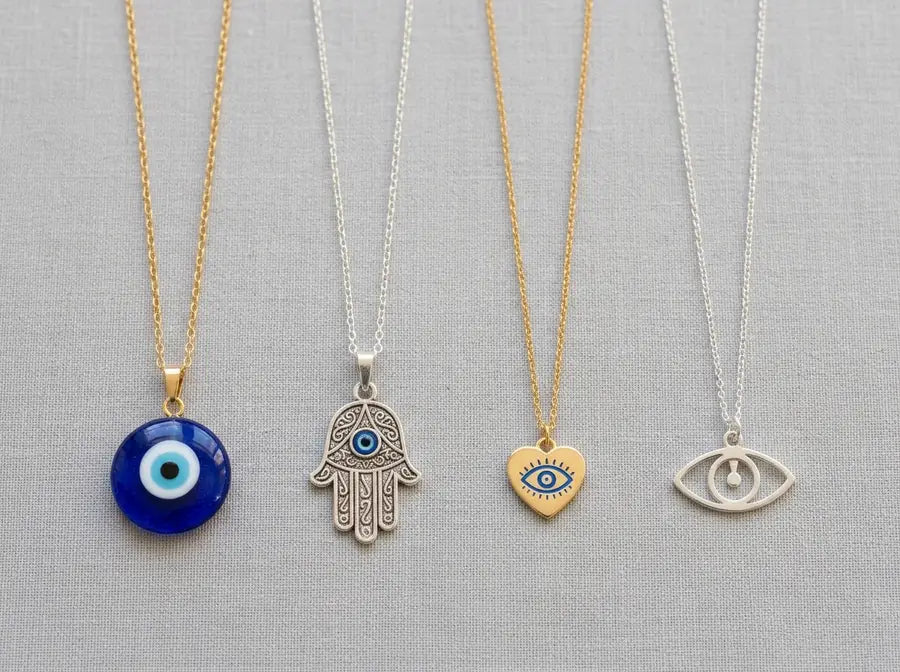
The classic blue-and-white eye is the most immediately recognizable form, but contemporary jewelry uses many colors, metals, stones, and shapes. These choices can influence how a necklace looks and how an individual describes it, yet modern color charts should not be presented as one ancient, universal code. If color is central to the decision, use the dedicated guide to evil eye color meanings and treat the associations as context rather than a promise.
Design can add another layer of personal interpretation. A simple circular eye may feel traditional or minimal; a heart can emphasize affection in a gift; and a Hamsa design combines two recognizable motifs that have their own histories. They should not be collapsed into the same symbol. The guide to Hamsa and Evil Eye differences explains that distinction in more detail.
Material and finish are practical selection factors, not proof of stronger symbolism. Use confirmed product descriptions for metal, stone, plating, or care information, and choose the appearance that suits the wearer's style and maintenance preferences.


Evil Eye Mesh Bracelet with Eyelash Detail and Open Eye Accent
$12.15
View


Evil Eye Cuff Bracelet with Wide Textured Panel and Blue Outline
$12.78
View


Black Beaded Evil Eye Bracelet with Dotted Hamsa Hand
$10.97
View
How to Choose One for Yourself or as a Gift
Start with the reason for choosing the necklace. If the main value is cultural connection or familiar symbolism, a recognizable blue eye may feel appropriate. If the piece is primarily a personal reminder, a subtle design that fits everyday clothing may be easier to wear consistently. For a gift, begin with the recipient's style rather than assuming that the most elaborate pendant carries the most meaning.
Match visibility to daily life
Consider whether the wearer prefers a quiet pendant, a colorful focal point, or a piece that can be tucked under clothing. Check chain length, pendant dimensions, clasp type, and care instructions in the current product details. Meaning does not compensate for a necklace that feels uncomfortable or impractical.
Choose symbolism without overexplaining it
A necklace can be meaningful without assigning a fixed spiritual identity to the wearer. If you are giving it, explain why you chose it and leave room for the recipient's own interpretation. If you are buying it for yourself, choose the design that you will actually enjoy wearing.
Browse the focused Evil Eye necklaces collection when you are ready to compare finished necklace styles. The broader Evil Eye jewelry collection is useful when you are still deciding whether a necklace, bracelet, ring, or earring format best fits the intended use.


Evil Eye Necklace with Round Pendant and Blue Accent Ring
$14.36
View
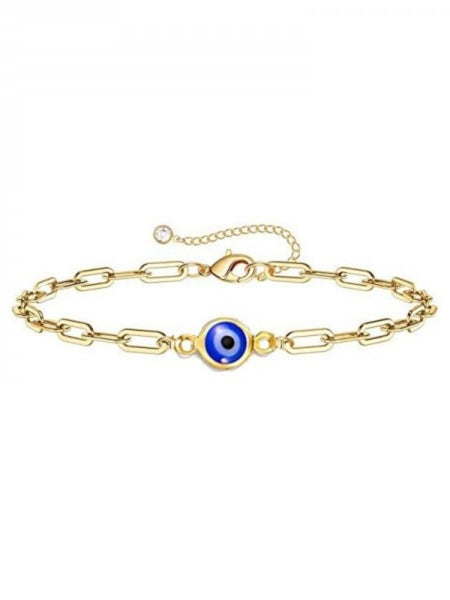

Chic and Versatile, Adjustable Turkish Evil Eye Charm Bracelet – An Essential Bohemian Summer Accessory for Style-conscious Individuals
$11.19
View


Evil Eye Beaded Bracelet with Scroll Spacers and Black Cord
$10.75 - $10.99
View
Common Questions About Evil Eye Necklaces
Can anyone wear an evil eye necklace?
There is no single universal rule limiting the symbol to one type of wearer. Because it carries real cultural and spiritual significance for many people, learn the context, avoid mocking or trivializing it, and describe your own reason for wearing it without claiming authority over every tradition.
Can you buy one for yourself?
Yes. Gifting may be meaningful in some families or personal traditions, but there is no universal requirement that another person must buy the necklace for you.
Should the pendant face a certain direction?
No widely shared rule makes one necklace direction correct for everyone. Wear the pendant so it lies comfortably and the front of the design is visible as intended.
What if the necklace breaks?
Some people attach symbolic meaning to a broken amulet, while a broken chain or setting can also have an ordinary mechanical cause. Inspect the piece, follow its care guidance, and decide whether professional repair, replacement, or respectful disposal fits both the material and your personal beliefs.
Carry the Meaning in a Way That Feels Personal
The meaning of an evil eye necklace begins with a long-standing protective association, but the necklace can also express heritage, care, memory, or personal intention. There is no universally correct chain length, chest position, color, or gifting rule. Choose a piece that fits your life, describe its symbolism with care, and keep belief separate from guarantees.
When you are ready to compare options, use the necklace and jewelry collections as practical next steps rather than as definitions of what the symbol must mean.
35
Products
Evil Eye Necklaces
Give your jewelry rotation a symbolic focal point with Evil Eye necklaces in classic blue, geometric, Turkish-inspire...
Explore
178
Products
Evil Eye Jewelry
Shop Evil Eye jewelry in symbolic necklaces, bracelets, rings, earrings, pendants and charm styles for everyday layer...
Explore