

Back to Evil Eye
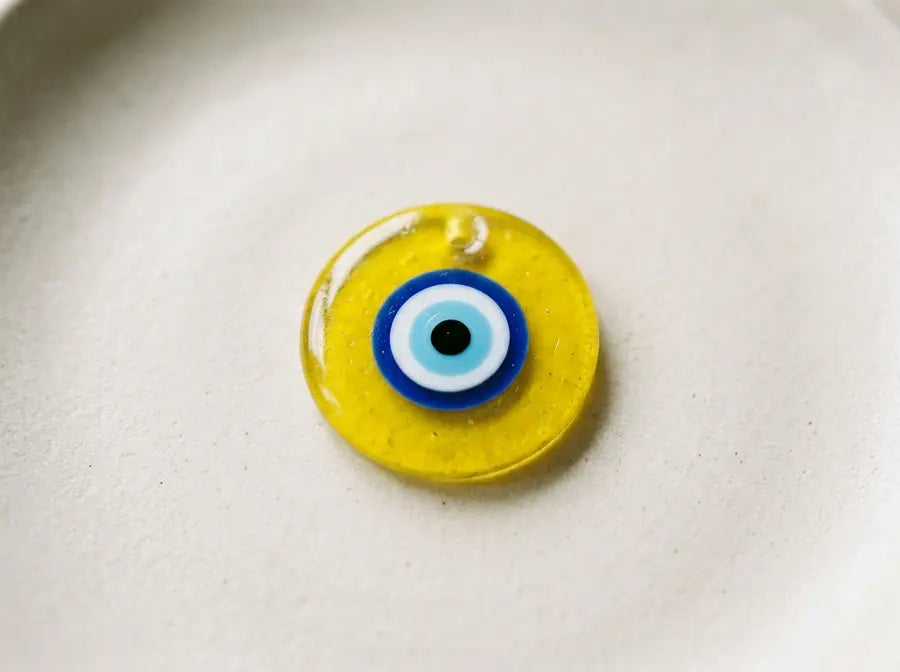
The yellow evil eye is commonly associated today with optimism, mental brightness, focus, and forward-looking energy. Its eye motif belongs to older protective traditions, but the yellow-specific meaning is a modern interpretation rather than a universal ancient rule.
This guide separates history from modern color symbolism, compares yellow with blue, gold, and orange, and helps you choose jewelry, gifts, or decor without promising a guaranteed result.
Yellow gives an old eye motif a modern layer of optimism, clarity, and forward motion without guaranteeing luck, health, or protection.
What does the yellow evil eye mean?
The short answer is that a yellow evil eye commonly represents optimism, mental clarity, focus, and the confidence to move forward. These are contemporary color associations, not a fixed definition shared by every culture or every wearer. One person may choose yellow as a reminder to approach a new chapter with a brighter outlook; another may simply prefer its warm visual energy.
The eye shape carries the older cultural context. Across several regions and traditions, eye-shaped amulets have been used in response to beliefs about the evil eye, envy, and harmful attention. Our guide to the meaning of the evil eye explains that broader idea. A yellow version combines that recognizable motif with a newer color layer.
That distinction keeps the symbolism useful without overstating it. You can treat a yellow evil eye as a personal cue for alertness, optimism, or a fresh start while recognizing that jewelry and decor do not guarantee protection, luck, health, or any other outcome.
Is the yellow meaning traditional or modern?
The eye motif is traditional; the neat color chart often attached to modern evil eye jewelry is not. Museum and university sources document longstanding beliefs about the evil eye and the use of amulets, especially the familiar blue nazar bead. They do not establish one universal ancient meaning for every color sold today.
The older tradition belongs to the eye motif
Beliefs about harmful envy or an injurious gaze appear across a wide geographic area and over long periods of time. Protective objects vary by place: some are eye-shaped, while others use reflective, bright, or symbolically charged materials. The history and origins of the evil eye are therefore broader than any single modern bead design.
The blue nazar is one of the clearest documented visual identities within this larger history. Its concentric blue, white, light-blue, and dark center make the eye instantly recognizable. Yellow or gold can sometimes appear as an accent, but that is not evidence of an ancient, universally agreed yellow symbolism.
Yellow is a contemporary color layer
Modern makers and shoppers use a wider palette to express mood, style, or personal intention. Yellow naturally suggests daylight, visibility, warmth, and alert attention, so associations such as optimism, mental brightness, and focus are understandable modern interpretations. They should still be described as variable associations rather than historical fact.
This is the same editorial boundary used in our guide to evil eye color meanings: the traditional motif has a documented cultural history, while most shade-specific meanings are contemporary ways of personalizing it.
Yellow compared with blue, gold, and orange
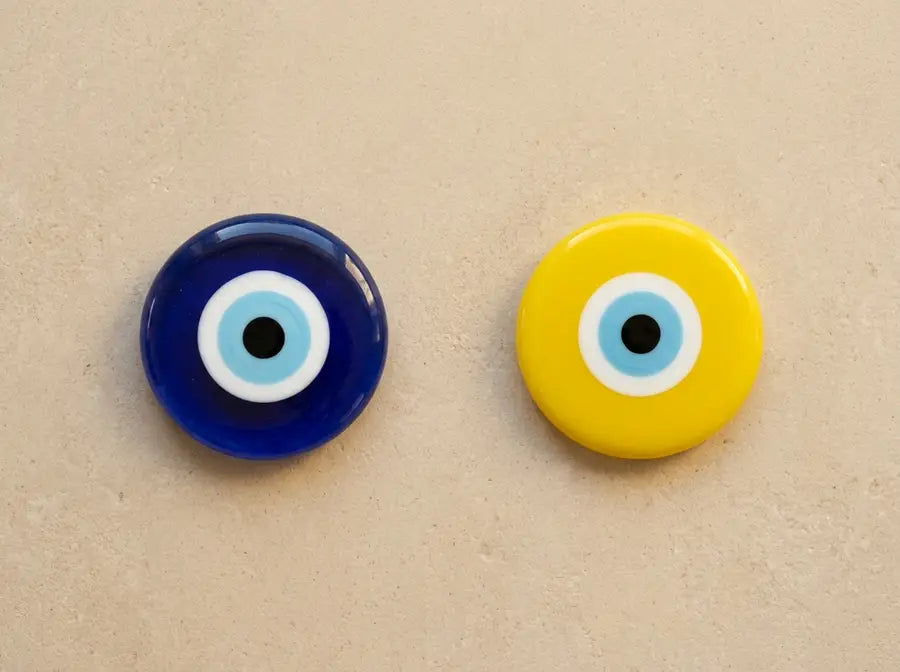
No evil eye color is objectively the strongest. The better choice is the one whose visual character and intended meaning fit the person, setting, and object. Comparing nearby colors can make that choice clearer.
Yellow vs. blue evil eye
Blue has the clearest connection to the traditional nazar bead and is the most familiar choice for someone who wants that recognizable visual identity. Yellow feels brighter and more contemporary, with emphasis on optimism, mental clarity, and forward motion. Our blue evil eye meaning guide explains the difference between dark and light blue in more detail.
Yellow vs. gold evil eye
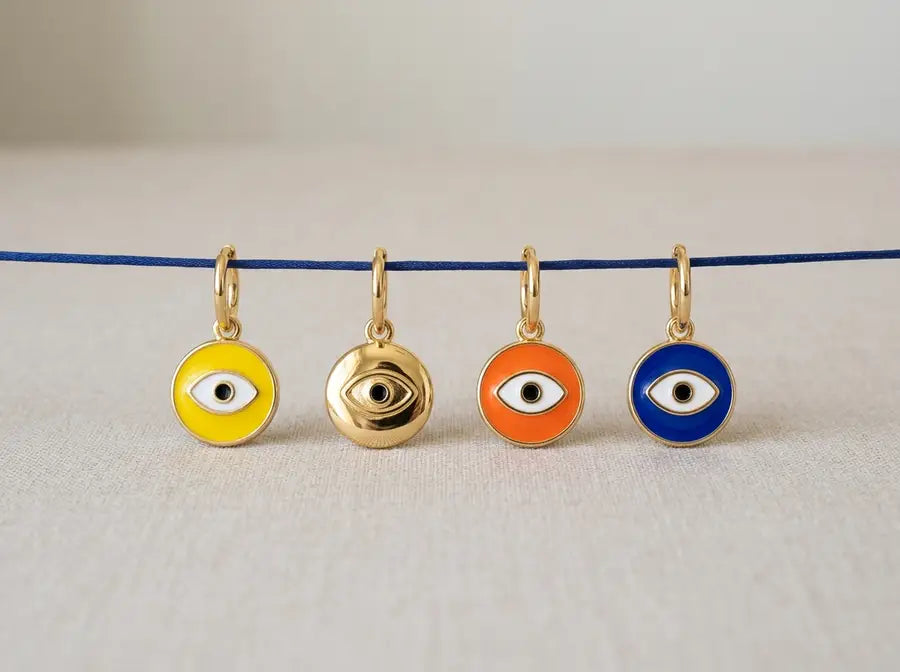
Yellow and gold can overlap visually, especially when a yellow bead is paired with gold-tone hardware. Yellow usually reads as bright, fresh, and energetic. Gold usually reads as warm, polished, or celebratory. Check the actual product photos and finish rather than assuming the product tag tells you which effect will dominate.
Yellow vs. orange evil eye
Yellow is often used for clarity, optimism, and an open outlook. Orange is commonly framed around creativity, expressive momentum, and social warmth. These are neighboring modern interpretations, not rigid categories, so the final choice can be based on appearance as much as symbolism. See the orange evil eye meaning for a closer comparison.
How to use a yellow evil eye
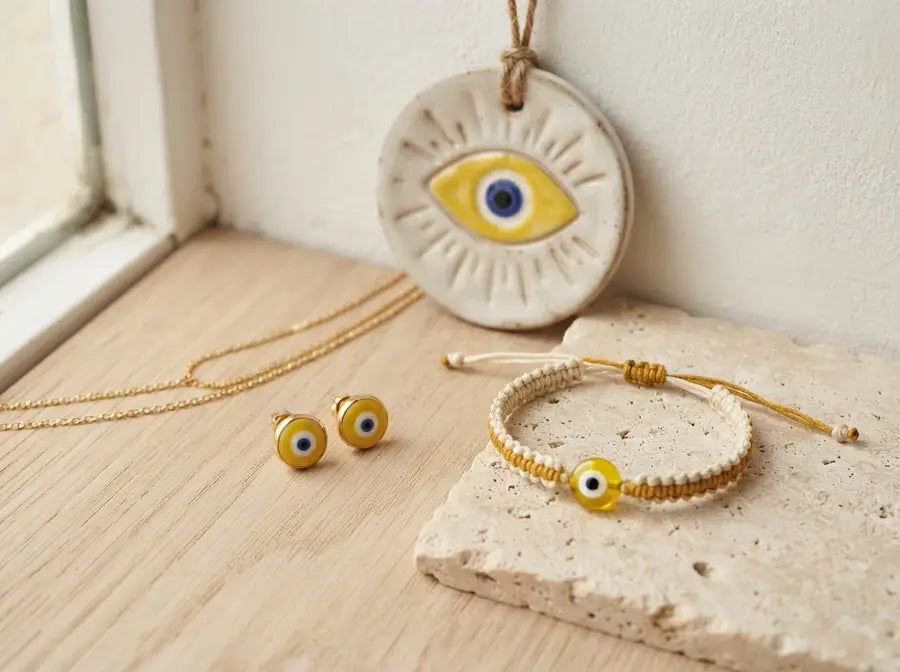
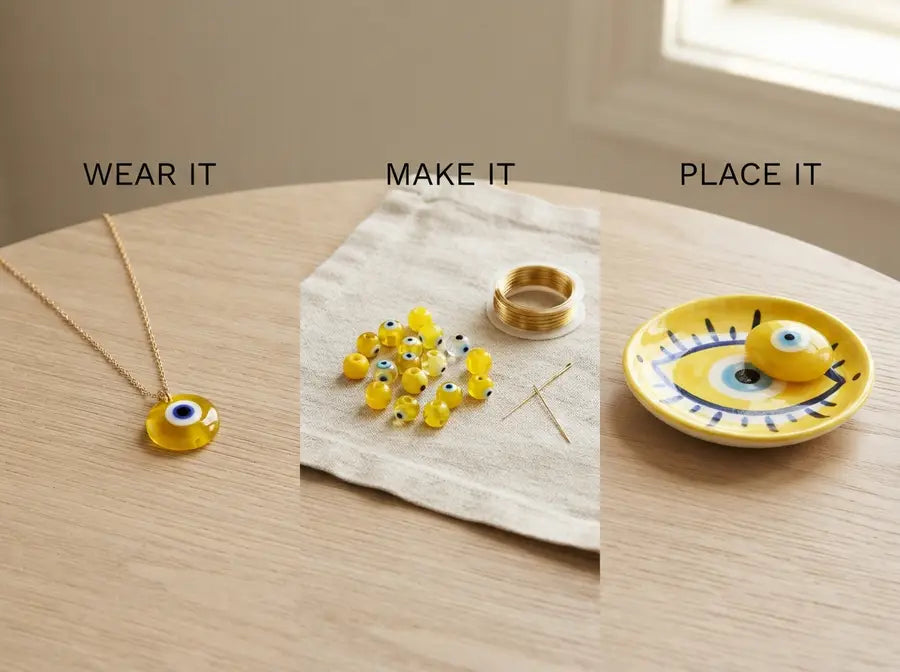
A yellow evil eye can be worn, given, made into a personal project, or placed at home. Start with the use case, then confirm the color is genuinely visible in the selected item. This matters because a product tagged yellow may show several colorways in one listing.
Wear it as a visible accent
Earrings make the color easy to notice, while a bracelet can turn it into a repeated daily detail. Look at scale, closure, weight, and the colors surrounding the eye motif. For bracelets, our daily evil eye bracelet guide covers fit and practical wear considerations.


Evil Eye Cuff Bracelet with Wide Textured Panel and Blue Outline
$12.78
View


Evil Eye Mesh Bracelet with Eyelash Detail and Open Eye Accent
$12.15
View
Give it with context
Yellow can suit a graduation, new job, move, creative project, or another transition because its modern symbolism points toward clarity and optimism. Present that meaning as a thoughtful intention, not a promise that the gift will control what happens next. The evil eye gift guide offers more ways to match the object to the recipient and occasion.
Place it in a bright, lived-in space
A yellow wall piece, textile, or small ornament works well where the color can connect with daylight or an existing accent palette. Entryways, work areas, and social rooms are common choices, but placement is personal rather than a rule. For scale and room-by-room ideas, see our guide to placing evil eye decor at home.
Choose the piece before the promise
Product selection should begin with observable details. Decide whether you want something to wear, craft with, or place in a room. Then confirm the actual shade, dimensions, materials, closure or mounting method, and care instructions on the product page. A clear yellow field, bead, border, or plate will communicate the color more strongly than a tiny accent hidden among many colors.
Next, separate symbolism from performance claims. A listing may describe cultural beliefs or a designer's intended meaning, but that does not prove the object can produce health, wealth, luck, safety, or emotional change. Choose it because the design and symbolism resonate with you.


Black Beaded Evil Eye Bracelet with Dotted Hamsa Hand
$10.97
View


Evil Eye Braided Cord Bracelet with Hamsa or Sunburst Charm
$11.37 - $11.46
View


Evil Eye Beaded Bracelet with Scroll Spacers and Black Cord
$10.75 - $10.99
View
If you want to compare a broader range before deciding, browse the jewelry and home categories rather than forcing a single format to fit every use.

178
Products
Evil Eye Jewelry
Shop Evil Eye jewelry in symbolic necklaces, bracelets, rings, earrings, pendants and charm styles for everyday layer...
Explore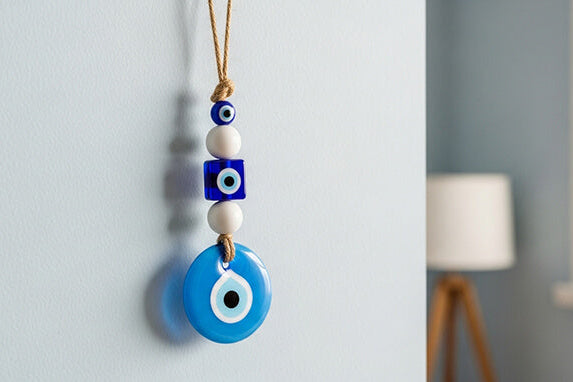
55
Products
Evil Eye Home Decor
Shop Evil Eye home decor, from wall hangings and decorative accents to stylish pieces for shelves, tables, and everyd...
ExploreCommon questions about the yellow evil eye
Is yellow the strongest evil eye color?
No. There is no objective ranking that makes yellow, blue, or another color more powerful. Blue has the clearest traditional nazar identity, while yellow offers a distinct modern association with optimism and mental brightness. Choose by cultural context, personal intention, and design.
Does a yellow evil eye guarantee luck or protection?
No. The protective role of evil eye amulets belongs to cultural belief and tradition. Jewelry, decor, and color symbolism should not be presented as guaranteed ways to change health, finances, safety, relationships, or future events.
Can you wear yellow with other evil eye colors?
Yes. Combining colors can reflect personal taste or several contemporary associations at once. Keep one dominant shade if you want a clear visual message, or choose a multicolor piece when variety is part of the design. There is no universal rule that mixed colors cancel one another.
Is a yellow evil eye the same as a gold one?
Not necessarily. Yellow describes a hue; gold may describe a color, a finish, or a material claim. A yellow eye can sit in gold-tone jewelry, and a gold-colored piece may contain no yellow bead at all. Use the visible product photos and verified specifications to tell them apart.
A bright meaning with clear boundaries
The yellow evil eye pairs an old, culturally significant eye motif with modern ideas of optimism, focus, mental brightness, and forward movement. Its value is strongest when that distinction stays visible: the tradition belongs to the motif, while the yellow-specific message is personal and contemporary.
Choose a piece whose color and format work in real life, and let its meaning act as a reminder rather than a guarantee. That approach respects the history, keeps the symbolism honest, and leaves room for the wearer or recipient to make it their own.
Sources
- Pitt Rivers Museum, University of Oxford: The Evil Eye - background on evil eye beliefs and protective amulets.
- Center for Russian, East European & Eurasian Studies, University of Kansas: Nazar - an overview of the nazar bead, its concentric eye design, and common color composition.
- Museum Europaeischer Kulturen, Berlin: Traces of European Muslims - cultural context for the blue nazar bead and beliefs associated with the evil eye.
