

Back to Evil Eye
Finding your evil eye bracelet broken can feel unsettling, especially if it was a gift or part of your daily routine. In some traditions, the break is understood as the charm completing its protective role. It may also be ordinary wear: tired elastic, a loose connector, moisture, impact, or one final snag.
Set the bracelet aside and gather the pieces before deciding what comes next. Once you can see what failed, you can choose between repair, restringing, saving an intact charm, or replacement without treating any choice as an urgent spiritual requirement.
A bracelet can remain meaningful even when the reason it broke is completely ordinary.
What can a broken evil eye bracelet mean?
An evil eye bracelet belongs to a wider tradition of eye-shaped amulets worn for protection. Beliefs differ across cultures. Our guide to the evil eye explains the broader background, while this overview compares evil eye meanings across cultures and beliefs.
In some Turkish accounts, a broken nazar is said to have absorbed a particularly strong negative force. A wearer may therefore see the break as the end of the charm's protective work. That is a cultural interpretation, not evidence about every broken bracelet.
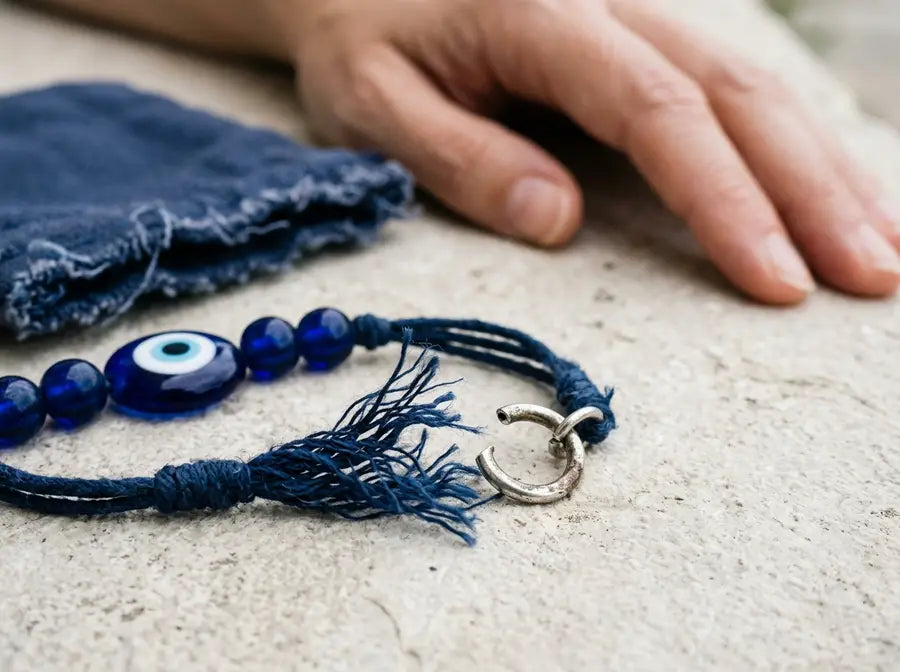
Why the moment can still feel significant
The timing may make the event feel personal. Perhaps the bracelet broke during a stressful week, after an argument, or at the end of an important chapter. You can acknowledge that meaning without assuming the bracelet proves that something harmful happened.
If it fell off instead of snapping: A loose knot, stretched elastic, open jump ring, or unreliable clasp is the first thing to check. You may attach the same personal meaning to losing it, but the practical response is the same: find it if you can, stop wearing it, and inspect the connection.
Spiritual meaning and physical cause are different questions
A symbolic interpretation answers what the moment means to you. A physical inspection answers how the jewelry failed. Keeping those questions separate gives you room for belief while helping you make a safe repair decision.
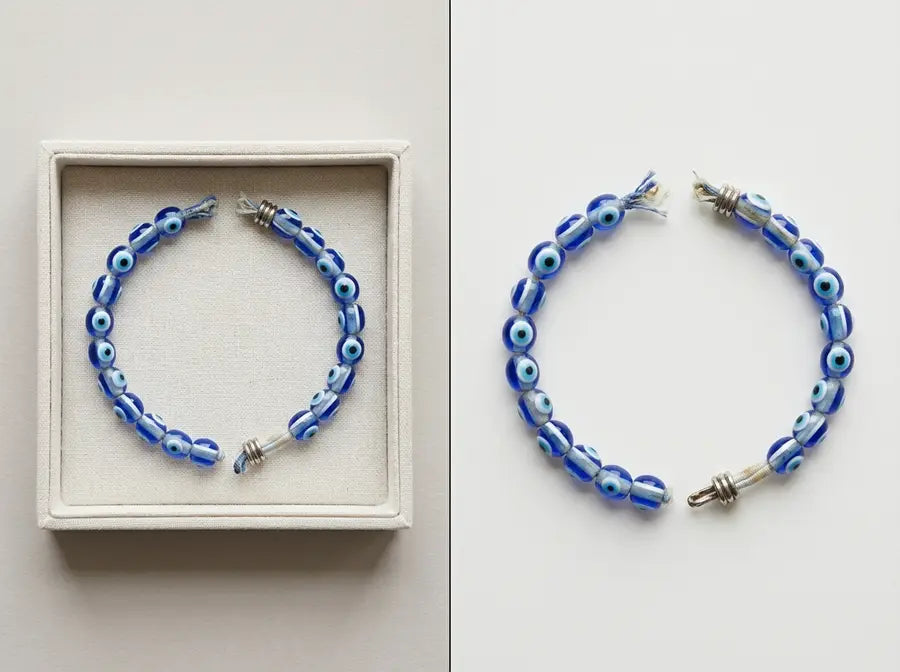
Wear, moisture, and snagging
Repeated stretching and friction can gradually weaken elastic, thread, or braided cord. Water, lotion, perfume, cleaning products, and sweat may also affect some fibers, finishes, adhesives, or metals. The exact risk depends on the bracelet's materials and construction.
A weakened bracelet may seem to break suddenly when it catches on a sleeve, bag strap, drawer handle, or towel. The snag is only the final load; the damage may have been building for weeks.
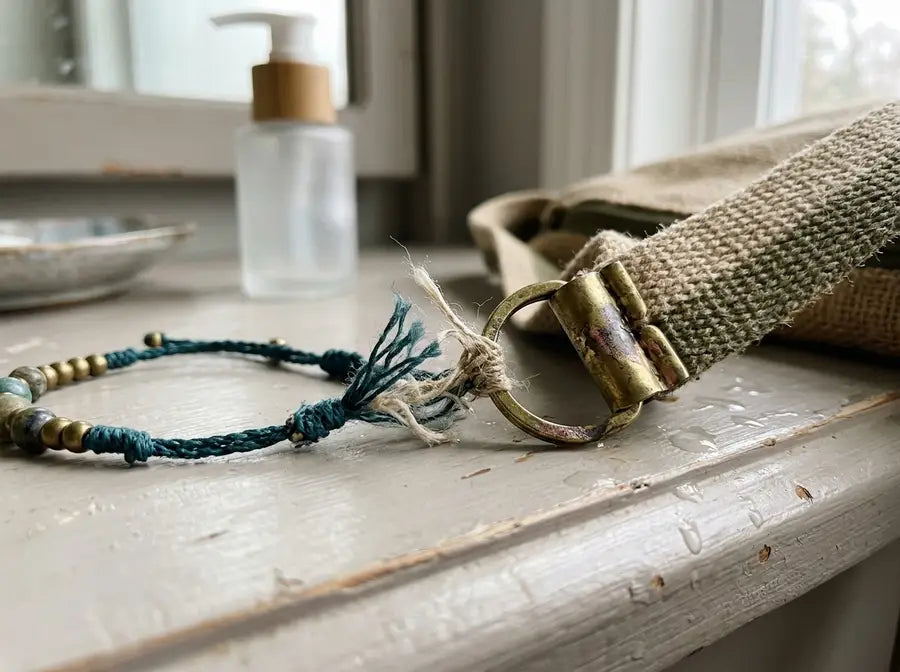
Impact and hardware failure
A drop onto a hard surface can chip a bead or crack a charm. On chain and cord bracelets, a bent jump ring, worn clasp, exposed wire tip, or crushed connector can release the bracelet even when the main strand still looks sound.
What should you do right after it breaks?
Do not put the bracelet back on immediately. A sharp bead, loose wire, or partly opened connector can scratch your skin or fail again before you notice it.
- Collect the charm, beads, clasp, rings, cord ends, and any small metal parts.
- Place everything in a shallow tray or sealed container so nothing rolls away.
- Check the floor, clothing, bag, and nearby furniture for missing fragments.
- Inspect the pieces in bright light before choosing repair, storage, or replacement.
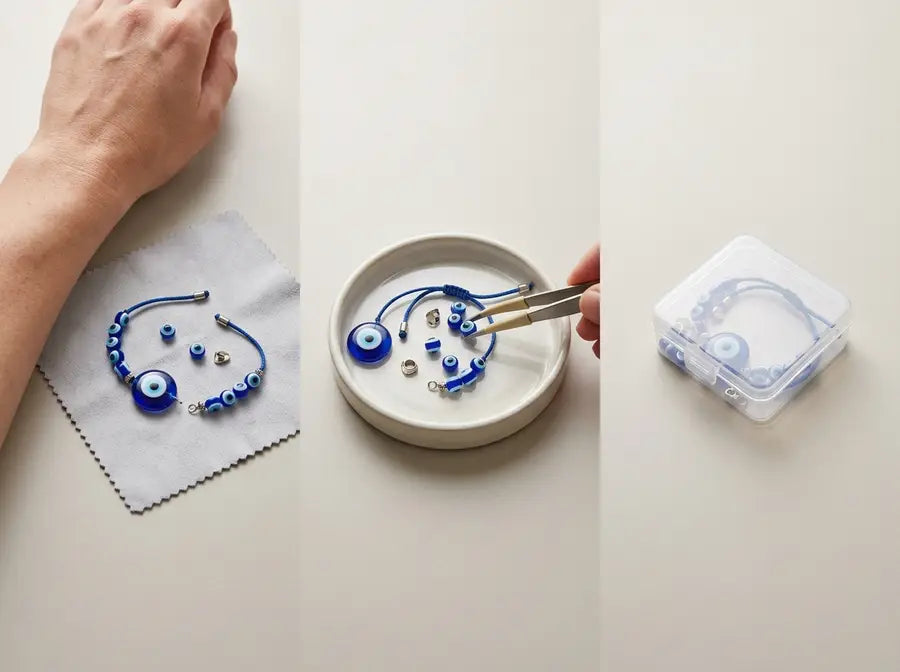
Separate anything that could cut or catch
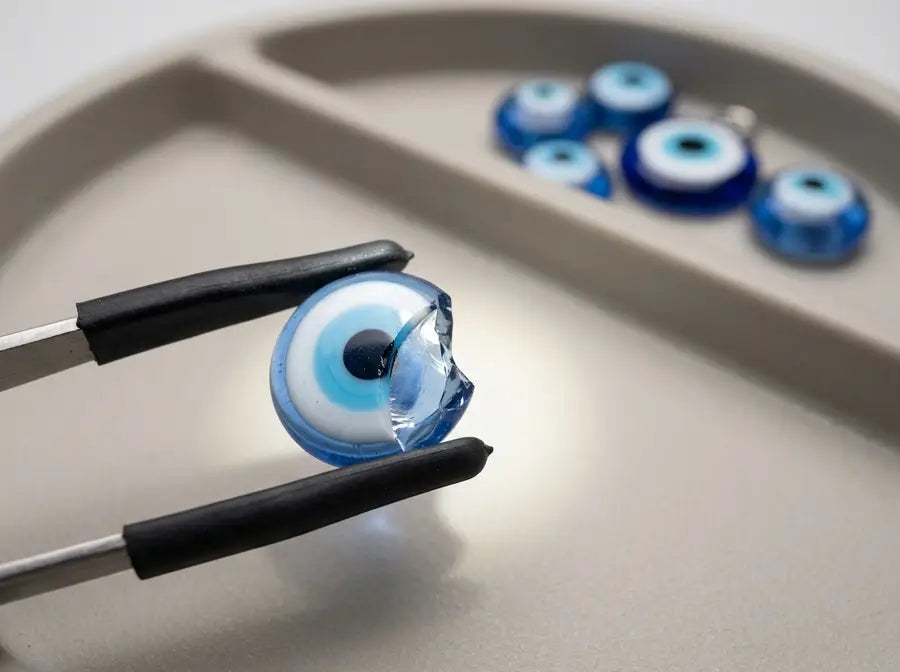
Set aside chipped glass, cracked stone, splintered wood, sharp metal, exposed wire, and badly frayed cord. Do not rely on glue or a tight knot to hide a dangerous edge. If you cannot tell whether a piece is safe, keep it off the wrist until a jeweler or repair specialist checks it.
Trace the damage from the failure point
Start where the bracelet opened, then inspect the neighboring parts. A snapped cord may have been rubbing against a rough bead hole. A loose clasp may be attached to a stretched ring.
Finding the first weak point is not enough if it damaged the pieces beside it.
- Elastic or thread: look for thinning, stiffness, discoloration, flat spots, or several frayed areas.
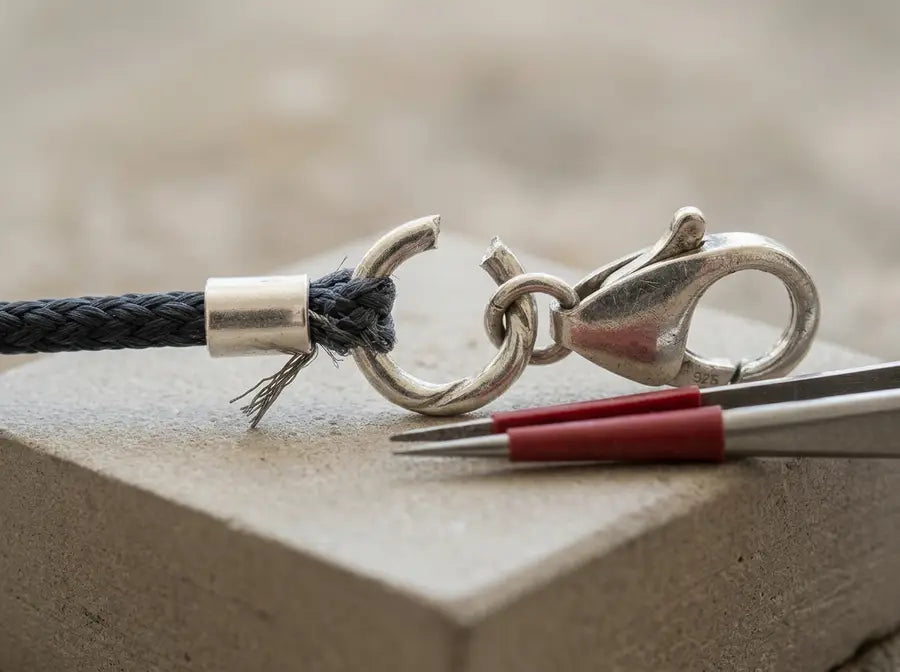
- Clasp, ring, or wire: look for gaps, distortion, rust, sharp ends, or a closure that opens under light pressure.
- Bead or charm: look for cracks, chips, loose settings, rough holes, or missing decorative parts.
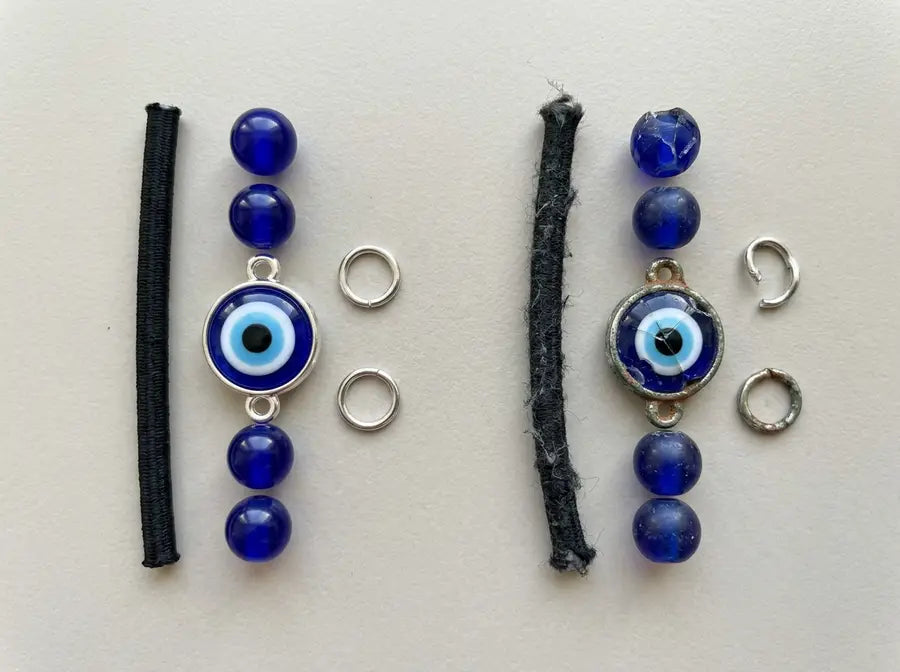
Pay special attention to clasps and rings: small connectors carry much of the load, so a tiny opening can matter. A jump ring should close cleanly, a clasp should spring back without sticking, and no wire tip should face the skin. Replace unreliable hardware instead of squeezing it shut repeatedly.
Should you repair, restring, replace, or keep it?
The best choice follows the condition of the parts, the bracelet's construction, and its value to you. No spiritual rule requires a particular response.
Choose the path that fits the damage
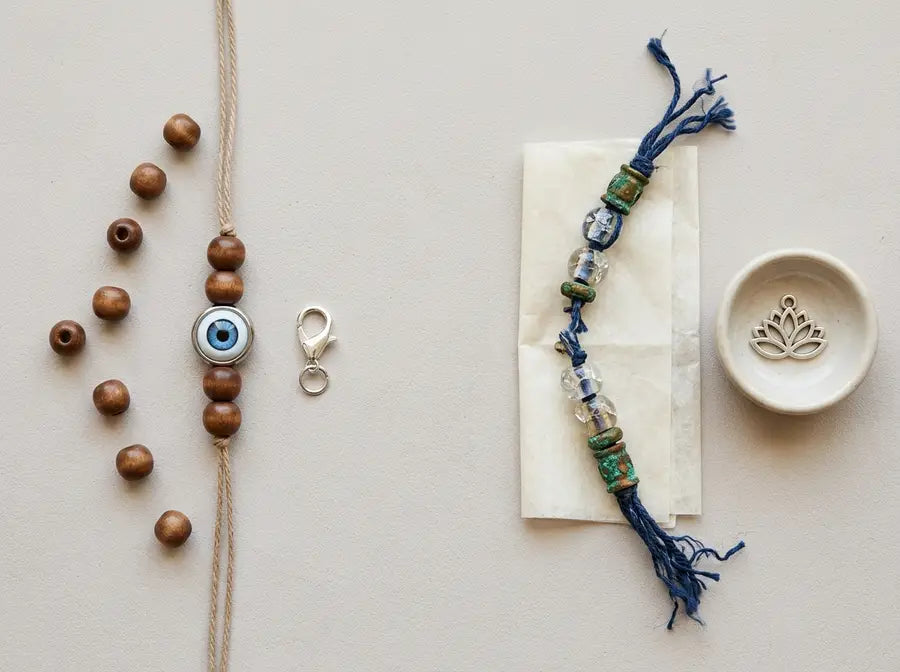
- Repair it when the main strand and decorative pieces are sound and one replaceable clasp or connector failed.
- Restring it when the beads and charm are intact but the elastic, thread, or cord shows age or widespread wear.
- Keep the charm when the bracelet is sentimental but rebuilding it would be unsafe or impractical.
- Replace it when several components are damaged, the material is brittle, or a secure repair would cost more than the bracelet warrants.
If the bracelet contains valuable metal, gemstones, a delicate setting, or a meaningful heirloom component, ask a jeweler before attempting a home repair. For a simple beaded strand, our beginner bracelet-making guide shows the basic structure, but it is not a substitute for professional work on fine jewelry.
When replacement is the practical choice
If the original cannot be worn safely, replacing it does not erase its meaning. You can keep an intact charm or bead as a memento, then choose a new piece from the evil eye bracelet collection with a closure and fit suited to daily use.


Evil Eye Chain Bracelet with Three Round Medallions
$13.49 - $48.98
View


Evil Eye Chain Bracelet with a Round Centerpiece - Fine or Rectangular Links
$11.19
View


Evil Eye Mesh Bracelet with Eyelash Detail and Open Eye Accent
$12.15
View


Evil Eye Braided Cord Bracelet with Hamsa or Sunburst Charm
$11.37 - $11.46
View
 BEST SELLER

Evil Eye Link Bracelet with Ridged Almond Frames
$10.93 - $11.06
View


Evil Eye Cuff Bracelet with Wide Textured Panel and Blue Outline
$12.78
View
What can you do with the broken pieces?
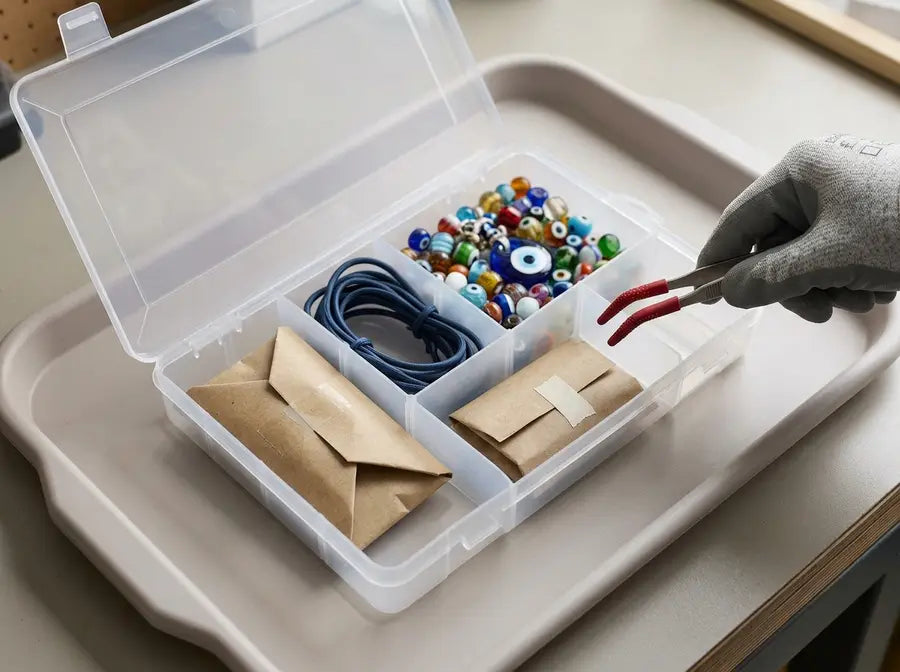
Contain the pieces before deciding. A small pouch or divided box keeps reusable beads and hardware together while preventing sharp fragments from becoming a household hazard.
Ritual is a personal choice
Some people offer a brief thanks, say a prayer, or store the charm with other keepsakes. Others repair the bracelet immediately or dispose of damaged material. Choose an action consistent with your own beliefs rather than treating an online rule as universal tradition.
Sort mixed materials before disposal
Keep usable beads, charms, and clean hardware apart from broken glass, sharp wire, or contaminated cord. Local recycling and disposal options vary, especially for mixed jewelry materials, so check your local guidance instead of placing every component in one bin.
How can you reduce the chance of another break?
No bracelet lasts forever, but a few habits can reduce avoidable strain. The goal is not to protect it from every moment of life; it is to remove it before activities that are especially hard on its materials.
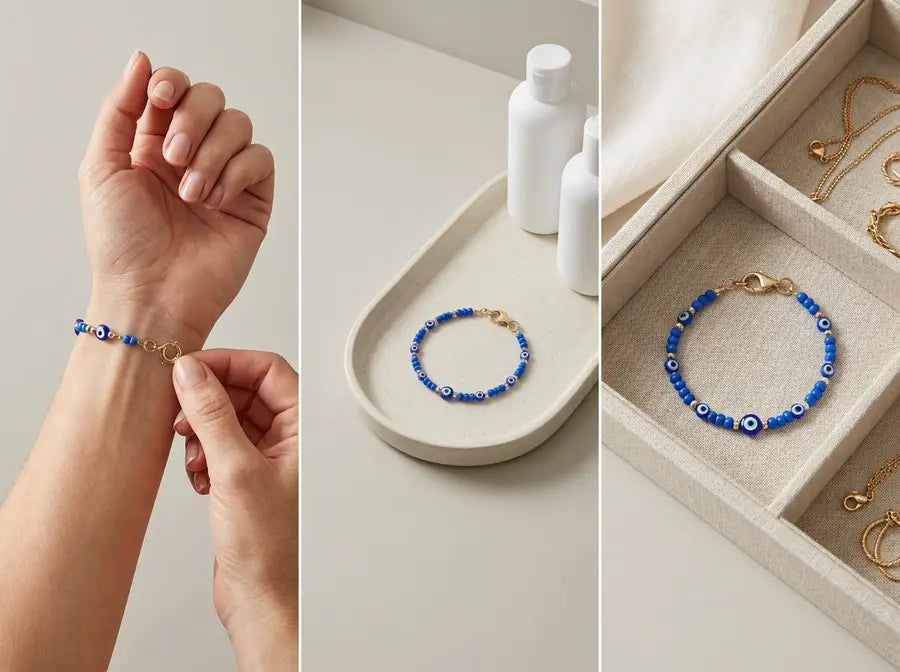
- Put it on and remove it by the clasp or closure instead of pulling hard on the strand.
- Remove it before showering, swimming, sleeping, vigorous exercise, cleaning, or applying lotion and perfume.
- Store it dry and separately so clasps and beads do not scrape against harder jewelry.
- Check the knot, elastic, cord, rings, and clasp when you notice looseness, fuzzing, discoloration, or a change in fit.
Fit and construction matter as much as care. Our guide to choosing an evil eye bracelet for daily wear can help you compare closures and styles before your next purchase.
58
Products
Evil Eye Bracelets
Shop Evil Eye bracelets for everyday style, layered wrist looks, and meaningful gifts. Explore beaded, charm, cuff, b...
Explore
178
Products
Evil Eye Jewelry
Shop Evil Eye jewelry in symbolic necklaces, bracelets, rings, earrings, pendants and charm styles for everyday layer...
ExploreInspect it when the fit starts to change
A fixed inspection schedule does not suit every material. Check the bracelet when it feels looser, twists differently, catches on clothing, or stops closing cleanly. Early attention to one worn component can prevent the rest of the bracelet from scattering.
Conclusion
A broken evil eye bracelet can carry symbolic meaning and still have an ordinary physical cause. Respect the meaning it holds for you, then inspect the actual damage before deciding what to do.
Gather the pieces, isolate anything sharp, and choose repair, restringing, safekeeping, or replacement according to their condition. The bracelet's story does not disappear simply because its original form changed.
